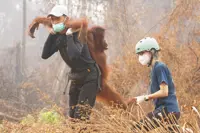
Cyclist Rhys Newell was just out for a ride in northern New South Wales when he suddenly felt something clawing at his face. Checking his cheek, he felt a small wound — he'd been swooped.
"Usually, you hear them click against your helmet. I'm already used to that. But this guy was really upset with me," Rhys recalls.
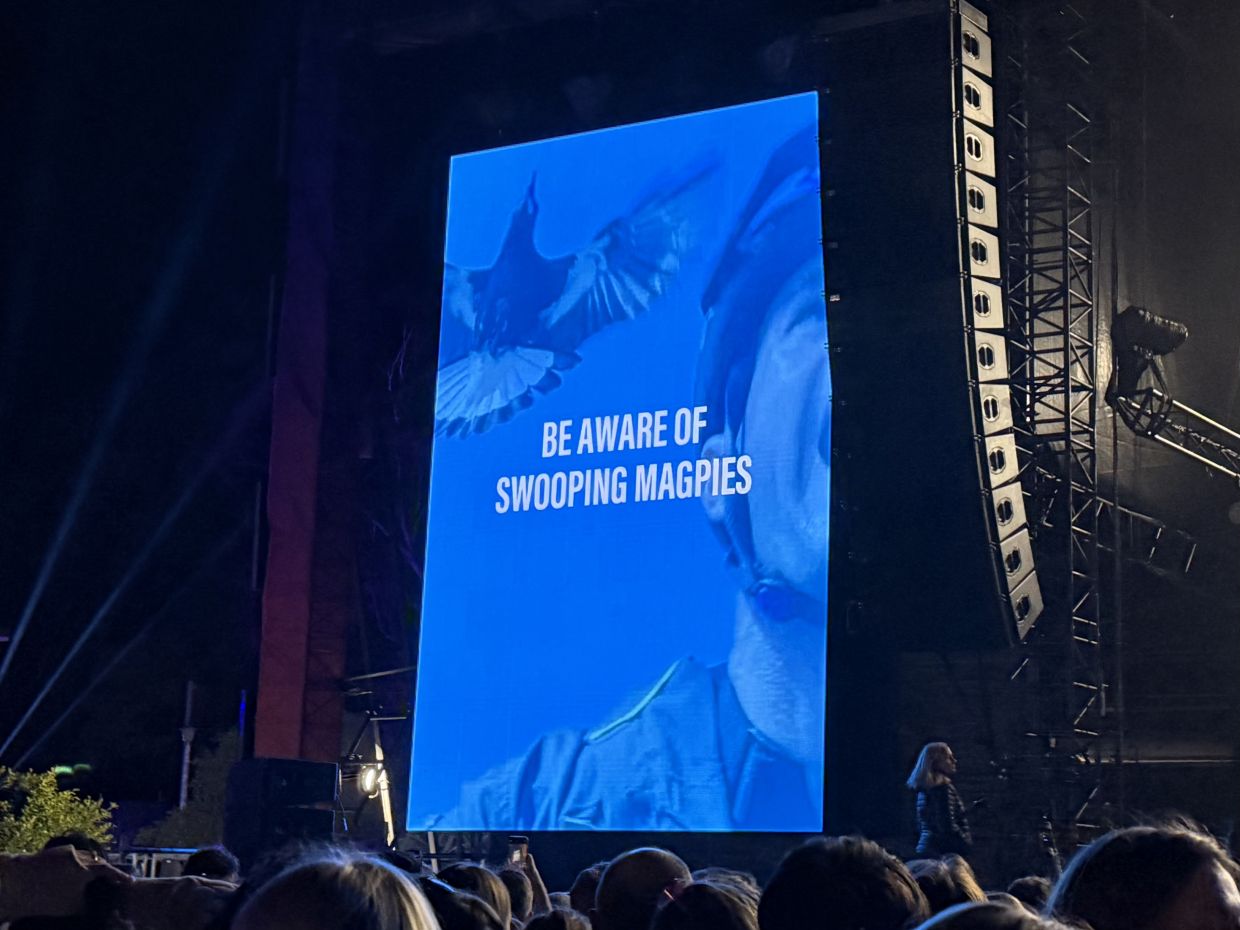
The "swooping" behaviour – which can be either a warning flyby or a direct strike – is seasonal and has earned magpies a fearsome reputation in parts of the population.
This is why pedestrians and cyclists have adopted some unusual tactics, such as wearing helmets with spikes or carrying an umbrella to keep the black-and-white birds away.
Respect for the birds grows once people learn that magpies can recognise individual humans and, in some cases, target the same person repeatedly.
Media reports cite injuries, event cancellations due to swooping risks, and accidents caused when pedestrians or cyclists try to dodge attacks.
Australians track swooping incidents through a website called "Magpiealert," where the swooped report attacks to warn others, most frequently between August and October.
But while the broader "swooping season" lasts for months, individual magpies usually swoop only for about four weeks, timed to the presence of offspring.
Few magpies swoop - and only to protect
Darryl Jones, behavioural ecologist at Griffith University and author of Curlews on Vulture Street: Cities, Birds, People & Me, says these horror stories are only a small part of the bigger picture.
He explains that only male magpies swoop — and only a small number do, strictly to protect their offspring. "90% don't do anything at all and the ones that do are keeping what they see as a predator away from their nest," he tells dpa.
Swooping usually begins with a warning call, followed by a close flyby, and may escalate to physical contact if the perceived threat persists. Being swooped typically means you are very close to the nest.
If you manage to become a target, Jones recommends keeping eye contact and slowly backing away. "99% of them will never attack if they see you looking at them," he says. "If you're being swooped, face the magpie and back away as much as you can. Don't run away."
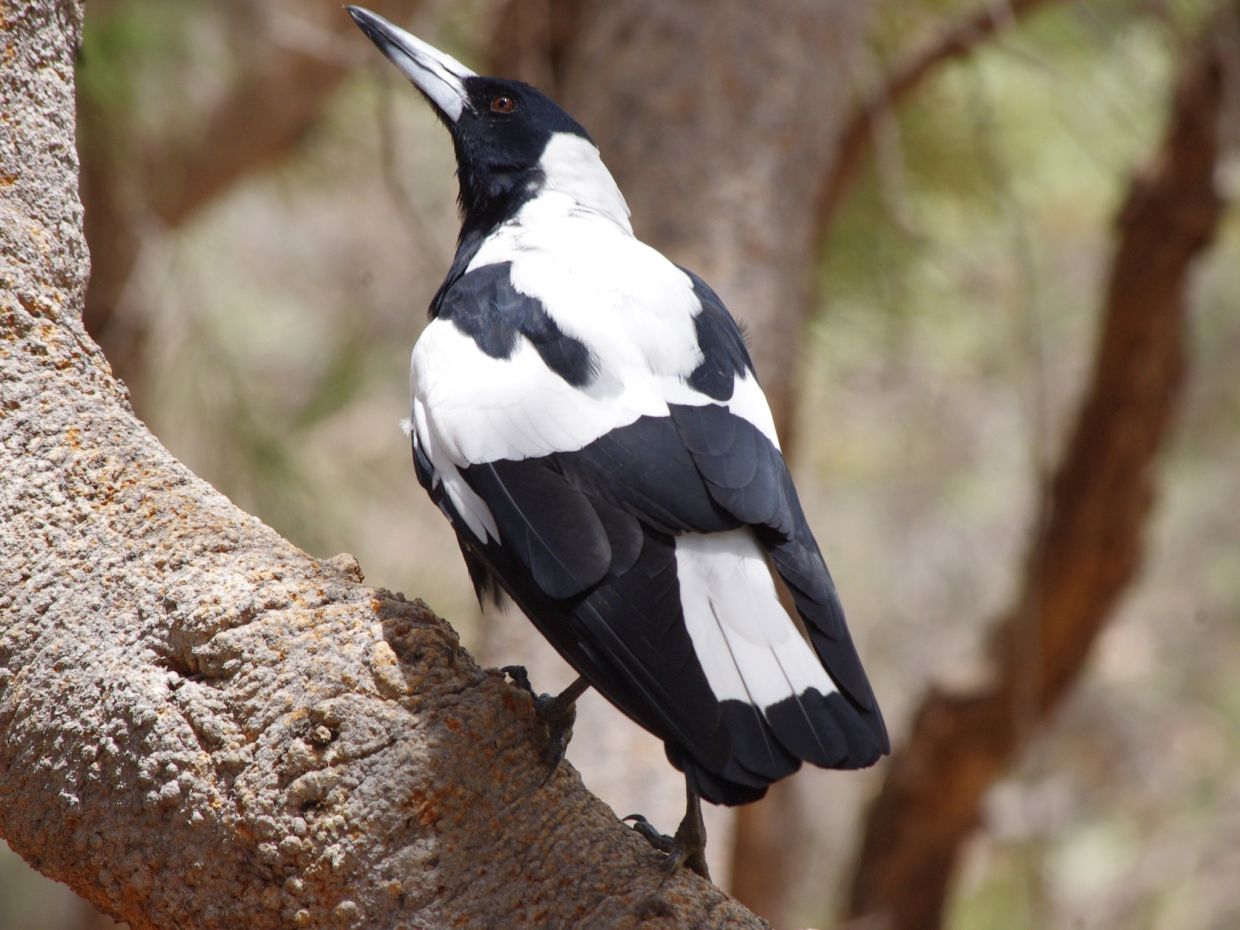
Cyclists are prime targets
Magpies appear to target cyclists more frequently than pedestrians. Cyclists have adopted creative protective measures, from sticking fake eyes on helmets to maintain "eye contact" to attaching spikes or cable ties to deter attacks.
While these strategies can help prevent direct strikes if implemented correctly, Jones notes that the birds often continue to follow and perform warning swoops.
Specialized "PieProof" helmets that protect ears and faces have also become popular during swooping season, turning bird defence into a small business.
Jones' simplest advice: Get off your bike.
"I've tried this a few times and it does work, but nobody does it. And my advice to people is, if you stop the bike and just get off, the magpie won't swoop you," he says, noting that speed seems to trigger attacks.
Other birds swoop too
While this particularly protective behaviour makes magpies stand out from other birds, Gisela Kaplan AM, emeritus professor of animal behaviour at the University of New England, notes that magpies are not the only birds that swoop.
However, most other bird species live far from humans, making encounters rare. Magpies, by contrast, thrive in suburban areas, where interactions with people are much more frequent.
Male magpies face intense pressure to guard the nest, Kaplan says: "If he's not doing a good enough job, she might even divorce him. The males are more than prepared not to swoop when they see that you're not a threat to their offspring."
Kaplan, author of the book Australian Magpies: Biology and Behaviour of an Unusual Songbird, confirms these birds have remarkable memories, recognising human faces for years.
They are very selective in their targets, she says. "Nice or even indifferent people they have seen before and are categorized by the male as 'harmless' never get swooped."
Friendly interactions can blossom and people who respect nesting sites may even be introduced to their offspring.
Magpies can be gentle companions
Baz Collis, who lives about 70 kilometres from Perth, has formed just such a bond with a magpie family. He explains that the magpies in Western Australia live in larger families, and the 16 birds in his area visit his terrace - and living room - daily.
Sometimes he feeds them small snacks of special magpie food and has named one Mr Sox, who often flies in and perches on one of his chairs for up to 30 minutes.
"He’s the only one who hops on my knee and actually insists on being hand-fed," Baz says. During dpa's phone interview, Mr Sox chirped right into the receiver. For Baz, these birds have become part of the family.
Despite the tales of bloodied cyclists, helmet spikes and swooping maps, most Australians approach swooping season with a mix of humour and respect.
Rhys Newell, too, isn't fazed by his incident, saying it's not the first time he had such an encounter while on his bicycle.
"I rode for another hour after it happened. The scratch looked worse than it was - I’d kind forgotten about it by the time I got home." – Chiara Holzhauser/dpa