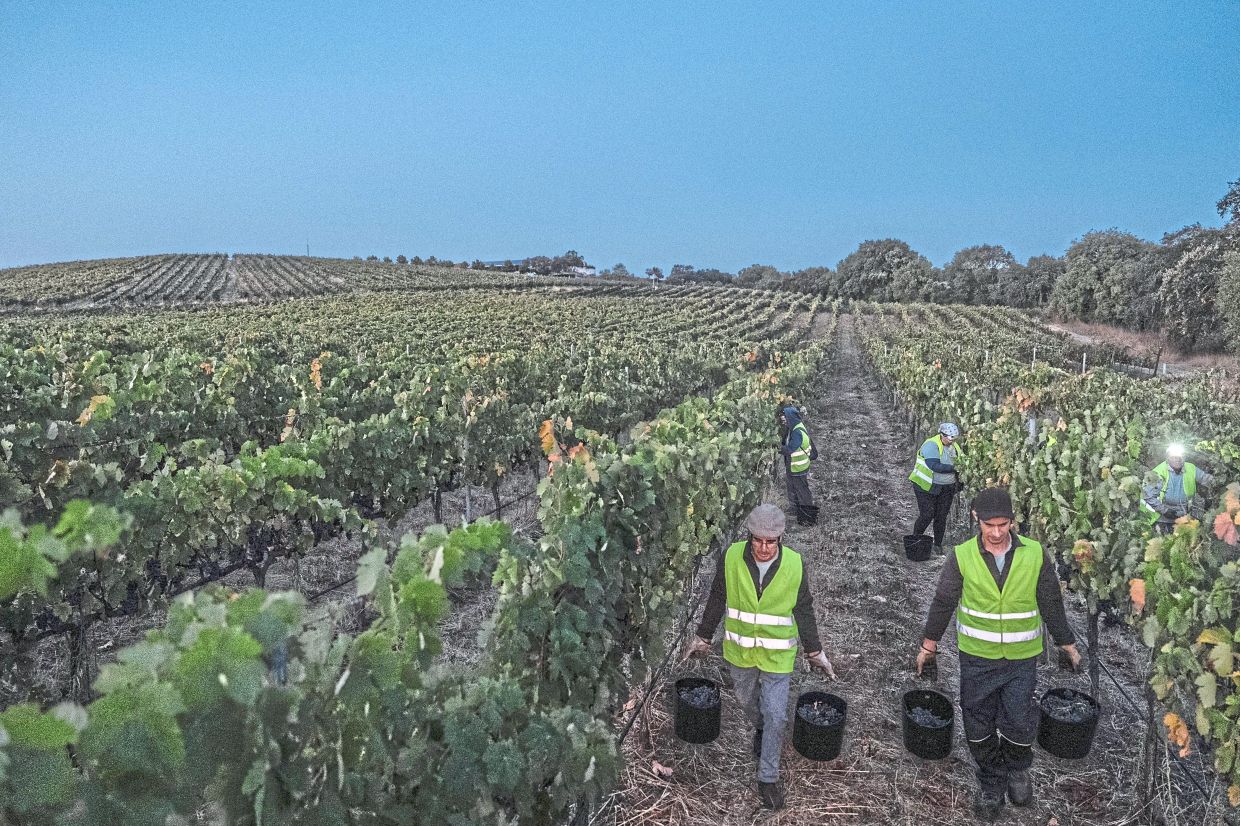
Under a moonlit sky and the glow of headlamps, workers gingerly pluck grape clusters while much of Portugal sleeps.
They harvest in the Alentejo region, sometimes called the "Tuscany of Portugal” for its rolling vineyards, olive groves and forests that supply cork for the wines. In this vineyard about a 90-minute drive east of Lisbon, the cool autumn night carries the smell of ripe fruit. The workers' laughter blends with the sound of rustling leaves.
The night harvest is a time-honoured practice in viticulture, meant to preserve the freshness of grapes and shield them from the adverse effects of daytime heat, sunlight and oxidation. As summers in Portugal grow longer, hotter and more unpredictable – in part due to climate change – the practice has become more common here.
Barbara Monteiro, co-owner and manager of the Herdade Da Fonte Santa vineyard said she struggled at first to convince her harvesters to work at night – midnight to 8am. They began doing so in 2019.
"Today, we can say they actually prefer this schedule, as they can often work almost another day, enjoy the day, and avoid the extreme heat we often experience here,” she said.
The wine harvest in Spain, Italy and Portugal generally takes place between late August and October, with variations based on the region, type of grapes and weather conditions.
Some vineyards have been harvesting at night for years. Like in parts of Italy, where they have been doing so for more than a decade.
The El Coto de Rioja vineyard in Spain’s famed La Rioja region opts for early morning harvests, beginning at 5am or 6am, according to Cesar Fernandez, the vineyard's technical director and winemaker.In Portugal's Alentejo region, daytime temperatures particularly in August can reach 40°C. At night, they can drop by as much as 20°C or more.
Climate change
Grapes are naturally sensitive to temperature shifts. Warmer weather can make them reach sugar maturity before developing a full flavour and ripeness, leading to higher alcohol levels but less complex wines.
Intense heat also speeds up acid loss and can trigger early fermentation as wild yeasts and bacteria become more active.By harvesting at night, vintners can lock in more vibrant flavours that improve the quality of the wine produced.
"Climate change has greatly influenced our harvest and the process and we’ve adapted over the years," Monteiro said.
Harvesters, too, don't mind the gentler temperatures.
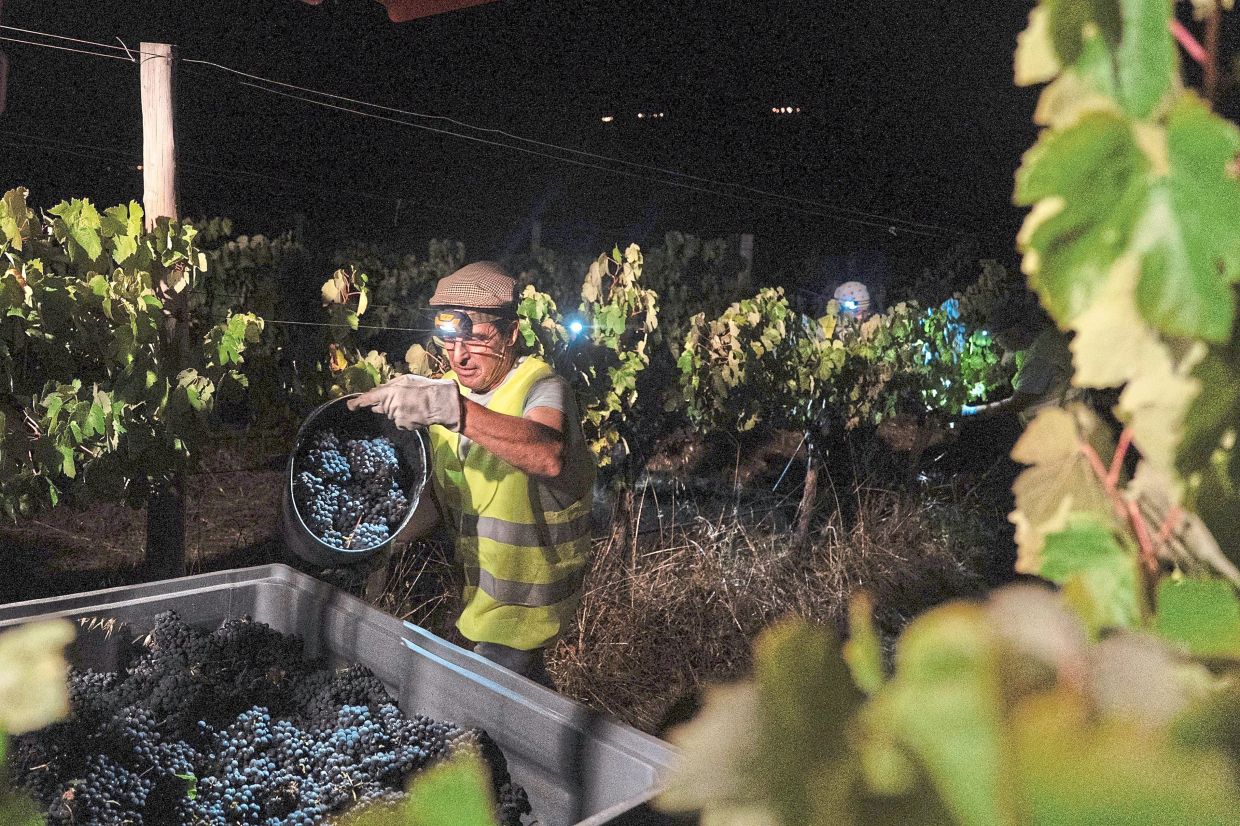
Foreman Vitor Lucas, 55, says he prefers the night harvest, even though there are some warm nights at the start of August.
Around 3am, workers take a short break to rest and enjoy a meal known as a "bucha”, consisting of cheese, olives, chorizo, bread and even a bit of wine. Then they return to the fields for another four hours before heading home.
The wine harvest here usually ends in September or October. That late in the season, temperatures have cooled significantly when foreman Lucas and nearly 10 others work the fields.
"It's a harvest we enjoy doing,” he said. – AP