Many cats long to sneak through the grass, bathe in the sun and climb trees. But letting them roam freely can be risky.
“The greatest danger to outdoor cats comes from cars,” says Judith Forster, a pet welfare specialist. Wild animals, parasites, toxins and even animal cruelty from humans can also pose threats.
If a cat is happy indoors, there is no need to let it out, Förster says. But indoor cats must be kept stimulated with scratching posts, climbing spaces, and play.
Your private garden can be a safe middle ground between keeping your cat indoors and letting it roam freely – provided it is well secured, as dangers can lurk between flower beds, ponds and fences.
It is particularly important that your cat stays in the garden, which means you need a fence that is high enough for your cat not to climb over.
According to the expert, the minimum height is two metres, or even more for athletic animals. In other words, to truly keep the cat from running away, the fence should also be difficult for humans to climb over.
A fence that slopes inwards at the top is ideal to make it more difficult for cats to climb.
If you want to be on the safe side, you can also secure the garden from above with a net, similar to ones used on balconies.
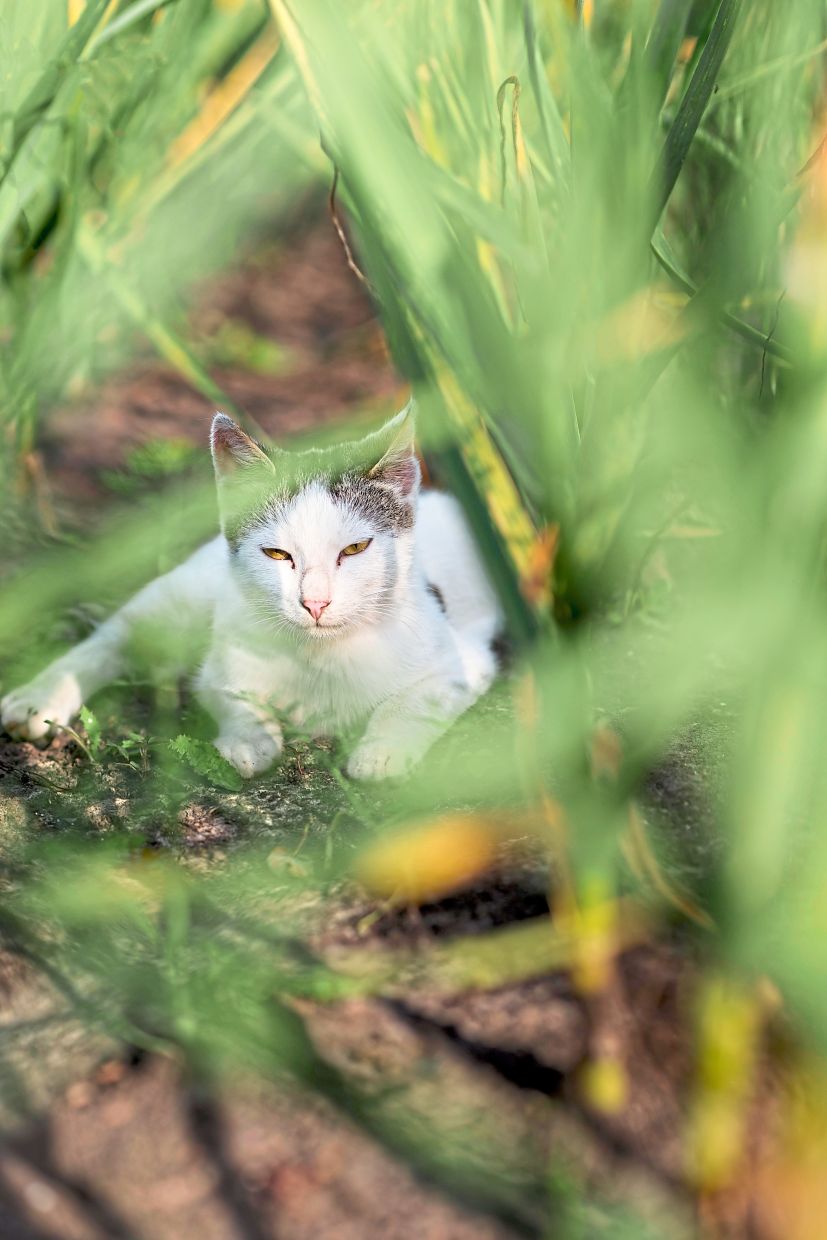
In addition to safety, design also plays an important role in making a cat feel comfortable in the garden. Variety is key here.
Pet owners can make the most of whatever natural features the garden has to offer, such as bushes, trees and shrubs. However, these should not be right next to the fence, as cats could use them to escape.
It’s also a good idea to provide some space for running and playing. “There are no limits to your DIY imagination here,” says Forster.
You may also want to consider limiting your cat’s access to trees or areas frequented by birds. Conservation experts believe cats are responsible for billions of bird deaths every year.
But caution is needed – many common garden plants are toxic to cats.
You’ll need to research which common local plants are most harmful.
According to animal welfare specialist Nadia Wattad cat owners in Europe should be wary of ivy, yew, monkshood, angel’s trumpet, broom and, in spring, crocuses, snowdrops and tulips.
Safer choices include lavender, valerian, lemon balm, catnip and cat grass – all harmless and much loved by cats.
Symptoms of poisoning can include excessive salivation, vomiting, diarrhoea and loss of appetite. In severe cases, cats will have trouble breathing, kidney failure or convulsions.
“It depends on how much of the plant has been ingested and what type of plant it is,” says Wattad. The surest protection, she adds, is to avoid toxic plants altogether and stick to safe varieties.
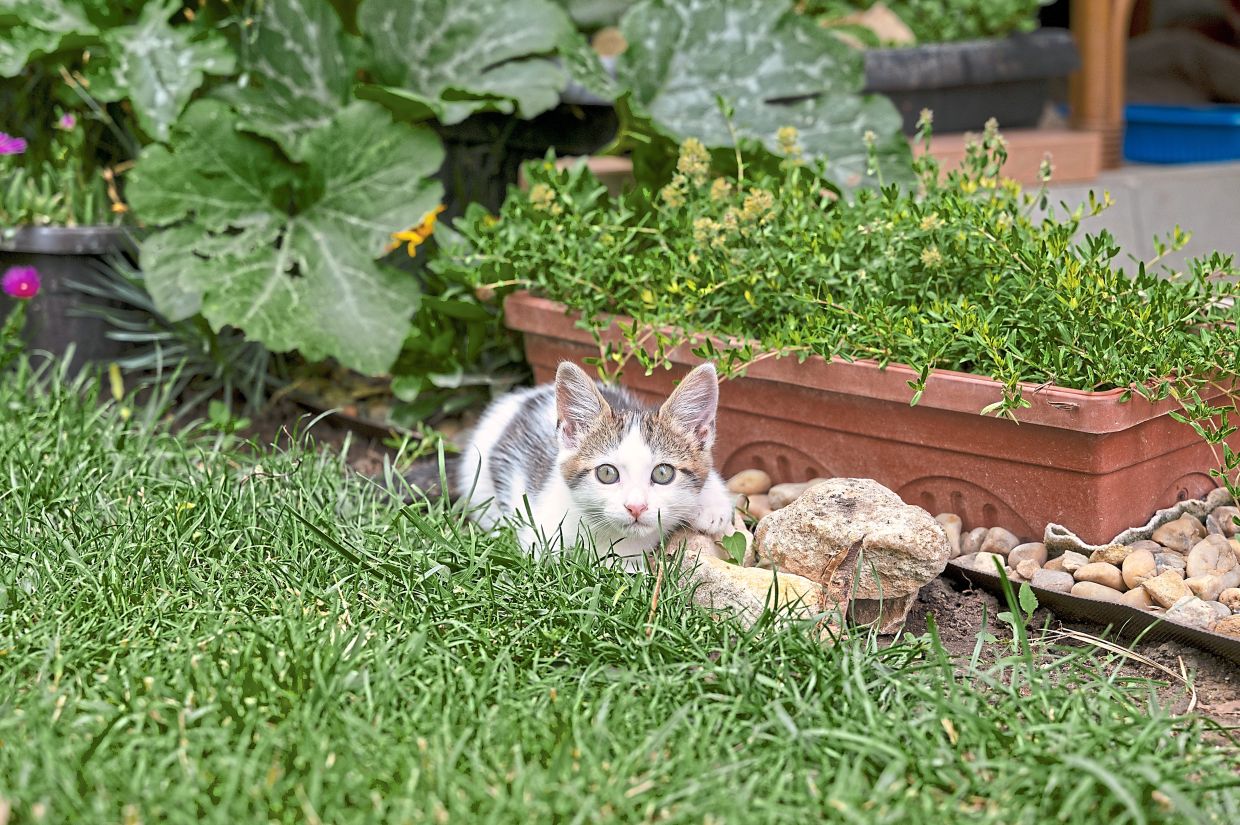
Garden water features can also pose risks. “Cats usually avoid water, but they can swim if they fall in,” says Wattad.
To make ponds safer, create a shallow edge so a cat can climb out easily. Swimming pools should also have some kind of cat-friendly exit.
Rain barrels, meanwhile, should always be securely covered with a solid lid. Nets are not enough, as they can collapse under the cat’s weight.
Many owners overlook everyday dangers in the garden.
Tools, nets and wires can injure cats and should always be stored safely.
Barbed wire is especially hazardous and has no place in a cat-friendly garden. Large-mesh nets and loose cords are also risky.
“Cats could get tangled up and, in the worst case, be unable to free themselves and strangle themselves,” says Wattad.
Invisible risks are just as serious: chemical fertilisers, weed killers, insect repellents and poisoned bait for rodents.
“Organic fertilisers or bio-fertilisers are more suitable for pet owners,” says Wattad. If a cat eats a poisoned mouse or rat, it can be fatal.
With the right precautions, however, cats can safely enjoy outdoor time. “The dangers in the garden are manageable,” says Wattad.
“For many cats, having access to the outdoors is a great enrichment. They benefit from plenty of exercise and variety, and they can also better live out their natural instincts such as hunting and exploring.”
Note: Before your cat sets paws in the garden, cats should always be neutered, vaccinated, microchipped and registered in a pet database – just in case they do slip beyond the garden fence. – /By MARIA BERENTZEN/dpa