
Martina De la Guti learned all the recipes she now serves at her catering business, Santa Maria Artisan Kitchen, from her grandmother and her nanny.
“My grandmother always said that the best moments were spent in the kitchen with good food,” said De la Guti.
“From a young age, I grew up offering to help her cook, and they would have me make soup or salsa or help clean the beans.”
Originally from Mexico City, Del la Guti moved to Dallas in 2019 and opened a business focused on serving authentic Mexican food to people who missed home. She started out by providing a weekly menu of prepared meals – a service she still offers – and then evolved the business into corporate and event catering in Grapevine.
Every aspect of De La Guti’s relationship to food comes with a story, whether it’s a family recipe or the dishes she uses to serve it on.
That includes mixiotes, one of the most traditional dishes in Mexico’s La Huasteca cuisine.
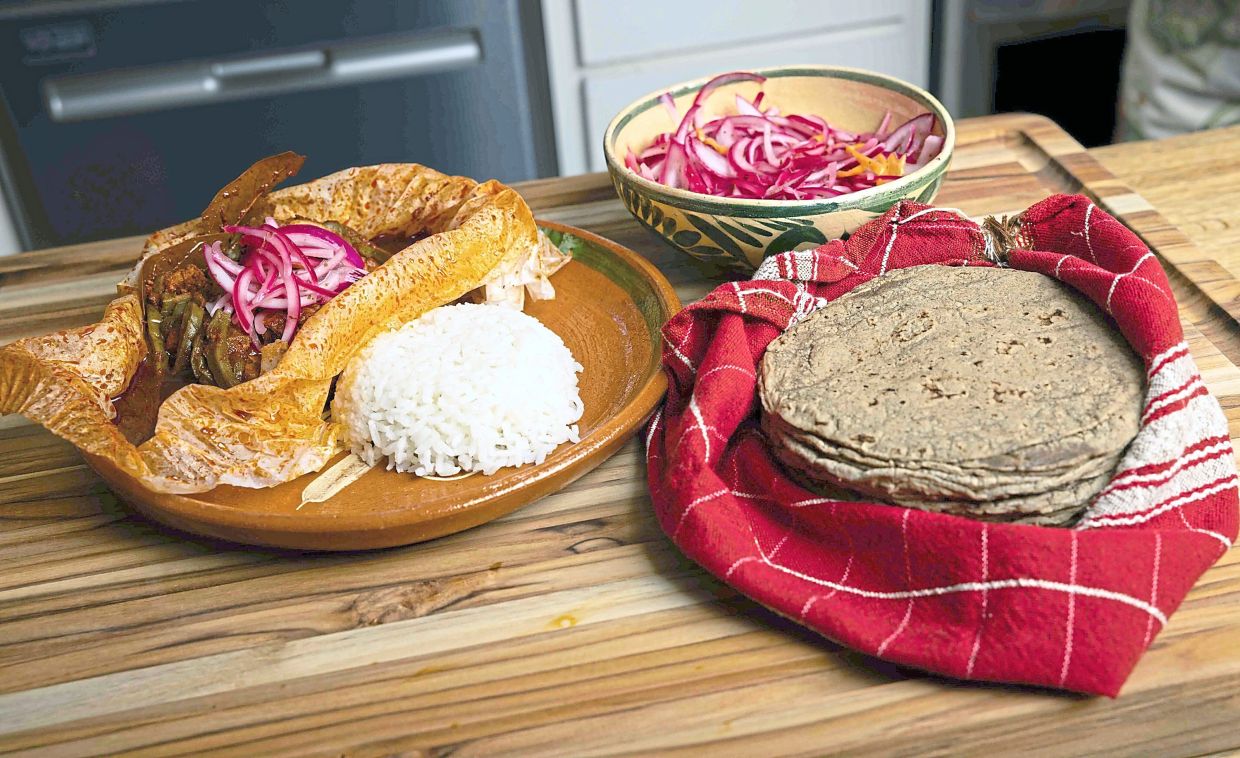
Mixiote comes served in a parcel of sorts, a piece of string that’s been dyed from the sauce inside poking out.
It’s similar to en papillote cooking in French cuisine, without the intricate folds and with a much longer history.
When you open the parchment paper bundle, you find meat – chicken, pork, lamb or goat – in a red broth that concentrates the flavours of ancient spices that have been used for centuries. Vegetables, such as nopales or potatoes, also appear within from time to time.
When De la Guti was a child, her grandmother would make mixiotes to thank doctors who helped save De la Guti’s grandfather.
“My grandfather’s name was Miguel, and September 28 is the religious feast day of Saint Michael the Archangel,” explained De la Guti.
“Every year, my grandmother would gather the whole family to help her prepare that dinner.”
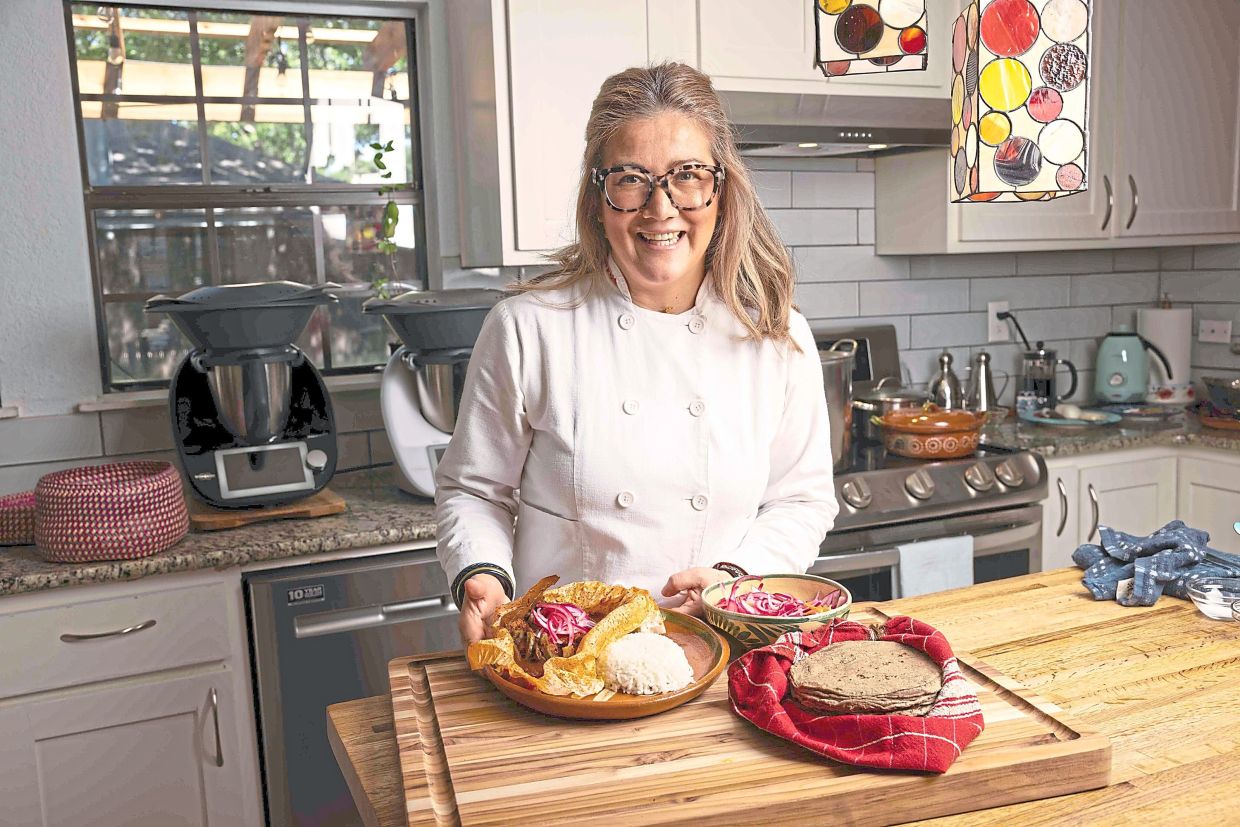
That tradition lasted for decades and was passed down to De La Guti’s mother.
“It wasn’t until she passed away that my family stopped doing it,” she said.
Mixiotes has a long history, and was eaten by the Aztecs more than 700 years ago.
“It comes from La Huasteca,” said de la Guti. “They are called mixiotes because that is the name given to the maguey leaf, the cuticle of the maguey, which is used to make the mixiote.”
The leaf, which is a kind of agave, is what was historically used to wrap up the dish, where parchment paper is more common today. The process of harvesting the leaves starts by removing the maguey’s skin, a thin, translucent membrane. It is then left to dry, and when it is ready to be used, it is moistened so that it can be easily handled.
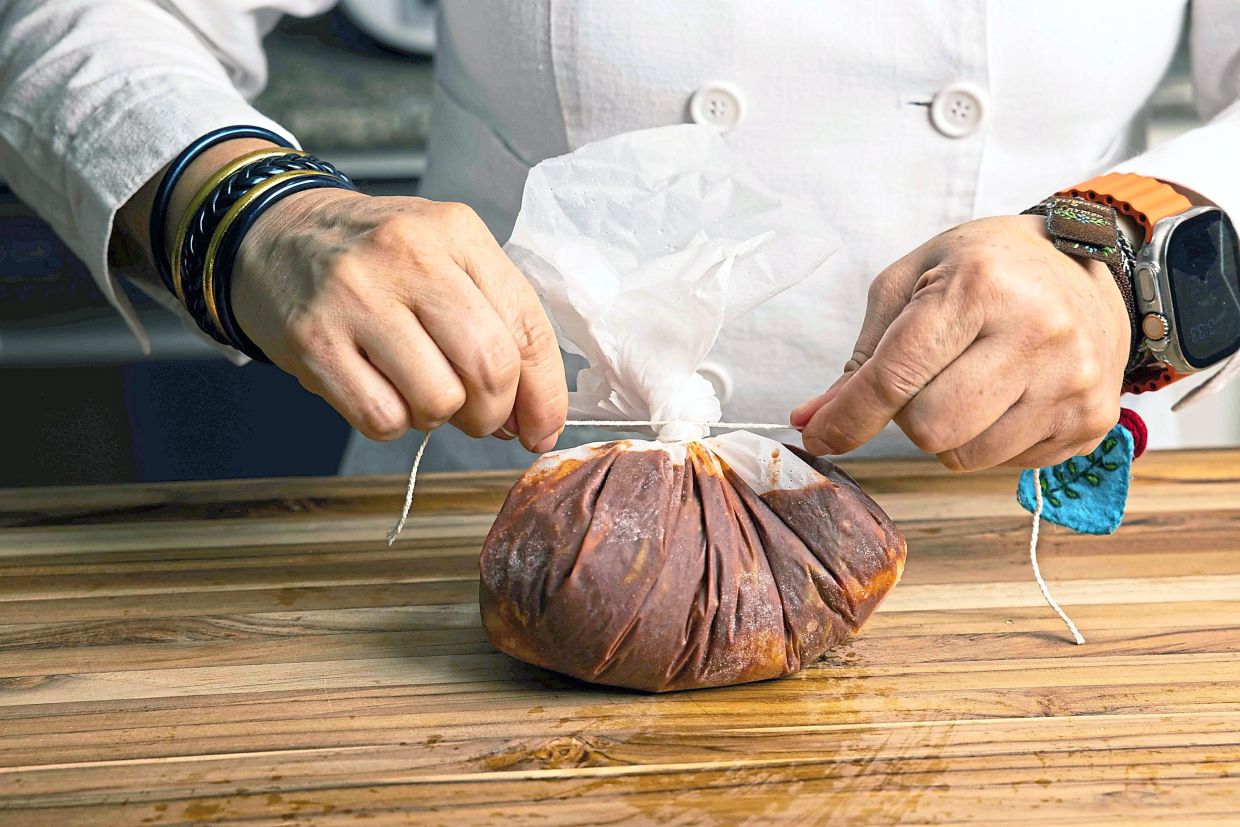
When it is time to prepare the dish, the maguey skin, or now parchment paper, is spread out. Pieces of meat are placed on top, covered in a sauce or marinade that has been prepared beforehand with several other ancient ingredients: guajillo chilli, ancho chilli, morita chilli, onion, garlic, cloves, pepper, oregano, bay leaves, cumin, salt and pepper, according to De la Guti’s recipe.
A couple of avocado leaves are added for a sweet flavour and a slightly bitter touch. Potatoes or nopales can complement the dish, too.
The next step is to take the edges of the agave leaf or paper and bundle it to make a sack, which is then twisted and tied with cotton thread.
Then, it is steamed for about two hours. When it is ready, each little parcel can be served with rice or beans and some spicy preparation. It’s also common to eat it with tortillas.
“Mixiotes are widely consumed at weddings, special occasions, or celebrations,” said De la Guti. “On weekends, mixiote is widely consumed in tacos.” – By IMELDA GARCIA/The Dallas Morning News/Tribune News Service