
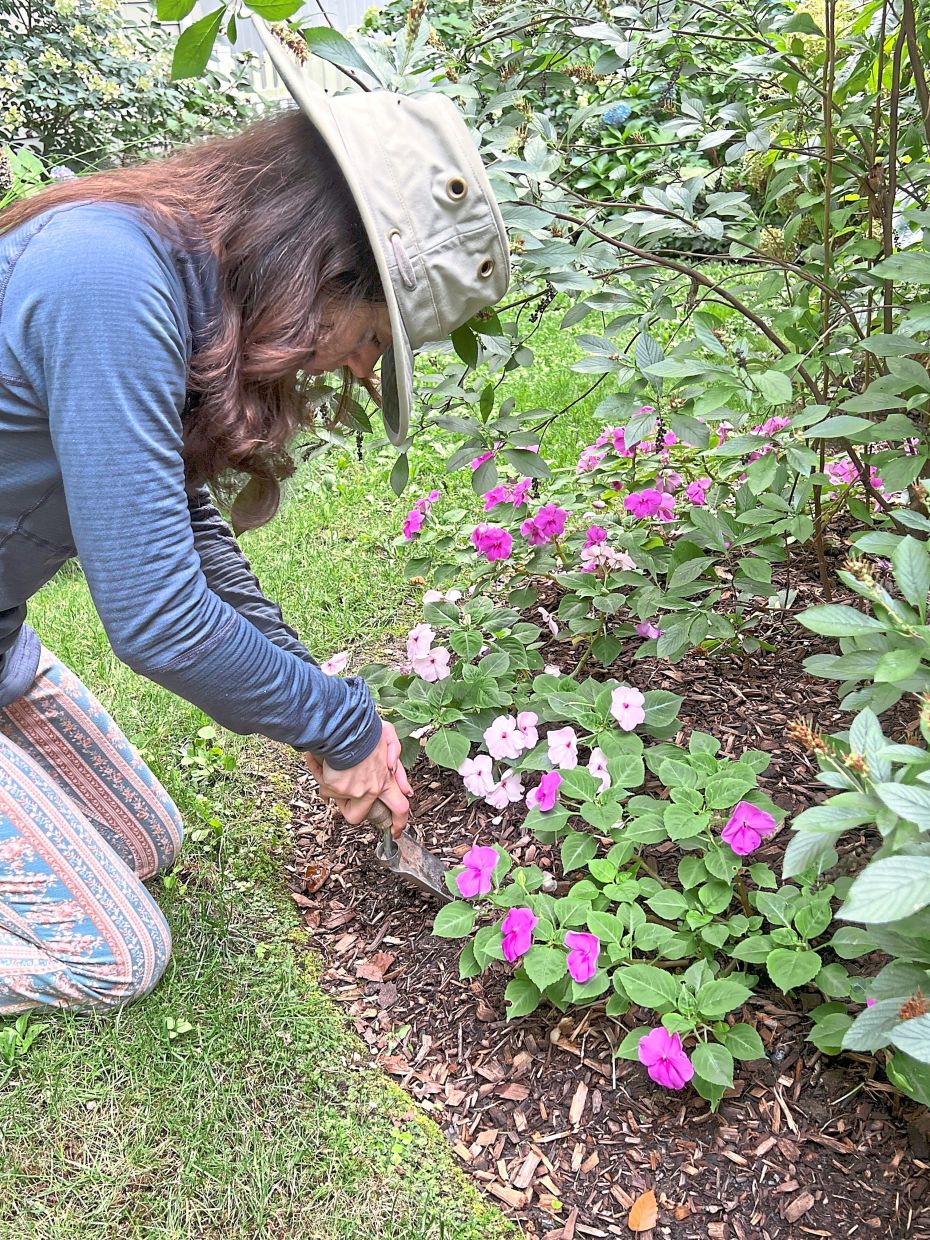
If you spend any time gardening, you probably understand what I mean when I say it feels good – despite the lifting, sweating and straining involved.
Yes, exercise is good for our bodies, but there’s something about digging in the dirt while listening to a bird soundtrack that lifts my spirits. Even the scent of the soil and mulch makes me happy.
As it turns out, there are scientific reasons for this.
In fact, there’s an entire field called horticultural therapy that’s dedicated to using "plant-based and garden-based activities to support people who have identified treatment needs,” according to Karen Haney, a horticultural therapy instructor at UCLA Extension in Long Beach, California.
"Research suggests 20-30 minutes (of gardening) a few times a week can reduce stress and lift mood, with benefits increasing the more regularly one gardens,” says Sarah Thompson, a professionally registered horticultural therapist in Boise, Idaho.
Yes, the simple act of being in nature can improve mood and restore focus, she said, but "the active engagement of nurturing plants, making decisions and seeing results over time adds a unique layer of meaning and satisfaction that passive time outdoors does not.”
In addition, Thompson said gardening has been shown to ease symptoms of anxiety and depression, and fosters a sense of calm, purpose and accomplishment.
A recent study at the University of Colorado-Boulder backs this up.
The researchers there provided one group of participants with an instructional gardening class, seeds, starter plants and a community gardening plot. They had a second group refrain from gardening for two years.
Better health
The gardening cohorts reported stronger social connections, lower stress levels and about a 7% increase in fibre intake, which have been shown to reduce risk factors for some physical and mental illnesses, including depression, high blood pressure, type 2 diabetes and cancer. They also reported a 42-minute weekly increase in physical activity, which the non-gardeners did not.
Previous studies have arrived at similar findings. In 2020, for instance, researchers at the University of Exeter and the Royal Horticultural Society in Britain found the health and well-being of gardeners over non-gardeners to be similar to that of residents of wealthy communities over those who live in poorer areas.
In addition to encouraging mindfulness, grounding people in the present moment and providing a sense of achievement, Thompson said, "research has also shown that exposure to sunlight can boost serotonin levels, while contact with soil introduces beneficial microbes linked to mood enhancement.”
So, it seems you just can’t go wrong with gardening.
"Physically, gardening improves strength, flexibility and balance. Socially, it can foster connection. Cognitively, it engages problem solving and creativity,” Thompson said, adding that it’s a highly adaptable activity.
"Gardening can be scaled to any space, ability or age, and its benefits are accessible to everyone,” she said.
Deep down, we gardeners have always believed this. Now, we have the science to prove it. – AP