There are recipes representing 32 countries in a new cookbook, and the authors have the pantries to prove it.
The Peruvian pepper paste aji panca, “timur peppercorns” from Nepal, Vietnamese ngo gai or culantro, black jeera seeds for lamb biryani – they’re all a new part of their cooking repertoire now.
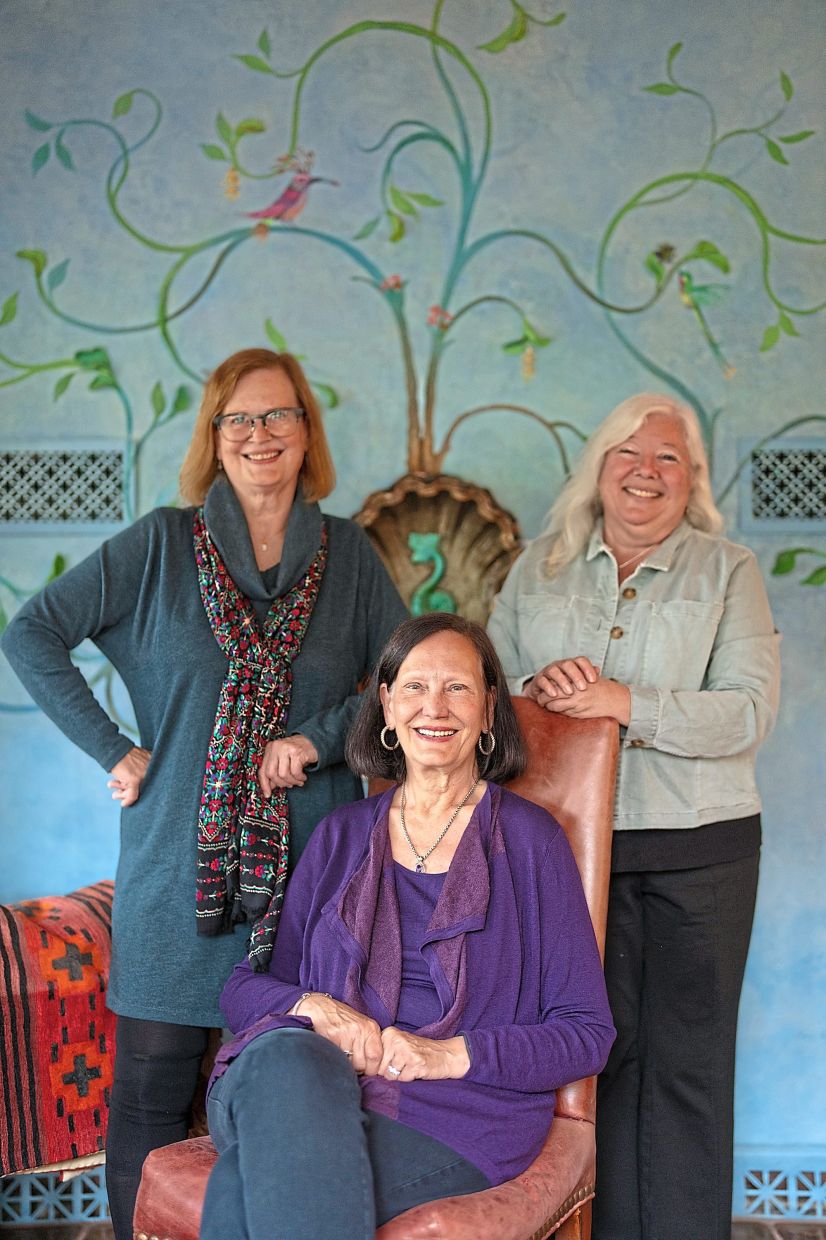
A trio of authors – two lawyers and a former Star Tribune Taste editor – interviewed immigrants to Minnesota, United States and compiled their recipes into a keepsake collection that tells the stories of their journeys through food.
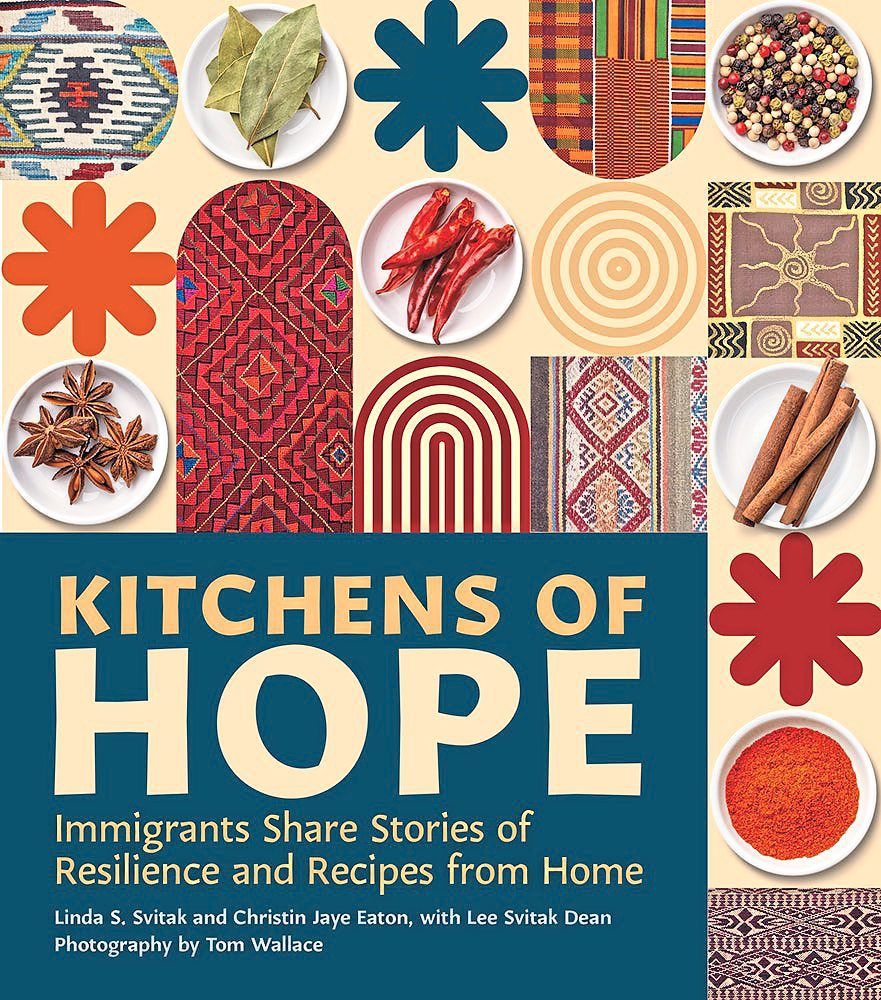
Kitchens Of Hope: Immigrants Share Stories Of Resilience And Recipes From Home, is now out from University of Minnesota Press.
“The most fun part, when we were testing recipes, is all the spices that we were using and the ones we were unfamiliar with that we were becoming accustomed to – you know, your kitchen just smells fabulous,” said Lee Svitak Dean, one of the authors and the former editor.
Dean joined her sister, Linda S. Svitak, and Christin Jaye Eaton to pen Kitchens Of Hope, with photos by former Star Tribune photographer Tom Wallace.
Telling stories
The book has recipes for Mexican mole verde, Hmong chicken soup, Ukrainian pirozhki, Pakistani khichdi, and Mongolian buuz or dumplings, among many others. But it’s not just measurements and detailed instructions on folding sambusa or stuffing cabbage rolls; each recipe comes from a person with a story to tell about how, and why, they came to the US.
Svitak, a retired trial lawyer, and Eaton, an attorney who has done pro bono work for cases involving immigrant status, were colleagues at Faegre Drinker Biddle & Reath, and both became involved with the Minnesota non-profit the Advocates for Human Rights.
Many of the immigrants featured in Kitchens Of Hope came to the authors through the Advocates for Human Rights, and the book’s proceeds will go to that organisation, which provides free legal help to asylum seekers and people who have been subjected to human rights abuses.
Svitak has volunteered with the organisation for more than a decade, and a colleague brought up the idea of writing a cookbook about the people the organisation had helped.
“That’s an interesting idea,” Svitak thought, “... but not something you do alone.”
She turned to her sister, who, in addition to writing about food for four decades at the newspaper, is the author of Come One, Come All and co-author of The Ultimate Minnesota Cookie Book.
“It was kind of remarkable,” Svitak said about working with Dean. “We both have our own spheres that we have expertise in, and I have always admired her writing and her creativity, but I don’t really see how the sausage is made, how you think about how to style a plate or how to make something, or all the things that go into a cookbook.
“To see it in real time, face-to-face, I thought it was really special,” she said.
It turned out that Svitak and Eaton’s skill sets in the legal realm were equally suited to cookbook writing.
“I’m always amazed by how much legal writing does actually make you a better creative writer,” Eaton said. “And for the stories, you know, we interview people for a living in a sense. You’re asking questions of people, listening to their answers and figuring out how to translate what they told you in a way that’s accessible to others,” she added.
The book is organised not by cuisine or course, but by the themes of the stories the contributors have shared: community, resilience, opportunity, justice, hope and celebration.
While some of the contributors are well-known restaurant chefs in the Twin Cities (an area in Minnesota) – Oro by Nixta’s Gustavo and Kate Romero, Vinai’s Yia Vang – the majority are what the authors describe as “everyday people”, home cooks who carry on their family histories through food.
“People came here with hope and they brought with them many, many contributions, not the least of which is all the food traditions, and that’s what we wanted to tap into,” Dean said.
Many of the people featured in the book had harrowing stories about leaving their homes and arriving in the US. Those needed to be handled with care, the authors said.
“We wanted to show the face of immigration, because that’s not one that is really shared. We see a very packaged impression of immigration, much of which is negative,” Svitak said.
“There’s a tendency not to know the people behind the immigration numbers, so this was an opportunity to give voice to those individuals to tell their stories in a way that some of them had never been asked before,” Dean added.
Some of the stories were ultimately too sensitive to publish.
“We had some beautiful, compelling stories where people decided they weren’t comfortable being in the book, people fleeing some type of danger or violence,” Eaton said.
But food was always the “throughline” (connecting theme).
“Some people on their travels, they had nothing with them except their recipes in their hearts and their minds,” Svitak said.
For all the challenges and uncertainty conveyed in these stories, there are also joys of flavour, memory, nourishment and above all, comfort.
“We asked people specifically for recipes that evoked home, so we got the really special ones, the one their grandma made when it was a special day, or the pozole or the pho for the big family gathering,” Eaton said.
The contributors “knew instantly” which recipes they wanted to share in the book, Dean said. “They fell into that comfort food category, and then also the celebration food. Those are the big moments in people’s lives.” – The Minnesota Star Tribune/Tribune News Service