



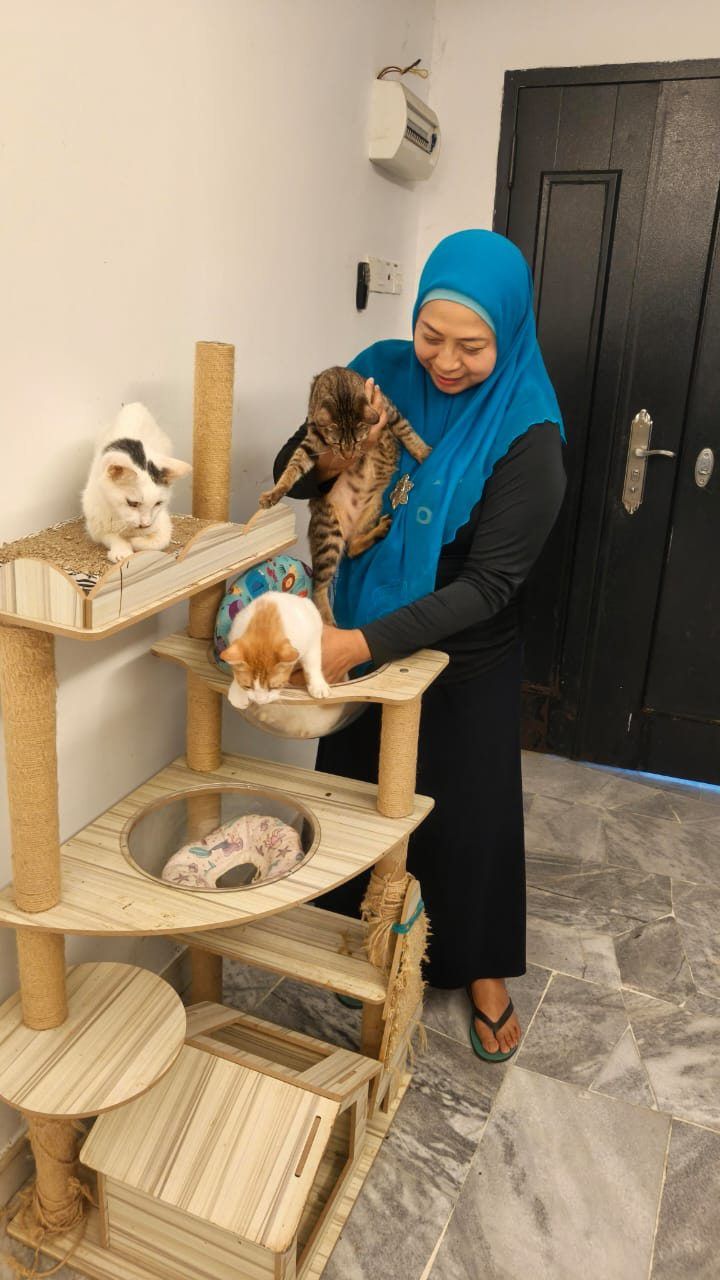
Whenever Noor Azila Ahmad runs her hands over her beloved fur children, Nosey and Jatey, it’s more than just a gesture of love and affection.
For Zill, as she is known to close friends, these loving and comforting strokes are her way of instinctively checking on the two most senior members of her 10-strong feline family, which ranges from four months to 11 years old.
Her hands, seasoned by years of caring for cats, have a story of their own. They once lovingly stroked and cared for a cherished companion who was with her long before she met her husband of 11 years.
“Boboy,” Zill recalls, her voice softening as her gaze drifts into the past, “was with me from my single days right into my married life. He was 12 when he died.”
It was Boboy, a ginger rescue cat, who first introduced Zill to the unique joys and inevitable heartaches of caring for an ageing cat.
The deputy general manager of a foundation in Shah Alam, Selangor, has been a serious cat parent since she started working almost 30 years ago, when she could finally afford to buy cat food with her own money.
Boboy’s journey through the ageing process and his illness left an enduring mark that shapes the attentive and loving care Zill now provides to Nosey, an 11-year-old reserved durian aficionado, and Jatey, a 10-year-old affectionate shadow.
Diagnosed with cancer, Boboy’s final months saw his health take a slow, steady decline.
“After his surgery, I noticed a slow but steady weight loss. But when he became very ill, I couldn’t feel his weight at all. It was both sad and frightening,” says the 53- year-old from Semenyih, Selangor.
While the illness ultimately claimed Boboy’s life, the experience of caring for him gave Zill invaluable lessons.
“It taught me that time with sick or elderly pets is never guaranteed, and that we must care for them with love and attention, especially in their final moments with the family,” she says.
A foundation of care
This experience became the foundation of her approach to her current senior cats.
“This is why I make it a point to give Nosey and Jatey as much love, comfort, and care as I can every day.”
Now, with Nosey recently recovered from a severe dental issue and Jatey slowly putting on weight after mouth ulcer, Zill takes the responsibility in her stride, using her past experience with Boboy as guide.
She has become sensitive to any changes in their behaviour, appetite or physical condition, and is committed to providing them comfort.
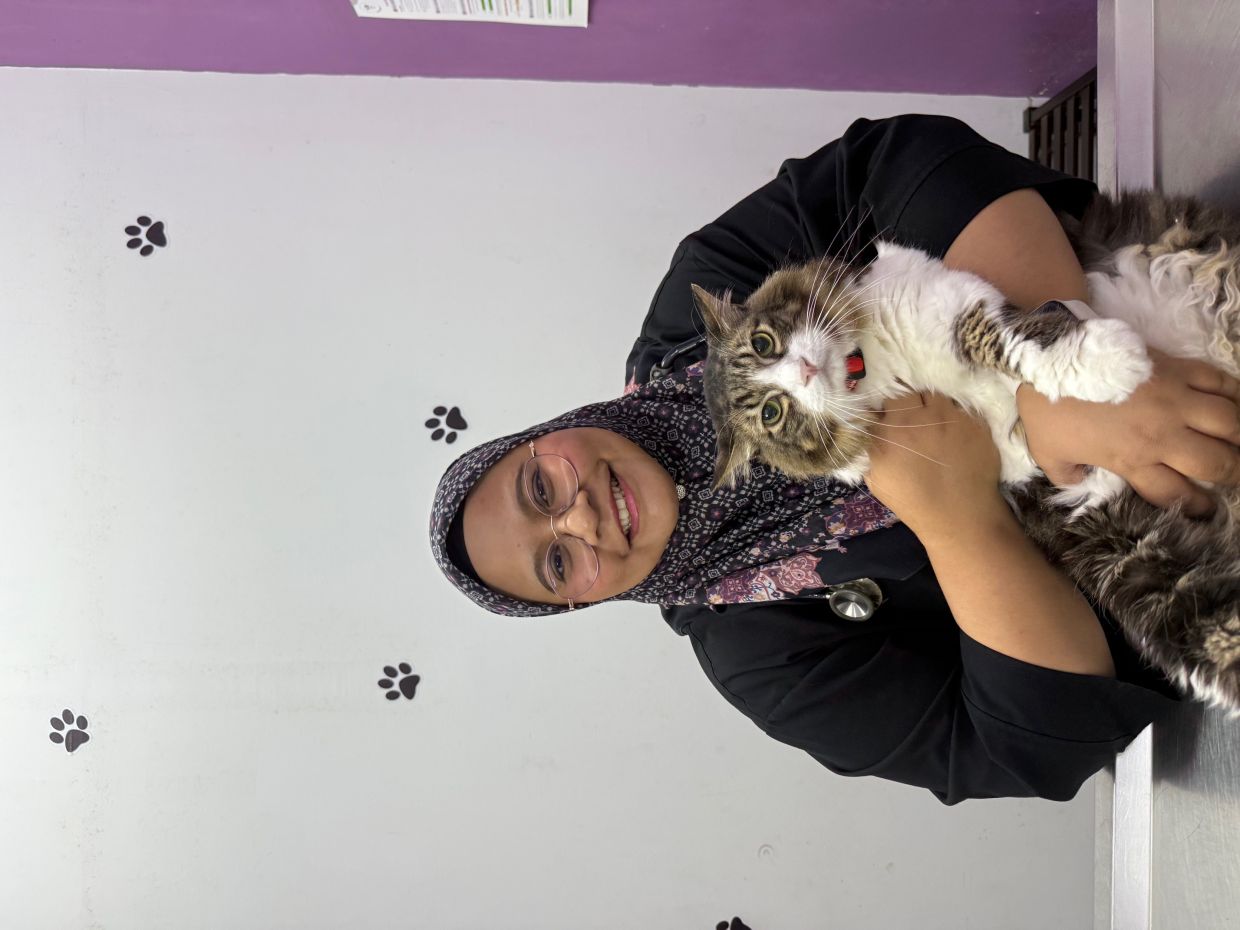
Her veterinarian, Dr Julida Ezatul Jalil of Juls Veterinary Clinic in Semenyih, knows very well the impact a past pet can have on future care.
“As a pet owner first, and a veterinarian second,” Julida Ezatul says, “I’ve walked the path many of my clients are on. Over the past few years, I’ve said goodbyes to two geriatric cats of my own. That experience has shaped how I approach senior pet care today – with empathy, honesty and a genuine desire to support both the pet and the family.”
One of them was Abang Isses, a rescued feline who was the very reason she decided to become a veterinarian.
Abang Isses was with her since she was 16, until he passed away of old age at 15 in 2019.
With 13 years of experience and a decade of running her clinic, Julida Ezatul agrees with Zill.
“While cats over 10 are typically considered senior, some as young as six or seven – depending on their management and care – can show the signs of ageing, such as lethargy, reluctance to jump or play, and weight loss,” she explains.
Julida Ezatul stresses the importance of preventive care.
“We recommend annual check-up for all cats starting from six years old and biannually for cats more than 10 years old.”
She highlights the top three health issues she often sees in senior cats: chronic kidney disease, diabetes and arthritis or mobility issues.
To manage these, Julida Ezatul advises pet parents to seek out diets “formulated for senior cats” with quality protein, digestible fibre and low fat content, and to consider adding supplements containing Omega-3, Omega-6 and glucosamine, which can also be beneficial.
Growing old together
For felines with mobility issues, Julida Ezatul has practical advice on home improvement: add ramps or steps to furniture, use low-sided litter boxes and ensure food and water bowls are easily accessible.
Above all, Julida Ezatul stresses the importance of looking for subtle signs of pain in cats.
“Cats are very good at hiding their pain,” she warns. “It might be too late to notice they are sick if you don’t know what you are looking for.”
She says a change in behaviour, reduced movement, increased vocalisation and inappropriate urination can all be indicators of underlying pain.
“Yes, my cats show signs of discomfort, and it is important for me to notice and respond,” Zill adds.
However, for Zill, the most challenging part is handling their fragile bodies while giving medicine or care.
“Their sickness and suffering are no different from that of a human being, so I need to be extra gentle and attentive,” she says.
Eventually, Julida Ezatul says, the most difficult conversations revolve around end-of-life care.
She approaches this with empathy and a genuine desire to support both the pet and the family, drawing from her own experience of saying goodbye to her old cats.
She shares that her very first cat, Abang Isses, was with her until his final days, when he was diagnosed with multiple organ failure, including kidney, liver, and thyroid issues.
“I had to make the difficult but necessary decision to put him to sleep after seeing him suffer and knowing there was no hope for him to recover, and no quality of life left,” she recalls.
This devastating experience became a driving force behind her approach as a vet.
“Caring for senior cats isn’t just about extending life, it’s about preserving its quality,” she says.
Both Julida Ezatul and Zill agree that caring for an elderly cat requires patience and a strong will to learn and adapt.
As she prepares for the years ahead, Zill says, “All the cats I have lost over the years – whether to illness or sudden, unexpected problems – remain in my heart and memories. But their loss will never stop me from protecting and helping other cats in need.”
