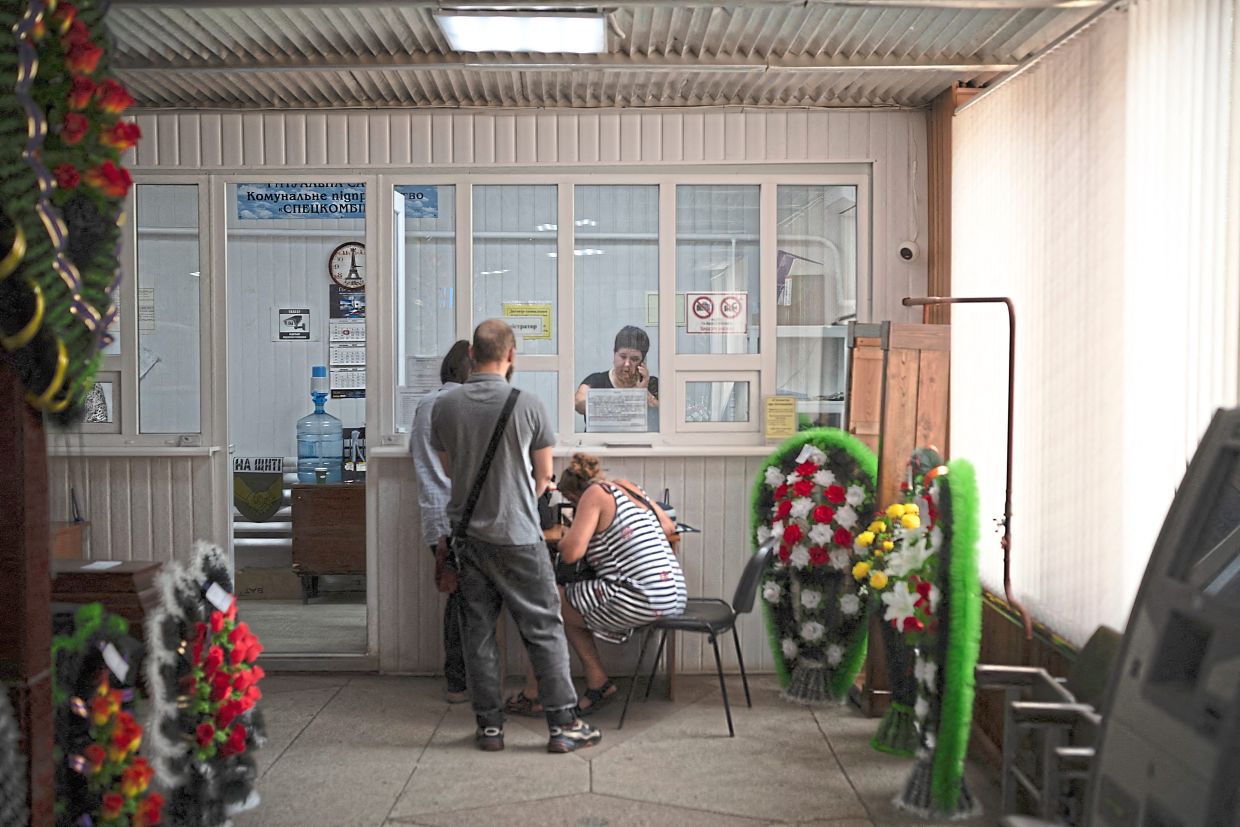
At a funeral home in the northeastern Ukrainian city of Sumy, Svitlana Ostapenko paced around as she prepared the dead for their final journey.
After five years of working in the funeral home, she was used to seeing dead bodies, but the growing number of dead – including young people from Russia’s invasion – was starting to overwhelm even her.
“Death doesn’t discriminate between young and old,” the funeral director said, breaking down in tears.
Ukraine’s funeral workers, who are living through the war themselves and have been repeatedly exposed to violent death throughout Russia’s invasion launched in early 2022, are shouldering a mounting emotional toll while supporting grieving families.
What’s more, Ostapenko’s hometown of Sumy near the Russian border has come under bombardment throughout the invasion but advancing Russian troops have brought the fighting to as close as 20km away.
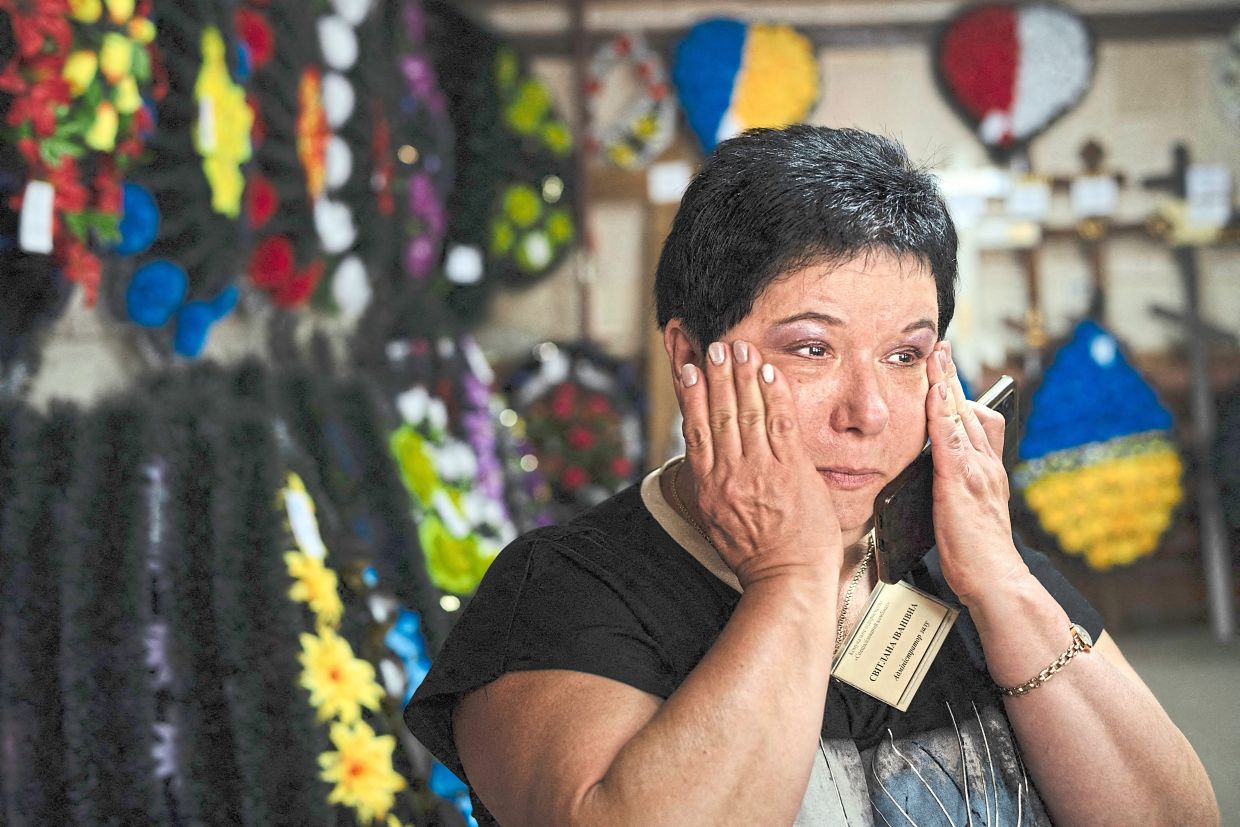
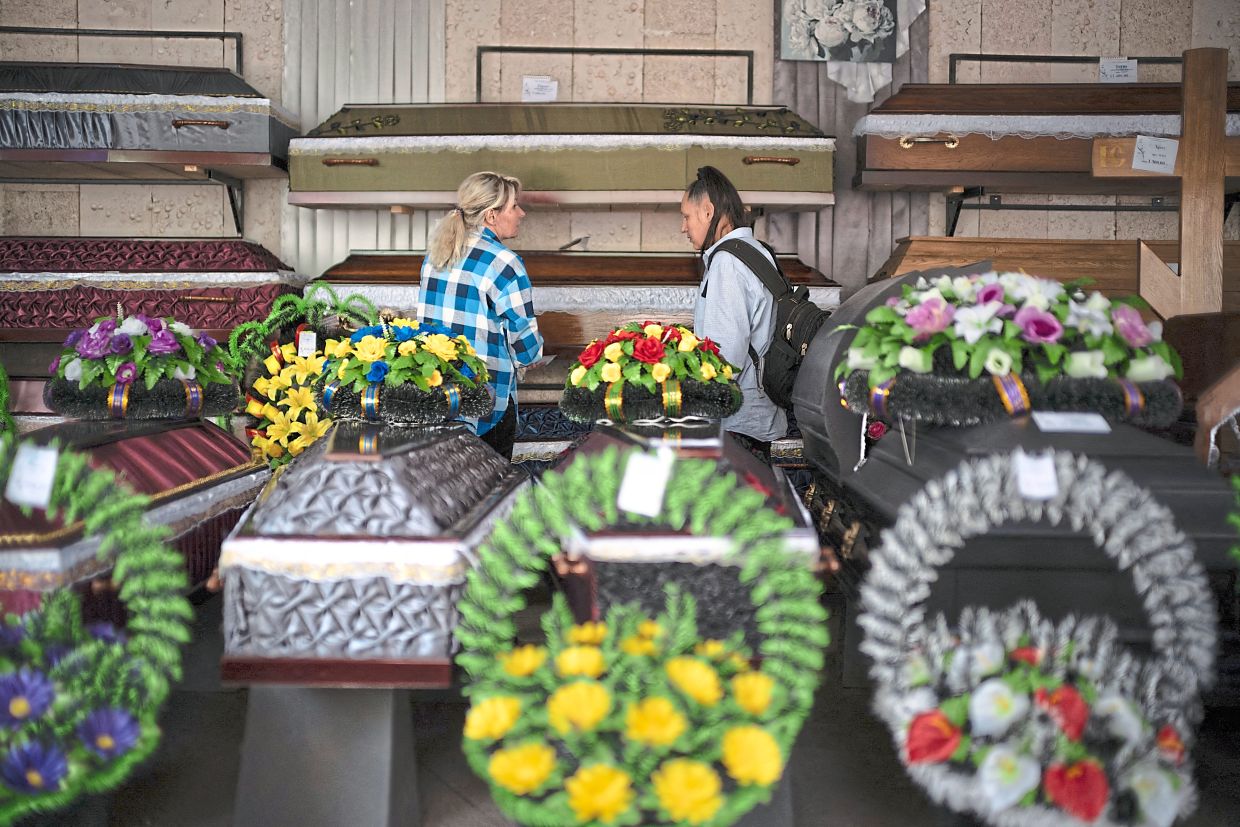
Every day, Ostapenko lays the region’s dead in coffins.
“One way or another, I’m getting by. I take sedatives, that’s all,” the 59-year-old said.
There has been no shortage of work.
On April 13, a double Russian ballistic missile strike on the city killed 35 people and wounded dozens of others.
Residents pass without giving a second thought to the facades of historic buildings that were pockmarked by missile fragments.
“We buried families, a mother and her daughter, a young woman of 33 who had two children,” said Ostapenko.
During attacks at night, she said she takes refuge in her hallway – her phone in hand in case her services are needed.
‘Not just numbers’
Every day, the Ukrainian regional authorities compile reports on Russian strikes in a war that has claimed tens of thousands of lives.
Petro Bondar, Svitlana’s colleague, said he noted the names of the victims in his notebook to “understand how much grief these bombings cause”.
“They’re not just numbers,” he said. “They were living people, souls.”
Igor Kruzo knew them only too well. His job is to immortalise their names in granite tombstones, along with portraits he paints stroke by stroke.
The 60-year-old artist and veteran said he found it difficult to live with the faces he has rendered for gravestones.
Soldiers, civilians, children, “all local people”, he said.
“When you paint them, you observe their image, each with their own destiny,” he said, never speaking of himself in the first person, avoiding eye contact.
At the cemetery, bereaved families told him about the deaths of their loved ones.
“They need to be heard.”
The conversations helped him cope psychologically, he said.
“But it all cuts you to the bone,” he added.
He used to paint elderly people, but found himself rejuvenating their features under his brush.
He remembered a mother who was killed protecting her child with her body at the beginning of the war.
“A beautiful woman, full of life”, whom he knew, he said.
“And you find yourself there, having to engrave her image.”
In recent months, his work had taken an increasingly heavier toll.
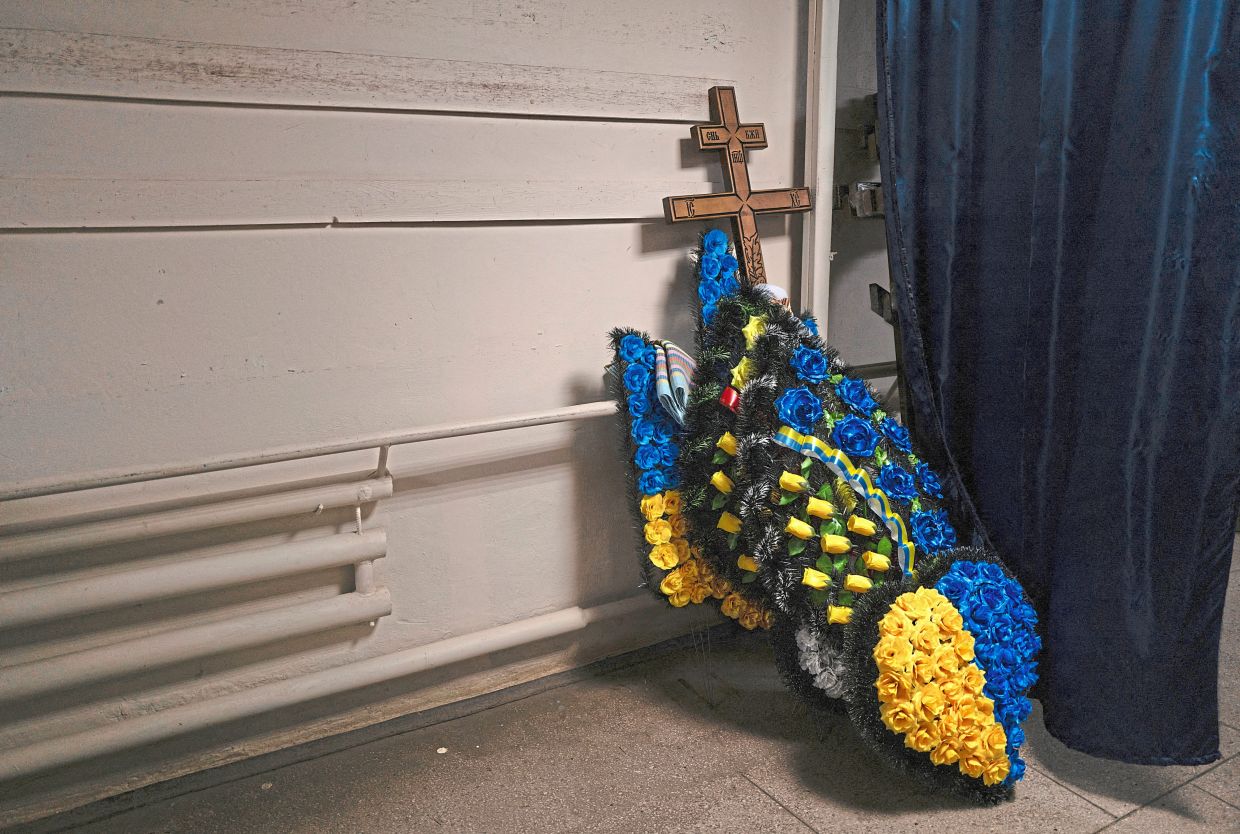
In the new wing of the cemetery reserved for soldiers, a sea of yellow and blue flags was nestled among the gravestones.
Enveloped by pine trees, workers bustled around a dozen newly dug holes, ready to welcome young combatants.
Dreams of the dead
In February, Ukrainian President Volodymyr Zelensky announced that 46,000 Ukrainian soldiers had been killed since 2022, and “tens of thousands” more were missing or in captivity – a figure that observers believed to be an underestimate.
Russia has not published its combat losses, but a tally by the independent newspaper Meduza and the BBC estimates the military death toll at more than 119,000.
“The dead appear in my dreams,” Kruzo said.
He said he saw soldiers crying over graves, or his daughter’s friends lying lifeless in the cemetery aisle.
“For the past three years, all my dreams have been about the war. All of them.”
Ironically, he said he was drowning himself in work because “it’s easier”.
He said he had never broken down, that he was tough man who served in the Soviet army, but that he was living in a “kind of numbness”.
“I don’t want to get depressed,” he said.
Behind him, a young, pregnant woman fixed her eyes on the portrait of a soldier smiling at her from the marble slab set in the earth. – AFP