With fewer than 800 left in Peninsular Malaysia, the Malayan tapir (Tapirus indicus) is categorised as an endangered species.
With a nickname the “panda of South-East Asia” due to its black and white body, this quiet and shy animal is essential to the ecosystem as it disperses seeds across different areas, which in turn, support forest regeneration.
However, habitat loss, roadkill and illegal hunting remain a threat to its existence.
In response to this, the China Enterprises Chamber of Commerce in Malaysia (CECCM), in collaboration with the Wildlife and National Parks Department (Perhilitan) held a corporate social responsibility programme called “Together For Malayan Tapir” last weekend.
Established in 2002, CECCM promotes cooperation among its organisation members, strengthens ties between Chinese enterprises and Malaysian society and works to expand bilateral trade.
Their purpose goes beyond business, and this year’s CSR activity with Perhilitan demonstrates their commitment to preserving the environment.
The initiative brought together about 70 participants, including representatives from 20 different companies, to plant 100 native trees at the Tapir Food Bank site in Hulu Selangor.

Once grown, these trees will serve as food sources for tapirs while helping restore their natural habitat.
“It is a pleasure to spend this weekend together, stepping out from our offices and into nature, to take part in the ‘Together For Malayan Tapir’ CSR event,” said CECCM President Ni Qingjiu in his opening speech.

“For Chinese enterprises operating in Malaysia, building bridges and roads may connect cities, but protecting nature and wildlife connects us with the future,” he continued.
Raising awareness
He added that the day’s tasks – planting trees and learning about the Malayan tapir – were part of an ongoing effort to raise awareness and inspire meaningful action for wildlife conservation.
After the tree-planting session, the attendees visited the Sungai Dusun Wildlife Conservation Centre, home to a number of Malayan tapirs.
There, they saw the tapirs up close, fed them and learned about the dangers to their survival, such as human-wildlife conflict, habitat destruction and illicit snares set in the forest.
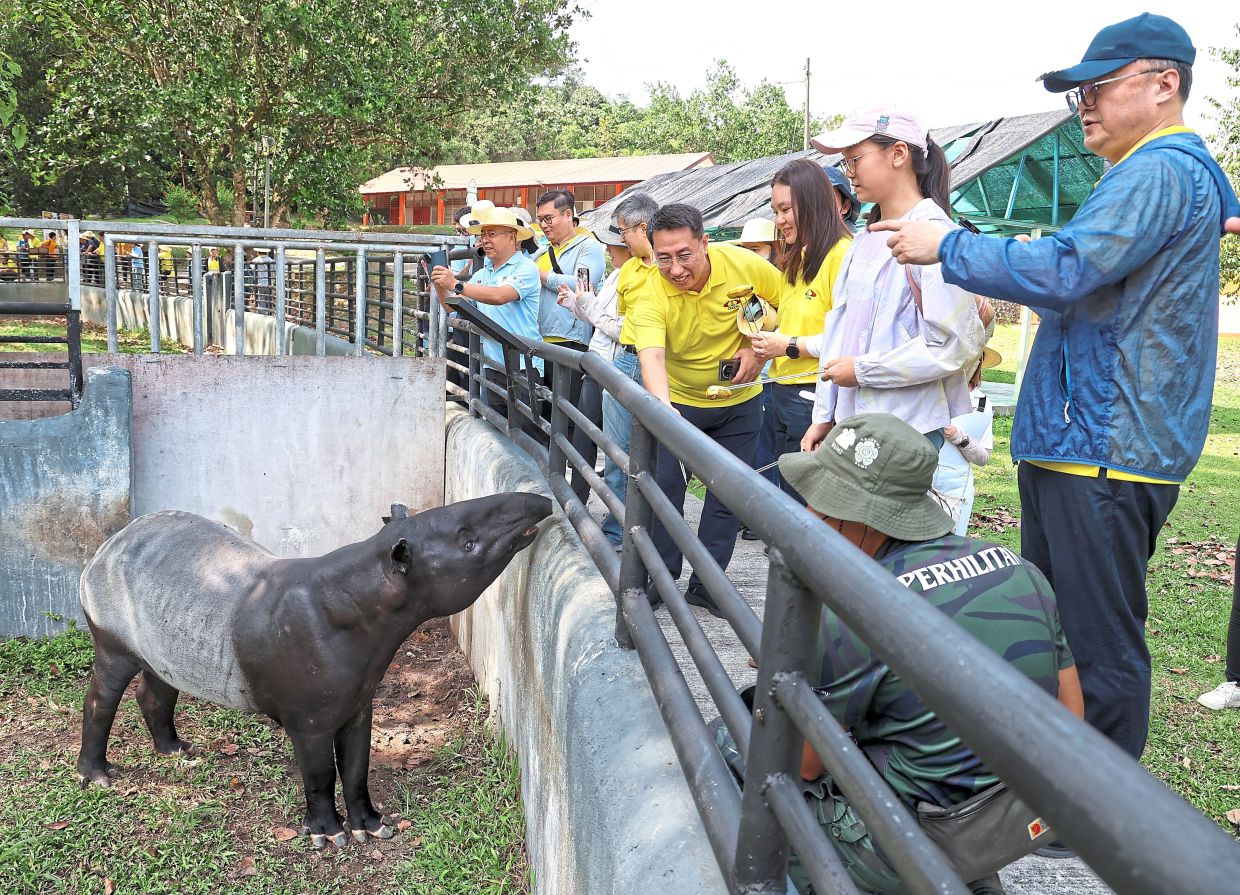
Ni later told StarLifestyle that CECCM chose this theme specifically because they wanted to tackle something both interesting and educational.
“Our members explored how we could take part in the protection of the Malayan tapir, which is a unique and important species in Malaysia,” he said.
He also mentioned the significance of the programme for everyone who joined.
“Many of us, including myself, had never seen a Malayan tapir before. These animals are exclusive to this region, and Malaysia is one of only four countries where they are found. This rarity makes us more appreciative of them.”
In addition to habitat restoration, the programme aimed to instil in participants a sense of duty to care for this species.
“I hope that through this event, people will become more environmentally conscious and understand how humans and wildlife can coexist peacefully,” Ni said.
Looking ahead, CECCM plans to continue organising similar initiatives.
“We will keep working with the authorities to cover important topics that are impactful to Malaysia,” he concluded.
For now, the planted trees represent a small but valuable step in ensuring the treasured Malayan tapirs can roam and enjoy Malaysia’s forests for generations to come.