
An Australian moth uses the night sky as a guiding compass during its yearly migration, according to a new study.
When temperatures heat up, nocturnal Bogong moths fly about 620 miles (1,000km) to cool down in caves by the Australian Alps. They later return home to breed and die.
Birds routinely navigate by starlight, but the moths are the first known invertebrates, or creatures without a backbone, to find their way across such long distances using the stars.
Scientists have long wondered how the moths travel to a place they’ve never been.
A previous study hinted that Earth’s magnetic field might help steer them in the right direction, along with some kind of visual landmark as a guide.
Since stars appear in predictable patterns each night, scientists suspected they might help lead the way.
They placed moths in a flight simulator that mimicked the night sky above them and blocked out the Earth’s magnetic field, noting where they flew. Then they scrambled the stars and saw how the moths reacted.
When the stars were as they should be, the moths flapped in the right direction. But when the stars were in random places, the moths were disoriented. Their brain cells also got excited in response to specific orientations of the night sky.
The findings were published recently in the journal Nature.
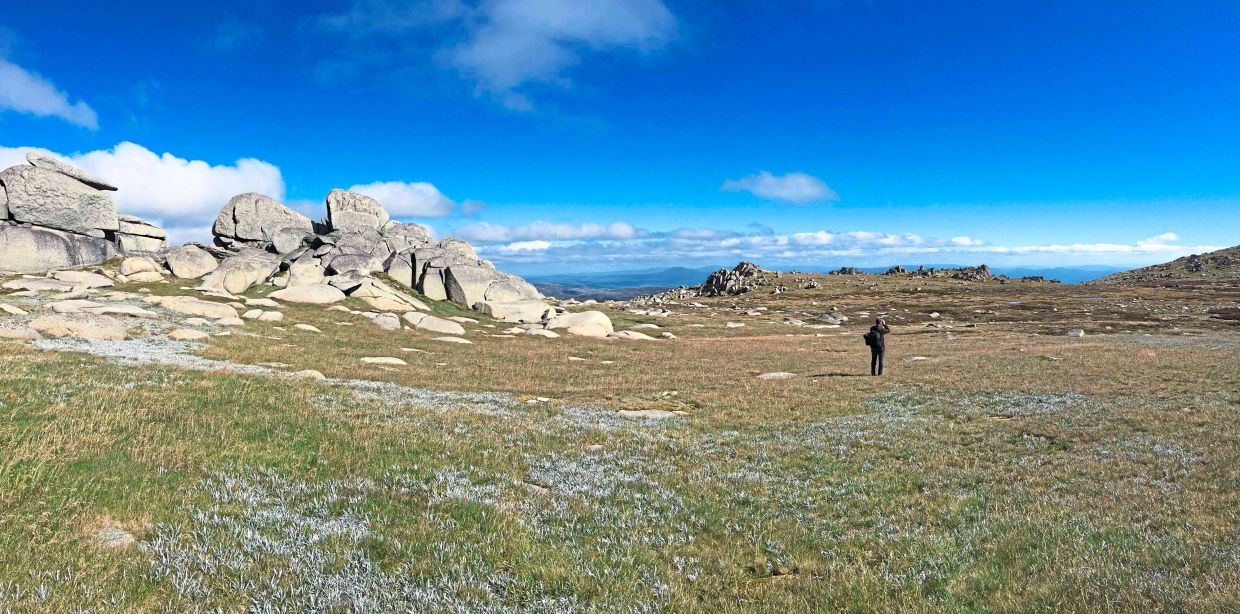
Sky as guide
It “was a very clean, impressive demonstration that the moths really are using a view of the night sky to guide their movements,” said Kenneth Lohmann, who studies animal navigation at the University of North Carolina at Chapel Hill and was not involved with the new research.
Researchers don’t know what features of the night sky the moths use to find their way. It could be a stripe of light from the Milky Way, a colourful nebula or something else entirely.
Whatever it is, the insects seem to rely on that along with Earth’s magnetic field to make their journey.
Other animals harness the stars as a guide. Birds take celestial cues as they soar through the skies and dung beetles roll their remains short distances while using the Milky Way to stay on course.
It’s an impressive feat for Bogong moths whose brains are smaller than size of a grain of rice to rely on the night sky for their odyssey, said study author David Dreyer with Lund University in Sweden.
“It’s remarkable that an animal with such a tiny brain can actually do this,” Dreyer said. – AP