
In Rome’s Colosseum and other amphitheatres in cities scattered across the sprawling ancient Roman Empire, gladiatorial spectacles were not merely human-versus-human affairs. Gladiators also were pitted against animals.
While there are depictions of these contests in ancient mosaics and texts, actual forensic evidence has been elusive, until now. Scientists have determined that bite marks on the pelvis of a man buried in what is believed to be a cemetery for gladiators near the English city of York, known at the time as Eboracum, were made by a big cat, probably a lion.
The man, estimated to be 26 to 35 years old at the time of death, appears to have lived during the 3rd century CE, when Eboracum was an important town and military base in the north of the Roman province of Britannia. The bite marks provide clues as to his suspected demise in the arena.

“Here we can see puncture and scalloping, indicative of large dentition piercing through the soft tissues and into the bone,” said forensic anthropologist Tim Thompson of Maynooth University in Ireland, lead author of the study published in the journal PLOS One.
“We don’t think that this was the killing wound, as it would be possible to survive this injury, and it is in an unusual location for such a large cat. We think it indicates the dragging of an incapacitated individual,” Thompson said.
The discovery illustrates how gladiatorial spectacles, often presented by emperors and other luminaries, that included wild animals were not limited to the empire’s major cities but extended into its furthest-flung provinces.
This man’s skeleton represents the first known direct physical evidence of human-animal combat from ancient Roman times, the researchers said.
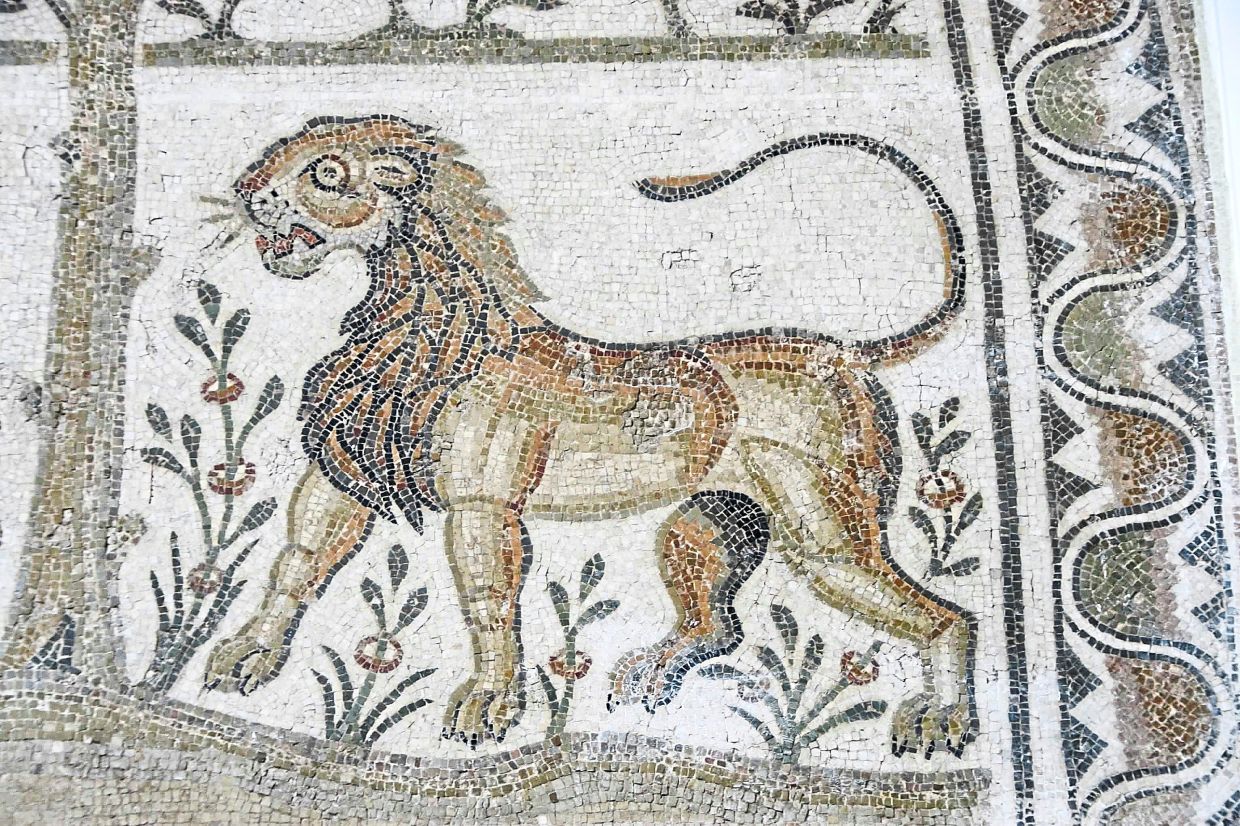
Wild animals used in such spectacles included elephants, hippos, rhinos, crocodiles, giraffes, ostriches, bulls, bears, lions, tigers and leopards, among others.
For instance, archaeologists in 2022 announced the discovery of the bones of bears and big cats at the Colosseum.
“Predatory animals – above all big cats but also sometimes other animals, for example bears – were pitted as combatants against specialist gladiators, known as venatores,” said study co-author John Pearce, a Roman archaeologist at King’s College London.
Large and aggressive animals also were pitted against each other – a bull and bear, for instance – and often chained together, Pearce said. Simulated hunts were staged in arenas as well, with humans against animals and animals against other animals, Pearce said.
Animals sometimes were used as agents of execution for captives and criminals – known in Latin as damnatio ad bestias – in which the victim was bound or defenceless, Pearce said.
Pearce described what may have occurred during the final moments of the man in York. The gladiator may have donned combined protective and theatrical costume. The animal may have been starved to encourage ferocity.
“Very speculatively, from the gladiator’s perspective, perhaps an approach like a matador’s would have been applied – to dodge and progressively wound, so as to extend the performance,” Pearce said.
“In this case, clearly that ended unsuccessfully, with it being likely, given the position of the bite mark, that the lion is mauling or dragging this individual on the ground.
“At the end, when one or both were dead, there would be a burial for the gladiator and the use of the animal carcass for meat for the spectators,” Pearce said.
Gladiators typically were slaves, prisoners of war, criminals and volunteers.
“For successful gladiators, a popular reputation as expressed in fan graffiti at Pompeii, likely money and the possibility of being freed if a successful arena star were the incentives and rewards,” Pearce said.
The York gladiator’s remains show evidence of spinal abnormalities perhaps caused by overloading to his back, as well as dental diseases. He had been decapitated, likely as a coup de grace after injury and defeat in the arena.
He was buried alongside two other men, their bodies overlaid with horse bones.
There are remnants of some of Eboracum’s buildings and city walls, though no amphitheatre has yet been identified.
Eighty-two human skeletons, mostly well-built younger men, have been excavated at the cemetery. Many had healed and unhealed injuries consistent with gladiatorial combat and had been decapitated, perhaps as losers in arena bouts.
“This is a reminder of the spectacle culture central to Roman public life,” Pearce said.
“This new analysis gives us very concrete and specific evidence of a human-animal violent encounter, either as combat or punishment, showing that the big cats caught in North Africa were shown and fought not only in Rome or Italy but also surprisingly widely, even if we don’t know how frequently,” Pearce said. – Reuters