
Nacho Fernández Suárez winces when he recalls the eight years he spent as an administrative assistant doing odd errands in the Argentine Congress. He was part of an inclusion programme for people with disabilities.
“They bullied me, they pushed me, they treated me poorly,” said Fernández Suárez, 34, who has an intellectual disability. He was also bored, he added, barely given any work to do.
Boredom is not much of a problem these days for Fernán-dez Suárez, who is part of the staff at a popular restaurant in Buenos Aires that is believed to be the first eating establishment in Argentina largely operated by neurodivergent individuals.
The restaurant, Alamesa, is seeking to change the paradigm of what inclusion in the workplace means for people who often do not have a clear path to employment after their formal schooling ends.
Even though Fernández Suárez earns about one-third of what he did as an assistant, his mother, Alejandra Ferrari, said he was thrilled because he “feels indispensable”. (The programme in the Argentine Congress he was hired through has been dissolved.)
“When you go to work and have a purpose, it changes your life,” she said.

That is precisely what inspired Dr Fernando Polack, a renowned paediatric infectious disease specialist in Argentina, to open Alamesa last year as part of a deeply personal quest to figure out how his daughter, Julia, 26, who is autistic, could gain independence in a world that seemed hostile to her needs.
“I realised that the way I could take charge of what we’re going to do with Julia was to build something, and that had to be a job,” Dr Polack said. “And to do that, I had to create that job.”
He dipped into his personal and family savings and settled on the idea of a restaurant in part because of childhood memories of feeling safe and secure while sitting around the dinner table with his large extended family during holidays.
A welcoming space
Dr Polack, who ran clinical trials for Pfizer’s Covid-19 vaccine in Argentina, quickly figured out he could apply his years of scientific, methodical research to build a team made up of people with non-traditional sets of skills.
Julia was the restaurant’s first official employee. The staff then expanded with other neurodivergent people Polack knew through Julia and word of mouth.
“To see the potential, that’s what we dedicate ourselves to – that is perhaps the heart of the venture, understanding the potential of each person, the richness of each, what they can contribute,” said Dr Polack.
Sebastián Wainstein, Alamesa’s executive director who oversees daily operations, says the restaurant benefits from the differences among neurodivergent individuals.
Fernández Suárez, for example, “is super chaotic”, Wainstein said, “but he’s a character”.
“He’s very friendly when it comes to dealing with customers,” Wainstein said.
Among the 40 neurodivergent employees of Alamesa, Fernández Suárez also stands out because he can openly talk about his intellectual disability, which he says is the result of having contracted meningitis as a baby.
Most are not able to explain their disability, and no one asks them for a diagnosis before they are hired, Wainstein said.
None of the neurodivergent employees have specific jobs at Alamesa because the goal is for everyone to be able to do everything.
Polack says Alamesa’s “real secret” is to harness each individual’s strength to “get out of this narcissistic idea” that a person who is neurotypical “is the superior being”.
“Alamesa breaks with the idea that people with neurodivergence want to be like people without neurodivergence,” Polack said.
In the process, the restaurant, which is the subject of a recent documentary, has created a community.
“We go to the movies, to drink coffee, go bowling,” said Sofía Aguirre, 27, a neurodivergent employee.

A culinary haven
Nestled in an upper-middle-class Buenos Aires neighbourhood bustling with stores and restaurants, Alamesa is an oasis. Music is played at a low volume, and soundproof material on the walls and ceiling ensures there is no echo from the cacophony of conversations.
It is just one of the ways Alamesa tries to accommodate its staff, many of whom are particularly sensitive to loud and unexpected noises, a common trait among those on the autism spectrum.
The restaurant, which serves only lunch, has a state-of-the-art kitchen with no knives because all raw materials come sliced and diced. There are also no open flames - the food is cooked in special ovens that use hot air and steam. To help employees with reading difficulties, ingredients are colour-coded so they can easily be matched to any of the 10 main courses and five desserts on the menu.
The menu, with an emphasis on international cuisine, includes an eclectic mix of dishes, such as a pastrami sandwich, salmon with panko breadcrumbs and Moroccan chicken with couscous.
“A lot of people came at first because of the concept of an inclusive restaurant; the food was secondary,” Wainstein said. “Now, people are also starting to come because ‘Hey, I ate really well’.”
Alamesa employs about a dozen workers without neurological issues, many of whom are psychology students or recent graduates from a local university, who provide support to the other workers as needed.
They can help resolve interpersonal conflicts among the neurodivergent staff and can tell if a worker is getting tired and needs a break.
Having such a large staff is one challenge of running Alamesa, but the restaurant manages to turn a small profit even as Argentina is enduring difficult economic times.
When it first opened, the restaurant was fully booked for weeks amid widespread attention from the news media and famous personalities, including Pope Francis, who is from Argentina.
“I congratulate you on the work you do,” the pontiff said in a video message addressed to Alamesa’s employees. “Thank you because it is a contribution to society, a unique contribution, a creative contribution from each one of you.”
Since then, the rush has subsided, but walking into the restaurant without a reservation can still mean having to wait. That has led to uncomfortable situations for Sofia Aguirre, who serves as a hostess.
“Sometimes people ask, ‘Please let me in’,” said the neurodivergent hostess. “Sometimes people get insistent and you have to say, ‘Sorry, there’s no room’.” Although the neurotypical employees continue to play roles such as running the cash register and dealing with suppliers, they do so with a neurodivergent employee by their side so they can learn the ropes.The goal is to make neurotypical workers superfluous.
“Our idea, and it was never utopian, it was always very concrete,” Wainstein said, “is that one day all neurotypicals will disappear, and they will take charge.” – @ 2024 The New York Times
Inclusion on the menu
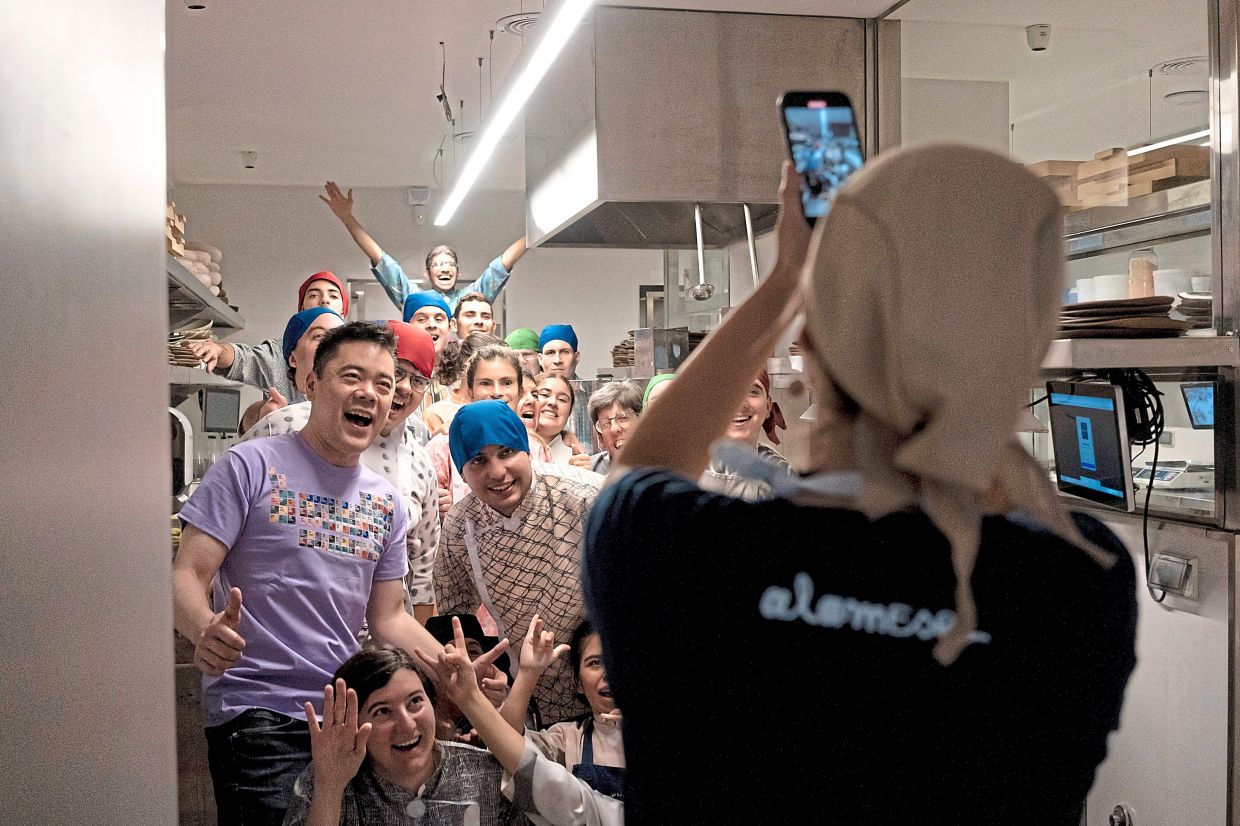
Alamesa is staffed almost entirely by workers with neurological challenges, tapping into often overlooked talent and harnessing their skills. Photo: NYT
Neurodivergent describes individuals whose brains function differently, including conditions like autism and dyslexia. Photos: 123rf
Thoughtful man looking for a solution with gear mechanisms over his head
Supporting individuals with autism fosters inclusivity, understanding, and acceptance.
- 123rf