Find out what are Malaysia’s favourite exercises


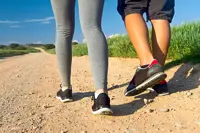
Walking remains the number one preferred exercise for the general Malaysian. — Photos: Filepic

In my last column, I discussed how easy it is to clock in a mile (1.6km) a day by walking at a pace suited to your fitness level.

Well, if you haven’t already started, do get on it to reap the benefits.

Apparently, daily walking and running were the two most popular fitness activities in Malaysia last year.

This data comes from the 2025 Garmin Connect Data Report, based on millions of wearable technology (fitness trackers) worn all over the world.

There’s a clear shift in fitness trends.

The top five activities worldwide, based on total volume, were:

  • Running (outdoors)
  • Walking
  • Cycling
  • Strength training, and
  • Indoor cardiorespiratory workouts, which range from using machines and dance classes to high intensity interval training (HIIT).

Also, kudos to Asians as we are adopting a more balanced mix of cardiorespiratory and strength workouts, compared to our Western counterparts, although racket sports are rapidly gaining momentum.

In our region, strength training grew 27%, surpassing cycling for the first time and entering the top three sports, indicating a shift towards more balanced training routines.

The data showed pickleball participation spiked 700% year-on-year, padel climbed 132%, Pilates grew 43%, and strength training increased 29% globally, signalling a rising interest in diverse and social forms of fitness.

Pilates has been around for decades and people are finally beginning to see the benefits of incorporating this core-centred mind-body exercise in their workouts.

Strangely, there was no mention of yoga – perhaps it has fallen off the bandwagon.

In terms of strength training, women are picking up the pace, recording 6% more sessions than men.

Now, let’s look at running, walking and cycling.

More than a quarter of runs recorded were 30-45 minutes long, while walkers tended to stick closer to 15- to 30-minute sessions.

The data showed that nearly half of cycling activities lasted an hour or longer.

Clearly, cyclists love what they do as they spent a longer time exercising than any other group.

If only our population can achieve this every year, then we could drastically cut down healthcare costs and sick days, and save on insurance premiums.

High step count

Strength training is picking up among women who realise the importance of keeping their muscles and bones strong. — Los Angeles TimesStrength training is picking up among women who realise the importance of keeping their muscles and bones strong. — Los Angeles Times

Topping the list of highest average steps taken a day were people from Hong Kong (10,663 steps), South Korea (9,969) and Spain (9,937).

Not bad that two Asian countries made the list.

The scores for Malaysia, however, were not revealed.

For the record, the Asia region refers to China, Hong Kong, Taiwan, Japan, South Korea, Singapore, Malaysia, Indonesia, Vietnam, Philippines and Thailand.

While 10,000 steps is a popular goal, research indicates that significant health benefits, such as reduced death and heart disease risk, can be achieved with about 7,000 to 8,000 steps per day.

For adults aged 60 and older, 6,000 to 8,000 steps is ideal.

Anything more doesn’t add to the health or fitness benefits.

If you don’t own a smartwatch, you can calculate your steps this way with a normal watch: a 10-minute walk typically consists of 1,000 to 1,300 steps for most people, assuming a moderate, brisk pace of roughly 100 to 130 steps per minute.

To move up one gear, start with a very, very slow jog first to trick your brain into believing that you’re actually running.

The pace of a slow jog can be slower than a brisk walk, so don’t get alarmed or annoyed when walkers whizz past you.

Then increase the speed.

Even better, alternate your brisk walk with perhaps 100-200 steps of a slow jog.

Experiment with what works for your body and progress from there.

Preference by age

Padel ball is a racquet sports game that combines the elements of tennis and squash. Padel ball is a racquet sports game that combines the elements of tennis and squash.

According to the report, different age groups had different preferences for the types of exercise they do:

  • Ages 18–29: Unsurprisingly, the youngest age group did the most amount of running, both outdoors and on the track.


    They haven’t yet found the extra cash to join a gym, so strength training was not on their agenda.

  • Ages 30–39: This age group, with a bit more money to spend, logged the most strength training, indoor cardiorespiratory and treadmill activities – likely in a fitness centre.


    At this age, their awareness of the importance of muscle strength has just begun, which augurs well for their later years to prevent sarcopenia (loss of skeletal muscle mass and strength) and osteopenia (low bone density).

  • Ages 40–49: Fresh off from being a youth, they did the most trail running of any age group.
  • Ages 50–59: This age group dominated the indoor cycling, lap swimming and mountain biking categories.
  • Ages 60–69: They led outdoor cycling, along with walking and hiking.
  • Ages 70+: When you’re in this age group, you take things slower, so these septuagenarians spent the most time swinging their clubs on the golf course.

And as expected, the seniors preferred working out in the morning (8am to 10am), while the younger ones tended to wait until the evening, possibly due to work hours.

In this instance, the early bird doesn’t always catch the worm!

Less stressed women

Here’s another interesting finding: the data revealed that women reported 3% lower stress levels than men, with the Netherlands ranking as the least stressed country.

Research consistently shows that women report higher levels of stress and experience greater rates of stress-related, internalising disorders (such as anxiety and depression), compared to men.

Women are more likely to report emotional, physical, and in some studies, work-related, stress, often citing family responsibilities and relationship issues as primary factors.

So perhaps exercise plays a crucial factor in lowering stress levels as indicated by Garmin’s report.

Whether you’re a man or woman, let’s get started on our walking and running journey to build a healthier body, mind and population.

Revathi Murugappan is a certified fitness trainer who tries to battle gravity and continues to dance to express herself artistically and nourish her soul. For more information, email starhealth@thestar.com.my. The information contained in this column is for general educational purposes only. Neither The Star nor the author gives any warranty on accuracy, completeness, functionality, usefulness or other assurances as to such information. The Star and the author disclaim all responsibility for any losses, damage to property or personal injury suffered directly or indirectly from reliance on such information.

Follow us on our official WhatsApp channel for breaking news alerts and key updates!
Running , walking , exercise , workout

Next In Health

Could incentives help increase blood donations safely?
Extra benefits when�senior citizens get vaccinated
Do you binge-watch shows compulsively? This might be why
What goes on during a post-mortem
Potentially harmful hair and skin care ingredients
How money shapes drug research
Must-do's to fix Malaysia's healthcare system
Unseen factors that influence our weight
US brings back a revamped Food Pyramid
Buying time for the failing heart to recover

Others Also Read