
SITTING cross-legged can benefit the hips by stretching muscles and ligaments, but it can also strain the spine and it’s not suitable for people with back problems, say orthopaedic doctors.
The posture is often the first choice for sitting on the floor at a picnic or when sitting down to play with a child, and certainly brings benefits for the hip joints.
Done from time to time and without overdoing it, the cross-legged posture can do the body good, says orthopaedic specialist Dr Martin Rinio.
The muscles in the hips and thighs are stretched.
And the external rotation of the hip stretches the ligaments around the joint capsule, which can help maintain cartilage health.
It’s not free of drawbacks, however.
The problem is that people tend to let their shoulders fall forward, which is bad for the spine.
Anyone with back trouble should avoid sitting cross-legged entirely, Dr Rinio advises.
That applies in particular to people with spondylolisthesis, where a vertebra moves out of its normal position in the spine, causing pain, tingling and numbness.
Everyone else should keep checking their posture while sitting cross-legged.
If you catch yourself in a curled-up posture, sit up straight.
People should adjust their posture every 10 to 15 minutes.
“It’s good to alternate continuously between upright, leaning forward and leaning back, and to shift weight frequently from one side of your bum to the other,” Dr Rinio says.
If you start to feel pain, change to a different position.
Similar, yet different
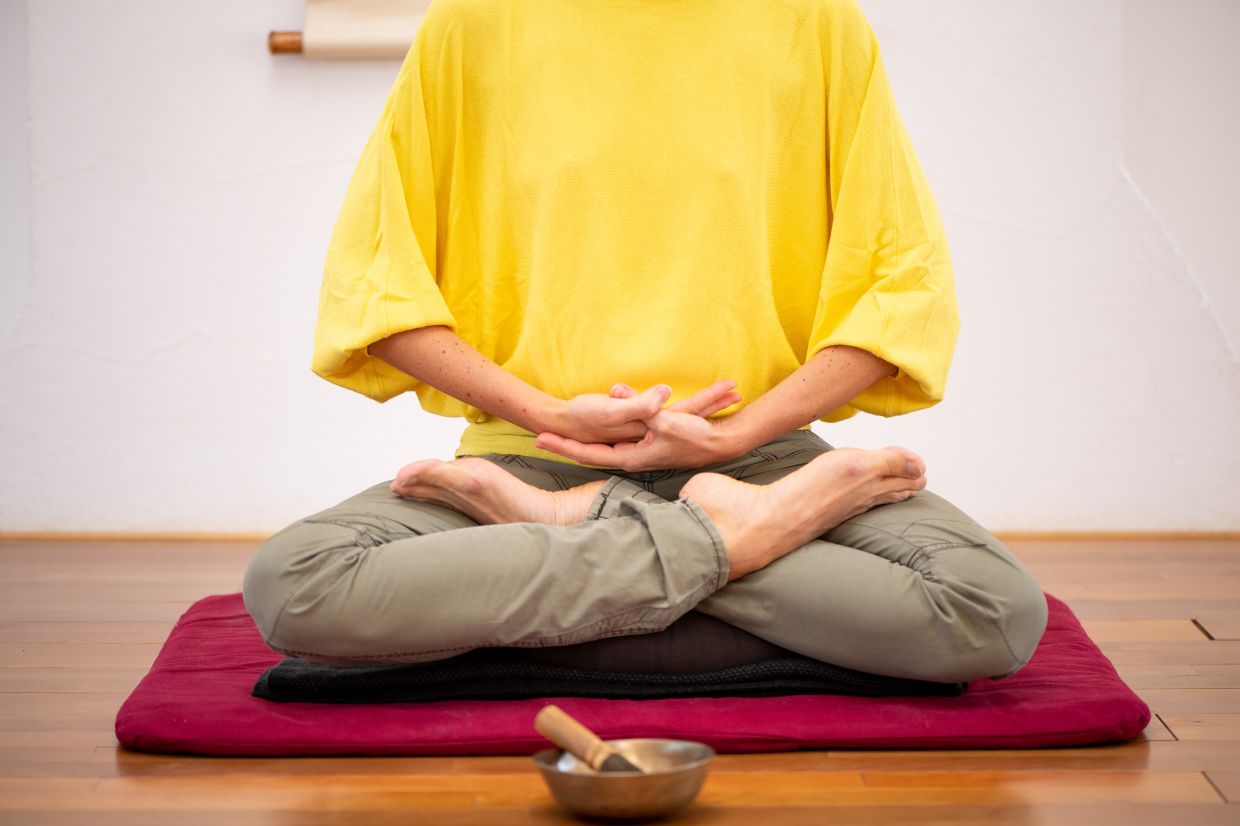
The lotus position, well known in yoga and meditation, is far more demanding than just sitting cross-legged.
Instead of one leg lying loosely in front of the other, the feet rest on the opposite thighs.
Compared with sitting cross-legged, the lotus position is easier on the back because the pelvis tilts forward.
That allows the spine to straighten, Dr Rinio says.
For the joints, especially the knees, however, the lotus position places more strain than the classic cross-legged posture.
Anyone with meniscus problems should avoid it.
You also shouldn’t overdo the lotus position.
Anyone who wants to spend longer periods sitting like this, e.g. during meditation, should work up to it with exercises that improve hip mobility.
One example is the butterfly pose:
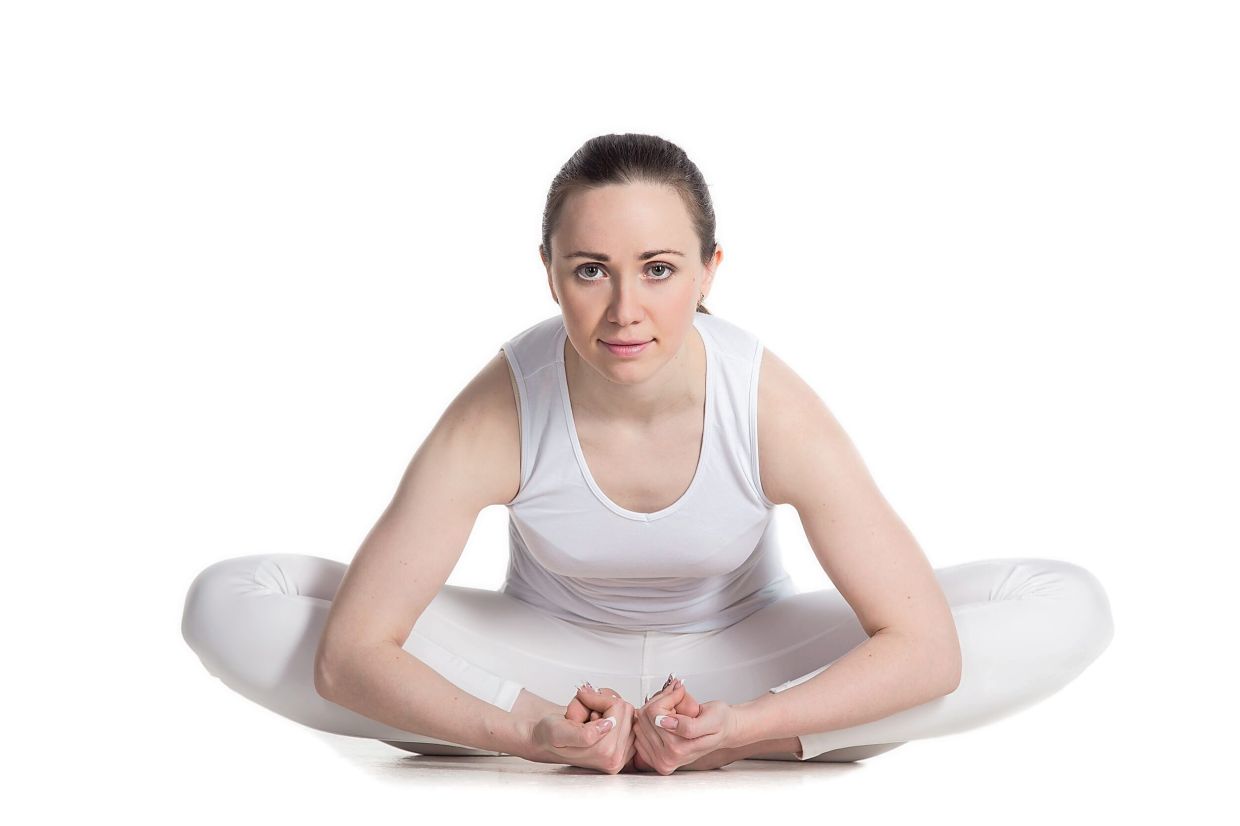
- Place the soles of your feet together with the knees pointing outward
- Grip your feet with your hands and pull them as close to your bum as possible.
- You can then gently bounce your knees to imitate the fluttering of a butterfly. – dpa