




People who have lost their vision because of a common, but untreatable, age-related condition are now able to read again thanks to a pioneering electronic eye implant.
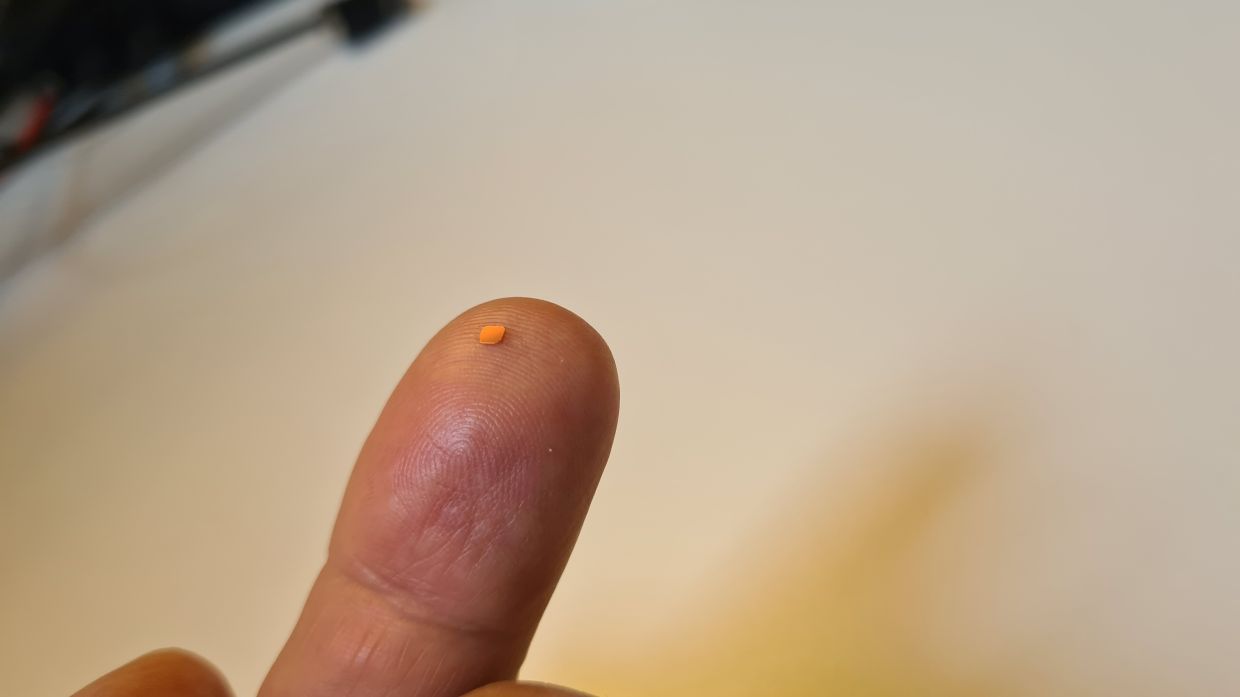
The tiny Prima device is just 2mm by 2mm and has half the thickness of a human hair.
Fitted under the layer of light-sensitive tissue in the eye called the retina, it allows patients to see letters, numbers and words through an eye that was previously blind.
Some can now even do crosswords and read the tiny text on prescriptions using the so-called “prosthetic vision”.
This breakthrough has never been achieved before, and represents a ”paradigm shift” in artificial vision, experts said.
A pioneering device
The world-first trial involved 38 patients across 17 sites in five countries, including Britain, France, Italy and the Netherlands.
All had a condition known as geographic atrophy (GA), which is an advanced stage of dry age-related macular degeneration (AMD).
AMD causes changes to the macula, the central part of the retina, which plays a key role in sight.
GA, which affects about five million people globally, can progress to full sight loss as the central macula melts away.
Experts in Britain estimate that around one in four people who are legally blind have GA from AMD.
Those involved in the study had lost the central sight in the eye being tested and had only limited peripheral vision remaining.
The procedures, which were completed in under two hours, took place at Moorfields Eye Hospital in London in 2022.
Surgeons removed the clear, jelly-like substance from inside the eye in what is known as a vitrectomy.
A trapdoor under the centre of the retina was then created, where the tiny 2mm by 2mm chip was posted.
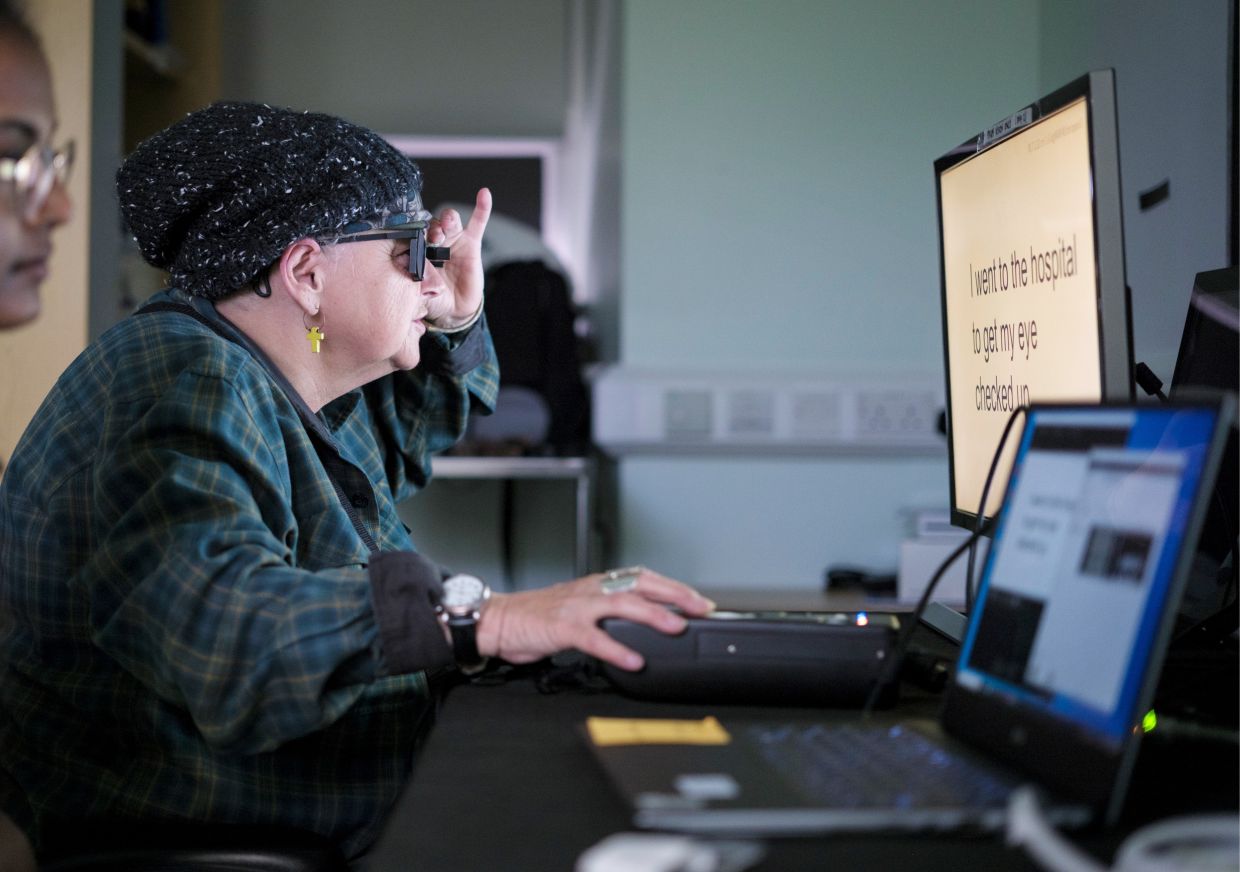
To see words and write, patients wear augmented-reality glasses, which contain a video camera.
This is connected to a small computer attached to their waistband, which includes a zoom feature to make text bigger.
The video camera in the glasses projects scenes as an infra-red beam across the chip, which activates the device.
Artificial intelligence in the waistband computer then processes the information, which is converted into an electrical signal.
This signal passes through the cells in the retina and optical nerve into the brain, where it is interpreted as vision.
A life-changing treatment
Moorfields Eye Hospital and the UCL Institute of Ophthalmology consultant ophthalmologist and vitreoretinal surgeon Dr Mahi Muqit says that this has been “life-changing” for patients.
”I have all these patients who are blind, and when you see them, they want to know is there anything that can restore vision,” he said.
”And the answer has always been no.
”We’ve got some patients who are now reading books, their quality of life is much higher.
”Some of them are writing, doing crossword puzzles, things they enjoy.”
The chip was activated about a month after the operation, with patients then undergoing intense rehabilitation to help them interpret the signals and learn to read again.
The pocket computer also helps to refine the signals that are being sent to the brain and turn them into formed objects and letters.
”You have to realise you’ve got blind patients who are depressed and socially isolated, who are now able to start to function and pick up things that they used to enjoy,” Dr Muqit says.
”In the history of artificial vision, this represents a new era.
”Blind patients are actually able to have meaningful central vision restoration, which has never been done before.”
Regaining quality of life
The findings, published in the New England Journal of Medicine, suggest that 84% of patients on the trial were able to read letters, numbers and words while using Prima, and on average, could read five lines on a vision chart.
Before the device was fitted, some could not even see the chart.
While the chip is permanent, patients can wear the glasses for as long or as often as they like.
Dr Muqit says: “There’s no pain, there’s no safety issues, inside or outside, because the device only switches on once you put the glasses on.
”There’s absolutely no time limit, they can use it every day, as long as they like.”
Sheila Irvine, one of Moorfields’ patients who took part in the trial, now reads her prescriptions, does crosswords and reads the ingredients on tins.
The self-professed avid bookworm said that prior to the operation, her vision “was like having two black discs” in her eyes, “with the outside distorted”.
”There was no pain during the operation, but you’re still aware of what’s happening,” she shares.
”It’s a new way of looking through your eyes, and it was dead exciting when I began seeing a letter.
”It’s not simple learning to read again, but the more hours I put in, the more I pick up.”
The developers of Prima, US-based medtech company Science Corporation, are now working to secure regulatory approval for the device.
”I would have to say, it’s a whole paradigm shift,” Dr Muqit says.
“You talk to surgeons in the UK that I’m colleagues with, and they’re all very excited by this particular technology.
”You know that this technology will be scalable.” – PA Media/dpa

![[ANN EXCLUSIVE] Cannes comes calling: A young Filipino editor’s journey from science lab to silver screen](https://apicms.thestar.com.my/uploads/images/2026/05/12/thumbs/200/3903830.webp)
