Physician and researcher Professor Dr Abba Zubair’s work combines two passions – medicine and space – for the benefit of astronauts and people on Earth.
His research in space is yielding discoveries in cancer, stroke, bone loss and more.
Prof Zubair, who is the vice-dean of the Mayo Clinic Alix School of Medicine in Florida, United States, answers five questions about his studies in microgravity.
“The goal is to harness the uniqueness of the space environment for the betterment of humanity, be it on Earth or in space,” he says.
“We wanted to take advantage of the environment at the International Space Station [ISS] to study how it affects human physiology,” he says.
The absence of gravity, and the impacts of radiation and vacuum, are three fundamental aspects of the uniqueness of space, adds Prof Zubair, who has sent three research projects to the ISS since 2017, with more to come.
As a regenerative biotherapeutics specialist, his work focuses in part on adult stem cells – known as mesenchymal stem cells – and their use in future treatments for stroke.
He noted that he uses stem cells in regenerative medicine and in supporting Mayo’s bone marrow transplant programme.
ALSO READ: What is regenerative medicine, what are its benefits, and is it for you?
“I also know how challenging it is to grow them in the lab.
“One of the first fundamentals is to see how the absence of gravity influences how stem cells divide and the growth rate,” he explains.
“We wanted to see whether cells grown in space are any better or grow faster than cells grown in the lab.
“When we did our first space flight, we had a really interesting finding, because we realised that the absence of gravity affects stem cells, but it depends on the type of stem cells.”
That led Prof Zubair to another project on the ISS: studying how mesenchymal stem cells – the precursor for bone-forming cells, among other types of cells – play a role in bone formation or osteoporosis (i.e. bone loss).
He notes that astronauts tend to lose bone density despite rigorous exercise.
Prof Zubair is also studying how leukaemia stem cells – the cells that form the seed of this blood cancer – respond to the space environment.
“We are also working to understand the impact of space radiation, from the angle of how we can mitigate the effect of radiation and prevent cancer,” he says.
“In the long run, we really want to protect astronauts, especially during long-term space travel – such as to Mars – where they would be deep in space and away from any magnetic field protection that we get from Earth.”
The research may also benefit people on Earth by revealing how to protect stem cells or cells in general when there is radiation exposure, such as during nuclear accidents, he adds.
In addition, Prof Zubair’s space research could have implications for CAR (chimeric antigen receptor) T-cell treatment, bone marrow transplants or other therapies for cancer patients.
“If we can understand how stem cells in space, especially haematopoietic stem cells (cells that live in the bone marrow and produce cells that function in the blood), expand and differentiate to make immune cells like T cells, microphages, we will learn how to make them more efficiently,” he says.
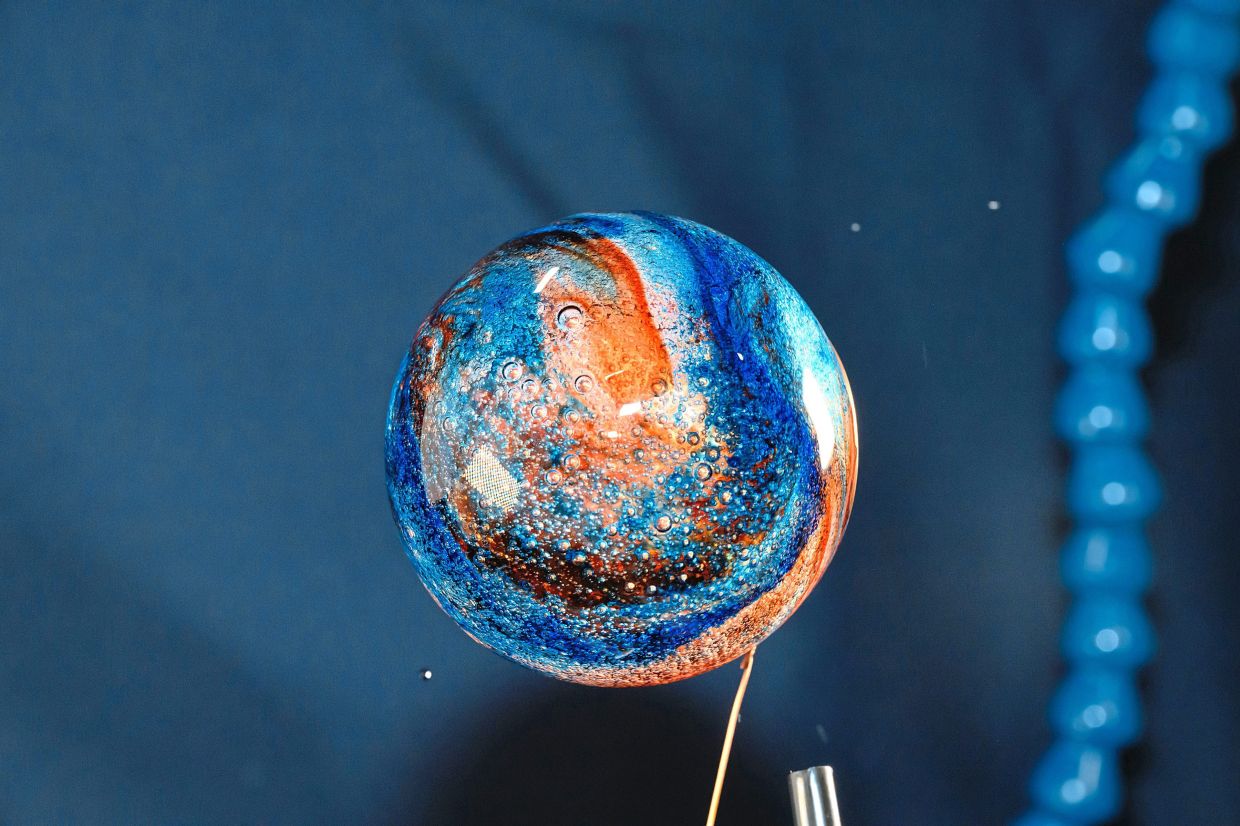
If cells proliferate more in space, e.g. if cancer cells go into what is called the cell cycle and multiply abnormally when they proliferate, then chemotherapy will be more effective, Prof Zubair says.
“If that is the case, that absence of gravity can induce leukaemia cells or other cancer cells to go into cell cycle – that makes them susceptible to chemotherapy,” he explains.
“So instead of giving the chemo on Earth, you might go into space where the absence of gravity makes the cancer cells more vulnerable to chemotherapy.
"That would be one more reason to go to space.
“That is definitely something that I would love to explore.”
It would be difficult to create a comparable microgravity environment on Earth, but technically, it could be done, Prof Zubair adds.
“Microgravity on Earth is basically like going into a swimming pool – a state of buoyancy where you are kind of in suspension; the gravity is cancelled out by the effect of the water.
“Now, obviously it wouldn’t be pleasant to be in water for quite some time.
“In the lab, we use a microgravity simulator where cells are suspended.
“It would be interesting if you could do the same for a human being,” he says.
Prof Zubair grew up in Kano, Nigeria, and remembers gazing at the night sky as a child.
“As far back as I can remember, I was always fascinated by what is out there in space.
“Looking at the moon and all the stars, and really, that ignites my passion for space and space exploration,” he says.
His first dream was to become an astronaut, but an adviser in secondary school counselled him to find a more practical career and he pursued medicine.
One of Prof Zubair’s next two payloads to the ISS, which are not yet scheduled for launch, will examine whether umbilical cord blood cells, which are rich in stem cells and potential therapeutic value, can be expanded.
Another study will explore the different cell types that participate in bone formation and whether the problem of bone loss in space can be alleviated through use of a special compound.
“If it works, then definitely we will see how we can treat patients with osteoporosis, particularly women, cancer patients, or people who are bedridden for a long time and are not weight- bearing, which affects their bone,” Prof Zubair says.
He notes that all of his space experiments are done in parallel on Earth with identical cells to compare the two results and validate the findings from space.
“I really think there is a lot out there that is just waiting for us to explore and use,” he says.
“And that’s why I do what I do.”
Prof Zubair has been honoured by Nasa (National Aeronautical and Space Adminstration) with the Exceptional Scientific Achievement Medal for demonstrating that human-derived mesenchymal stem cells grown aboard the ISS could be used for potential clinical applications. – Mayo Clinic News Network/Tribune News Service