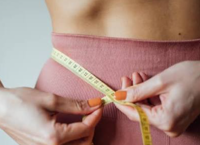
Are male body mass index (BMI) measurements accurate?


Males typically have more muscles than females, even if they don't lift weights. — Victor Freitas

With professional views split on the use of body mass index (BMI) to measure men’s health, two experts from Cleveland Clinic explain why men’s BMI calculators can be so divisive, but when men might still might want to use them.

Physiologist Chris Dempers and fitness specialist Colt Mcdonough explain that BMI is a formula to measure your body fat through dividing your weight in kilograms by your height in metres squared.

"BMI gives you an overall health assessment. Your number indicates if you’re in the healthy, underweight, overweight or obese range,” says Dempers. "But it doesn’t factor in body fat or muscle mass, so there are BMI limitations.”

BMI is one-size-fits-all – it doesn’t account for naturally occurring body differences, the experts explain.

"It’s the same BMI chart for men and women, even though women typically have more body fat than men,” adds Dempers.

However, in a time-crunched society, the benefits of BMI measurements are clear says Dempers.

"Many physicians use it because it’s a quick, affordable assessment for the general population: average-sized people who don’t exercise regularly.”

BMI gives a fairly accurate measurement of where people fall in the weight range and whether the extra weight has them on the verge of type 2 diabetes, heart disease and other conditions.

"It can motivate people to jump-start a healthier lifestyle,” he explains.

BMI chart ranges for men

Health experts say a number between 18.5 to 24.9 is a healthy BMI for men. The same goes for women. The weight classification in the BMI chart for men is:

Below 18.5 – Underweight

18.5-24.9 – Normal

25.0-29.9 – Overweight

30.0 or higher – Obese

The two experts point out that BMI is an old tool – it was developed almost two centuries ago. "At that time, they got most of their data from corpses, so that’s what healthy BMI ranges are based on.

"People’s average height and weight have also increased over the years, which further throws things off,” says Dempers.

Five alternative ways to measure your body fat

Dempers and Mcdonough say it is best to view BMI as part of the puzzle.

The following five tools can help complete the picture:

1) Dual-energy X-ray absorptiometry (DEXA): DEXA is an imaging test that measures bone density.

"You can use it to tell what percentage of your body is bone mass, muscle mass and body fat,” explains Mcdonough.

2) Electronic body fat scanner: Electronic body fat scanners send a small current through the body to determine body fat percentage. Scanners are typically built into many scales.

"While they typically have a standard deviation of about plus or minus seven on the accuracy scale, they still give you a good ballpark measurement,” notes Dempers.

3) Mirror: Dempers says mirrors are a great tool to measure physical progress. "It’s not about nitpicking yourself.

Instead, look in the mirror at where you are and notice changes – like less belly fat – as you achieve your health goals,” says Dempers.

4) Skinfold calipers: While it varies by age, men’s average body fat range is 18% to 25%.

Experts consider 25% body fat and above to be the obese range for men.

Skinfold calipers, which look like tongs, are a tool used to measure body fat percentage.

"Some athletic trainers know how to do a six-site test on your body using calipers.

The results show your body fat percentage,” adds Mcdonough. "While your BMI might be in the obese range, the skinfold caliper test can show that you’re holding more muscle density than your BMI indicates.”

5) Waist-to-hip ratio (WHR): WHR is a person’s waist measurement divided by hip measurement in centimetres.

Where the WHR falls within a certain range shows if a person is overweight and at risk for obesity-related conditions.

WHR for men:

0.95 or lower – Low health risk

0.96 to 1.0 – Moderate health risk

1.0 or higher – High health risk

The experts advise patients to make sure they stand up straight.

To find waist circumference, place a tape measure around the smallest part of the waist, which is typically above the belly button.

Then to figure out hip circumference, do the same with largest part of the hips, typically the widest part of the buttocks.

Divide waist circumference by hip circumference.

"You can have a good BMI, but your WHR could be off. You could have a big belly, but on paper, your height and weight are still within the normal range,” notes Dempers.

"To accurately figure out your body fat percentage, enlist an exercise physiologist or trainer at a fitness center with experience to help you. Then use that information to help make positive changes.

"The mantra ‘use it or lose it’ is truthful,” says Mcdonough. "If you need to lose weight or maintain muscle, stay consistent with a balanced diet and regular exercise. That can do the trick to keep you healthy for the long term."

Get 20% OFF The Star Digital Access

Monthly Plan

RM 13.90/month

RM 11.12/month

Billed as RM 11.12 for the 1st month, RM 13.90 thereafter.

Best Value

Annual Plan

RM 12.33/month

RM 9.87/month

Billed as RM 118.40 for the 1st year, RM 148 thereafter.

Follow us on our official WhatsApp channel for breaking news alerts and key updates!
Body Mass Index , Waist Hip Ratio , Muscles

Next In Health

When water takes lives�
What is a head spa?
How elections can affect our emotions
Nutrition during the golden years�
When you're trapped by an earthquake
No, creatine won't make you go bald
Doctors, please treat the woman, not just her cancer
Rabies reemerges in Europe due to disruptions in wildlife vaccinations
Pack these essentials when you're working out outdoors
Faking an illness to gain sympathy

Others Also Read