Making milk chocolate as healthy as dark chocolate


By AGENCY
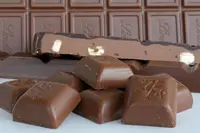
Milk chocolate could soon be just as healthy as dark chocolate when it comes to its antioxidant properties. — AFP

While the global chocolate market is forecast to reach US$139.9bil (RM583.7bil) by 2024, milk chocolate has long been a consumer favourite worldwide.

Scientists have now found a way to make it as healthy as its more bitter counterpart, dark chocolate.

Often prized for its sweet flavour and creamy texture, milk chocolate does not have the same nutritional value as dark chocolate, whose high levels of phenolic compounds provide multiple anti-inflammatory health benefits.

According to the American Chemical Society, researchers at the US Department of Agriculture’s Agricultural Research Service (USDA) have discovered a new way to combine milk chocolate with waste peanut skins and other wastes to boost its antioxidant properties.

“The idea for this project began with testing different types of agricultural waste for bioactivity, particularly peanut skins.

“Our initial goal was to extract phenolics from the skins and find a way to mix them with food,” principal investigator and USDA food technologist Dr Lisa Dean said in a statement.

Her team has found that peanut skins, which are usually thrown away after the peanuts are shelled to make peanut butter and other products, are a potential goldmine of antioxidant bioactivity as they contain 15% phenolic compounds by weight.

They grounded the peanut skins into a powder and combined them with maltodextrin, a common food additive, to make it easier to incorporate into the final milk chocolate product.

Researchers later put their discovery to the test with a panel of taste-testers, who sampled several versions of their boosted milk chocolate with concentrations of phenolic compounds ranging between 0.1% and 8.1%.

“The taste-testers found that concentrations over 0.9% were detectable, but incorporating the phenolics at 0.8% resulted in a good compromise of a high level of bioactivity without sacrificing flavour or texture,” the American Chemical Society reported.

Additionally, more than half the panel preferred the 0.8% phenolic milk chocolate, even compared to the plain milk chocolate consumers can find on supermarket shelves.

While these results are promising, Dr Dean’s team has also worked with various coffee roasters and tea producers to obtain used coffee grounds and tea leaves, in order to similarly extract the antioxidants from these materials.

While commercial availability of their boosted milk chocolate is still a ways off, researchers plan to further explore the use of peanut skins, coffee grounds and other waste products into other foods. — AFP Relaxnews

Get 20% OFF The Star Digital Access

Monthly Plan

RM 13.90/month

RM 11.12/month

Billed as RM 11.12 for the 1st month, RM 13.90 thereafter.

Best Value

Annual Plan

RM 12.33/month

RM 9.87/month

Billed as RM 118.40 for the 1st year, RM 148 thereafter.

Follow us on our official WhatsApp channel for breaking news alerts and key updates!
Chocolate

Next In Health

What is a head spa?
How elections can affect our emotions
Nutrition during the golden years�
When you're trapped by an earthquake
No, creatine won't make you go bald
Doctors, please treat the woman, not just her cancer
Rabies reemerges in Europe due to disruptions in wildlife vaccinations
Pack these essentials when you're working out outdoors
Faking an illness to gain sympathy
Why we need to create a blood donation culture

Others Also Read