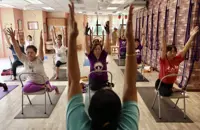
New research published on July 2 (2020) in The Journal of Physiology shows that 12 weeks of easy-to-administer passive stretching helps improve blood flow by making it easier for your arteries to dilate and decreasing their stiffness.
Passive stretching differs from active stretching in that the former involves an external force (another person or gravity) stretching you, whereas active stretching is performed on your own.
Already a subscriber? Log in
Get 20% OFF The Star Digital Access
Cancel anytime. Ad-free. Unlimited access with perks.