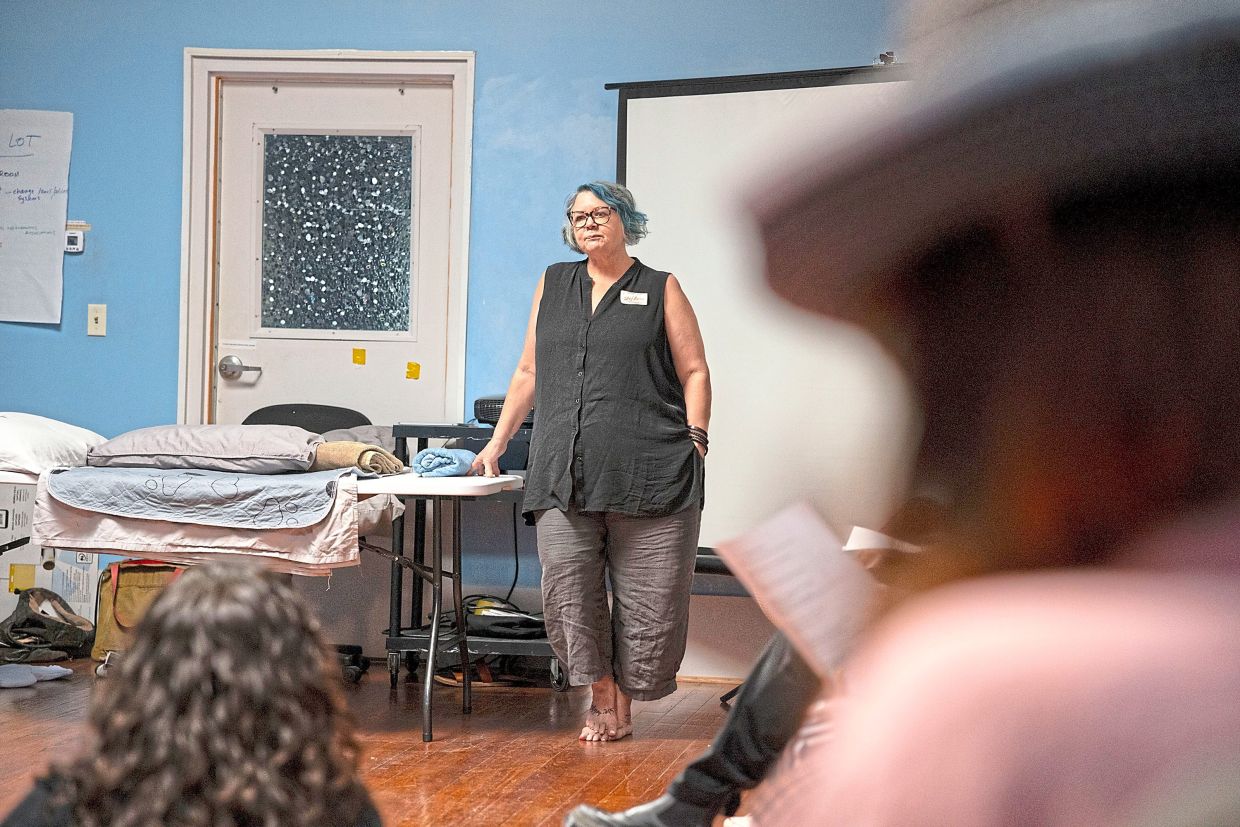
Liz Dunnebacke isn’t dying, but for a recent end-of-life care workshop in New Orleans, she pretended to be.
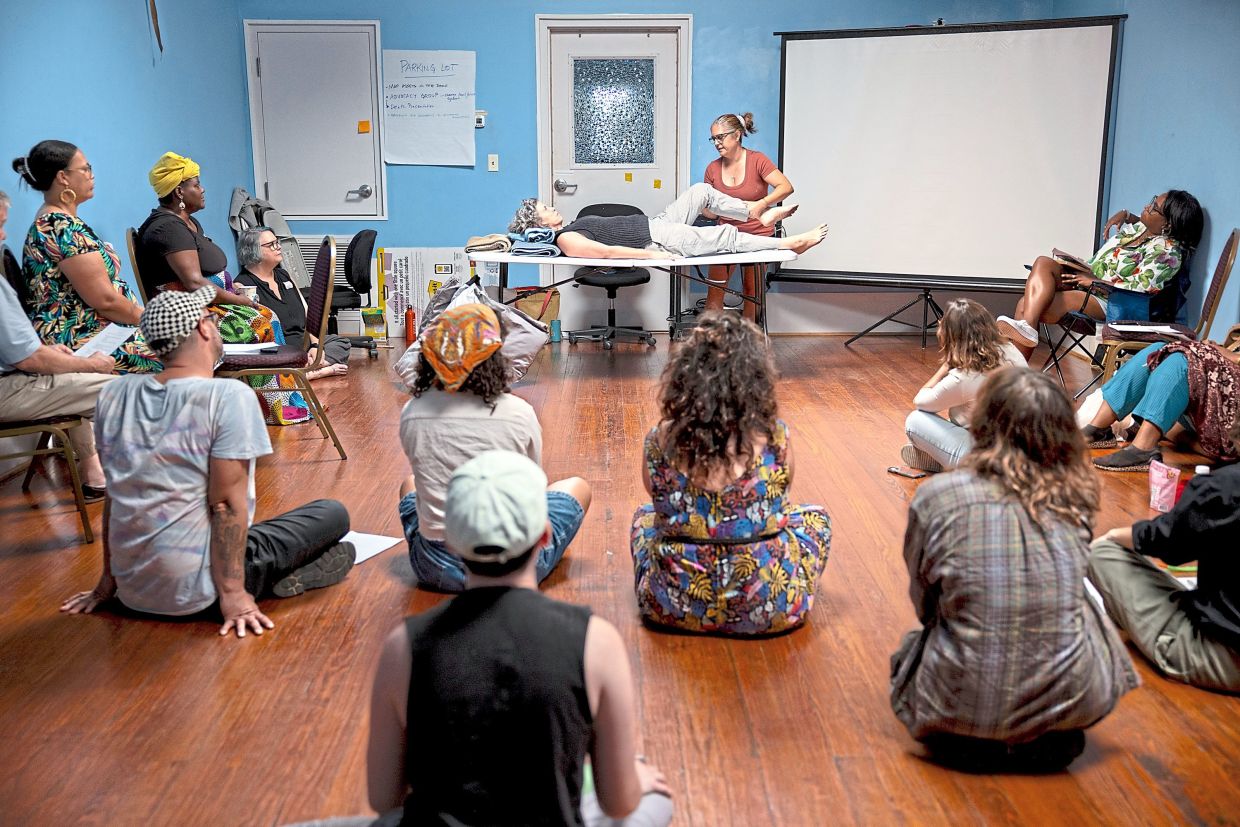
Dunnebacke lay still atop a folding table that was dressed as a bed, complaining that her legs hurt. Registered nurse Ana Kanellos, rolling up two small white towels, demonstrated how to elevate her ankles to ease the pain.
“ Mum’s legs are always swollen? Raise ’em up,” Kanellos said.
About 20 New Orleans residents listened intently, eager to learn more about how to care for loved ones at home when they’re nearing the end of their lives. Attendee Alix Vargas said she used to be terrified of dying. But about three years ago, a close cousin’s death led her to attend group writing workshops, helping her embrace her grief and conquer her fear.
“ I’m feeling very called towards this work,” she said. “It’s definitely knowledge that I wanted to obtain and expand my mind in that way. And this is also something that we’re all going to encounter in our lives.”
The workshop made her think about a neighbour whose mother has dementia.
“ I was immediately thinking, ‘OK, there’s someone in my immediate orbit that is experiencing this,’” Vargas recalled. ‘“Here’s a practical way to put the mutual aid in use.’”
Demand for home health care, including at-home hospice care, has skyrocketed since the onset of the Covid-19 pandemic, as has the number of family caregivers.
An estimated 63 million people in the United States – nearly a quarter of all American adults – provided care over the previous year to another person with a medical condition or disability, usually another adult, according to a 2024 survey by AARP and the National Alliance for Caregiving. In the past 10 years, about 20 million more people have served as caregivers.
With nearly one in five Americans expected to be 65 or older by 2030, health care experts predict the demand for at-home caregivers will continue to rise.
Online resources for end-of-life care are widely available, but hands-on training to prepare people to become caregivers is not, and it can be expensive. Yet untrained family members-turned-caregivers are taking on nursing and medical tasks.
Filling the gap
Advocates like Osha Towers are trying to help caregivers navigate this.
“It is certainly very scary, but what we know we can do right now is be able to just show up for all individuals to make sure that they know what they need to be prepared for,” Towers said.
In New Orleans, a nonprofit called Wake, which focuses on supporting family caregivers providing end-of-life and death care, is one of the organisations trying to help fill the knowledge gap. Wake put on the free, three-day September workshop where Dunnebacke, the group’s founder, pretended to be a dying patient.
Such workshops are aimed at preparing attendees for what to expect when loved ones are dying and how to care for them, even without costly professional help.
“You don’t have to have any special training to do this work,” Dunnebacke said. “You just need some skills and some support to make that happen.”
In some ways, the evolution of end-of-life care in the US over the past century has come full circle. It was only starting in the 1960s that people shifted from dying at home to dying in hospitals, nursing homes, and hospice facilities.
Such institutions can provide immediate advanced medical support and palliative care for patients, but they often lack the human connection that home care provides, said Laurie Dietrich, Wake’s programme’s manager.
Now, more people want to die in their homes, among family, but with the support and technology that comes with modern medical facilities.
In the past decade, death doulas – who support the nonmedical and emotional needs of the dying and their loved ones – have grown in popularity to help guide people through the dying process, helping to fill that gap.
Douglas Simpson, executive director of the International End of Life Doula Association, said his organisation recognises the lack of resources for death care, so it is training doulas to be community educators. He hopes doulas can be especially useful in rural communities and lead conversations about dying.
“Making people more open, more comfortable about talking about death and considering their mortality,” Simpson said.
Community-based approach
Death doula training varies depending on the organiser, but Simpson’s group focuses on teaching attendees about the dying process, how to maintain the autonomy of the dying person, and how to be aware of how they show up to a job and take care of themselves while caring for others.
Some people who attended Wake’s workshop had also attended some form of death doula training in the past.
After Nicole Washington’s mother was killed in 2023, she considered becoming a death doula. But she thought the doula training, which can cost US$800 to US$3,000 (RM3,271 to RM12,267), was clinical and impersonal, as opposed to Wake’s communitybased approach.
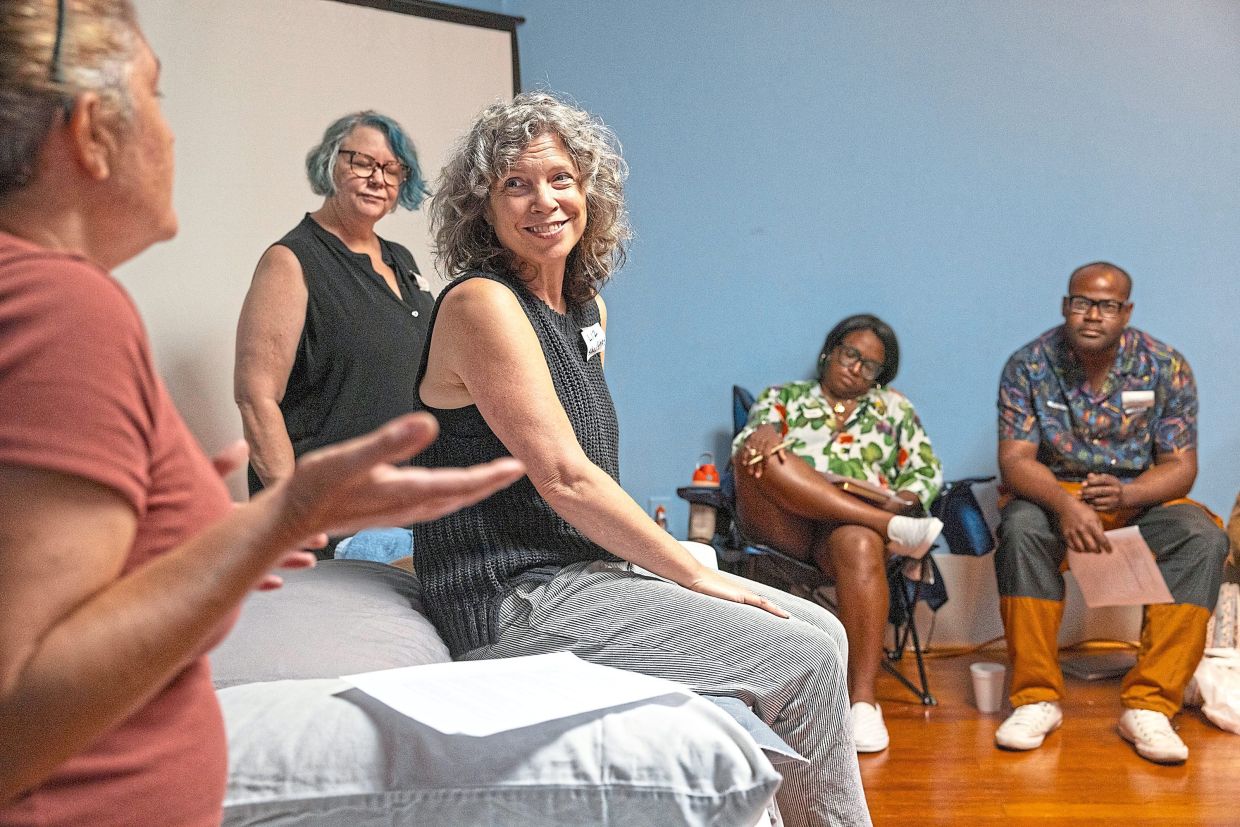
“I feel very energised, very uplifted,” Washington said. “It’s also really nice to be in a space with people who are familiar with death and grief.”
Ochsner Health’s Susan Nelson, who has worked as a geriatrician for 25 years, said there is a need for more specialised programs to train and prepare caregivers, like Wake’s.
“Learning caregiving skills is probably, unfortunately, more trial by fire,” Nelson said.
Compassion & Choices is another organisation trying to educate caregivers. Towers said the group’s training ranges from advanced planning to acting as a health care proxy to caring for the dying.
“We’ve gone to a place in our country where we’re so removed from end-of-life care in a way that we didn’t used to be,” Towers said.
She said the movement to care for people at home and give them community support has roots in the Aids epidemic, when some doctors refused to care for Aids patients.
Friends started coordinating food delivery, visits, bedside vigils and even touch circles, where patients could receive comforting forms of touch such as hand-holding to ease pain and feelings of isolation.
“I like to look at it as a blueprint for what we can get back to doing now, which is again just prioritising community care,” Towers said. – Verite News/KFF Health News/Tribune News Service