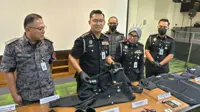
The United Nations Human Rights Day falls on December 10 every year. The Bar Council has been organising the Human Rights Festival since the first one in 2022. This year, the event was extra significant as Chief Justice Datuk Seri Utama Wan Ahmad Farid Wan Salleh was there to launch the MyBar Pro Bono Hub. The initiative offers a range of services, including support to help seniors access their legal rights.
These rights (or principles) cover the right to independence, participation, care, self-fulfillment and dignity.
Let me comment on each of these five rights. My views come from my personal interaction with the homeless elderly during the months filming on location in the inner-city areas, and from my conversations with members of my senior community.
The right to independence
Older persons should have the right to decide for themselves, where they want to live in their old age, what to eat, how to dress, who to go out with, how to spend their time and money, and which aged care home to move to.
This also extends to their will and legacy, who and what to bequeath to; their relationships, whether they should get married again or just co-habitate with someone they like. In short, any decision that concerns them. Their adult children and well-meaning friends may offer advice, but the final decision rests with them.
Independence also covers end-of-life decisions including how they want to depart i.e. burial or cremation, what religious rites or none at all, indeed, all decision right down to the choice of obituary photo. It is their life and they should have a major say in it, as long as they are still capable of making decisions on their own.
The right to participation
Senior citizens looking for a job should not be discriminated against based solely on age. If they meet all the job specifications, they should be given a fair opportunity to be considered for the job. The same applies to participation in learning. Registration for workshops, courses and training should be open to all, including older persons.
If the learners are all older persons, the instructor should be familiar with geragogy – the principles of teaching older learners with age-related limitations, for example, hearing loss and vision impairment.
Participation also extends to retirees who may want to volunteer their service to NGOs or help out at community events and projects. They want to be useful, to do their bit for society. Give them the opportunity to do so. They should also be allowed to start an association, an enterprise or a movement if they have the required capabilities and skills.
Government resources like scholarships for further studies and upskilling opportunities should be made available to retired persons too.
The right to care
Every human being, from cradle to grave, deserves care. It should come not only from the family, but also from the community, society and government. Care goes beyond healthcare.
It extends to protection, safety and support, shelter and food. When a family no longer cares for its elderly members, that’s when the latter ends up in welfare homes or on the streets.
Take a walk in the downtown city areas, you are bound to come across heart-breaking scenes of elderly men and women rummaging through garbage bins looking for plastic bottles or aluminum cans, or collecting discarded cardboard boxes to sell for a pittance.
These seniors should be enjoying their golden years pursuing their passions and playing with their grandchildren, not eking out a living.
It is hard to understand how anyone could be all alone in the world, with no family members or friends to turn to in times of need.
No one wants to be in a situation like this. No one deserves to be in a situation like this.
It can happen to anyone. Even the wealthy can end up poor and homeless if an unexpected calamity befalls them.
Having good relationships with family and friends reduces the risk of abandonment and social isolation in old age.
The right to self-fulfillment
Think only the young have dreams? Older persons have them too. Retirees now have the time and financial means to make their dreams come true. Some go back to school to earn a degree, some sign up for courses to turn their passion into income, some look for opportunities to improve their singing, dancing or music talent. One senior I know took up a course in Cantonese opera performance. The sky is not even the limit for
unfulfilled dreams. Another found his calling in doing commercials.
Love to travel? Go for it. If you have always wanted to travel to Antarctica, go join Yusuf Hashim’s tour group. He’s 79 and has been there several times.
Don’t let anyone tell you that you are too old to do something or that you lack the ability to do it. You know yourself best. As oft repeated, If not now, then when? At our age, opportunities don’t come knocking often, not even twice.
The right to dignity
No one should victimise, ridicule or disrespect anyone on the basis of age. Older persons should not be the brunt of ageist jokes or be made to feel worthless just because they may not be well educated or earning an income. In the same breath, seniors must also be deserving of respect in their actions, speech and attitude towards others.
Respect is earned through our behaviour, how we treat others and how we react to situations. We can do better – treat others with respect even when they may not respect us. Life is not a tit-for-tat. Revenge and other toxic emotions should never have a place in our heart. They can poison our health, both physical and mental.
To me, the top three evils that older persons should be protected against are the 3As: Ageism, Abuse, Abandonment. It takes a whole-of-society and a whole-nation approach to stamp out such violations of human rights. In our youth, we helped build the country. When we are no longer in our prime,
we should not be marginalised, ignored, forgotten, and worse of all victimised.
We can’t force others to uphold these human rights, but we can start with ourselves. Let’s begin the new year with the commitment to respect others and be a better human being, to care for others, to forgive and forget and to move on, to live life as best as we can, to take care of ourselves and those who can no longer care for themselves. If you can’t do it alone, join a community group or start our own. It’s never too late, and we are never too old to do good.
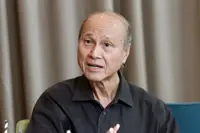
Lily Fu is a gerontologist who advocatesfor seniors. She is the founder of SeniorsAloud, an online platform for seniors to connect and enjoy social activities for ageing well. The views expressed here are entirely the writer’s own.