
The four-hour Chinese brush painting class at the Kelab Warga Emas Subang Jaya is entering its final, most crucial hour.
The small, four-student group remains intensely active, yet silent, their focus locked on every precise movement instructor Eva Chin makes.
The only sound in the hall is the steady hum of a wall fan, directed specifically at a couple of wet paintings laid out on the floor to dry.
The hall – the club’s largest space within the corner-lot, two-storey terrace house located in the residential area of Subang Jaya in Selangor – has individual tables for each student to work.
But in this final stretch, the students, all women deep into their golden years, are gathered attentively around a single student’s table, having left their own workstations topped with paint, brushes, and their morning’s efforts.
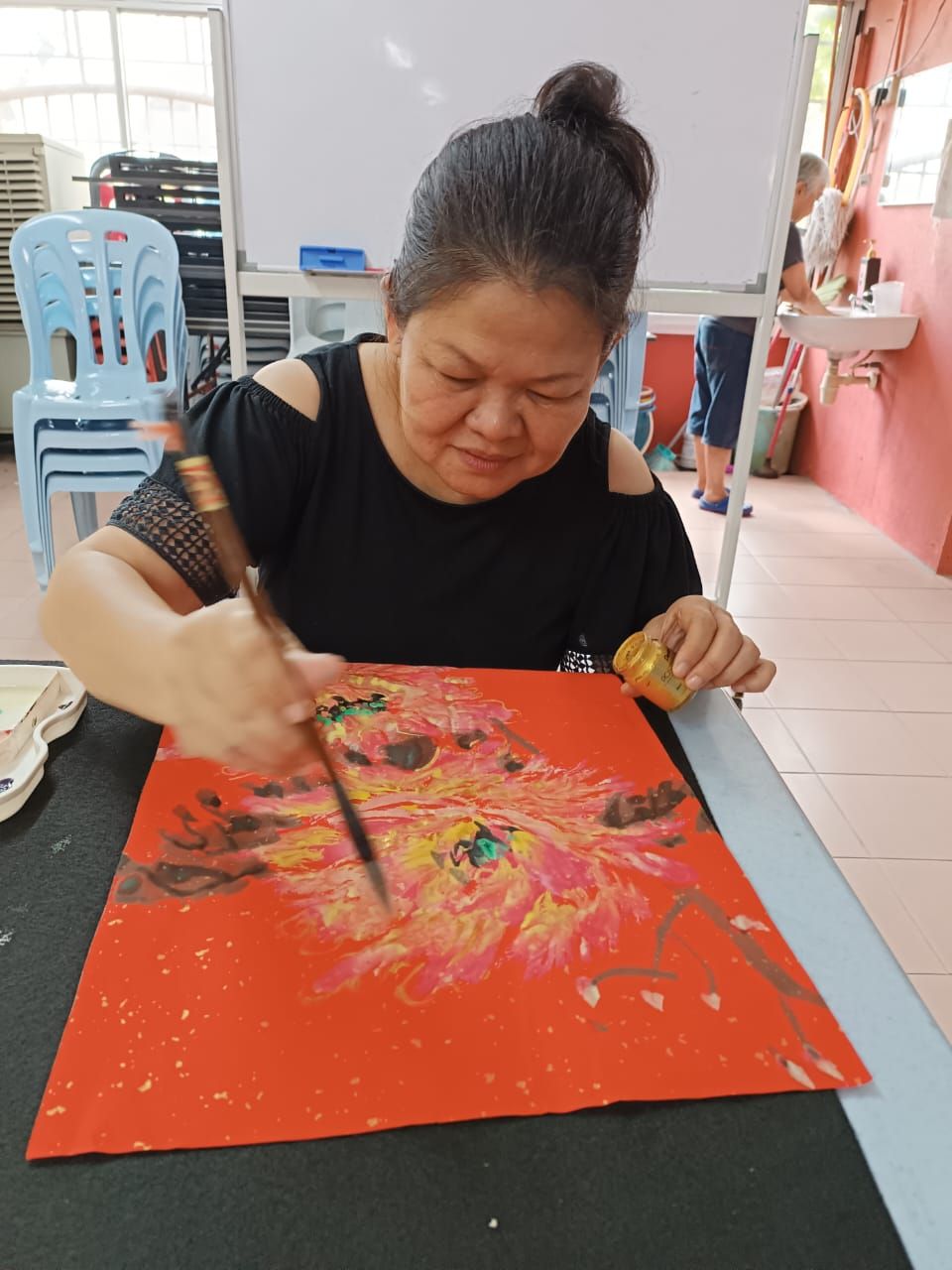
They are now getting Chin to evaluate their work, and add some final touches that would complete the day’s assignment.
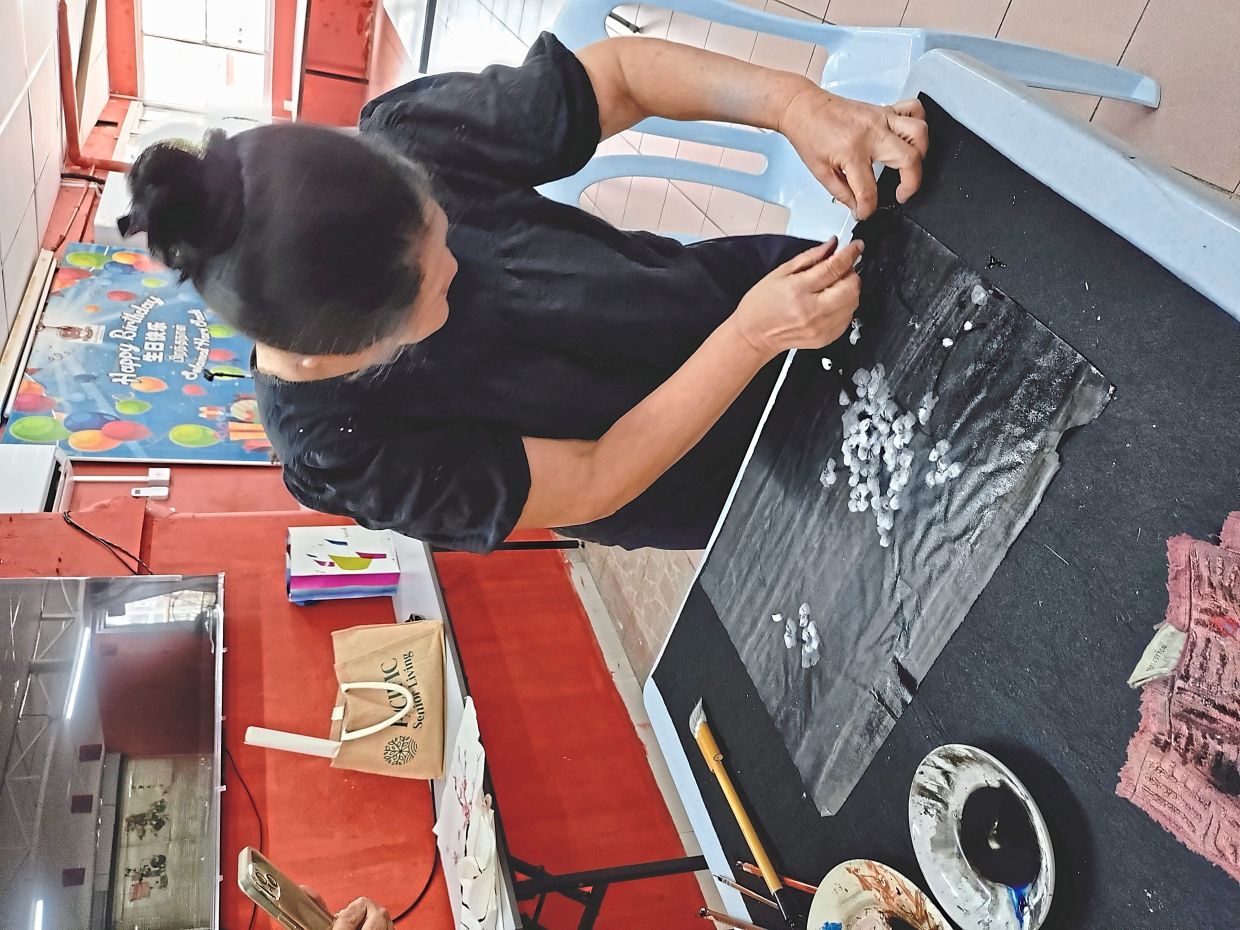
Unaffected by her surroundings, Chin performs her quiet magic, running a thick brush dipped in deep black ink over the delicate rice paper.
She is applying a dramatic black background to one of her student’s completed cherry blossom paintings – a final, masterful touch.
While each student has spent the morning churning out a few versions of the subject – some capturing their sakura in pink and others in blue – all attention is on their instructor as she uses powerful contrast of colour to bring their work to life.
Once she’s done with the background, and her final touch added, Chin moves swiftly to another table. She firmly sets aside a student’s painting, pulls out a fresh sheet of rice paper, and mutters something in Mandarin under her breath.
“That tree trunk is wrong,” a student explains, translating Chin’s mutter for me.
With effortless grace, Chin guides her brush across the clean paper with gentle, deliberate motions. She knows exactly when and where to apply the appropriate pressure.
The lines form a perfect tree trunk, complete with branches. To complete the lesson, she takes a smaller brush and dabs it in pink paint.
Her strokes become quick and shorter as she forms tiny circles that instantly spring to life as sakura petals. She finishes with short black lines to define their delicate stamens.
A late bloomer
Chin is 52. A former graphic designer, who graduated from the Malaysian Institute of Art (MIA) in 1993, she spent years creating client-driven designs in advertising and sign-making. Her artistic journey took a profound turn 12 years ago when she discovered a Chinese brush painting course at a private college.
“I wanted to try something new,” says the mother of three children aged 16 to 28, who ultimately spent eight years studying under two masters, Sum Kwai Fung and Zhong Zhen Chuan.
“Different teachers have different styles,” Chin explains. “Some focus on form, others on the spirit of the subject. I realised then that brush painting is not about copying – it’s about capturing feelings.”
She says this shift from the commercial work to personal expression was “transformative”: “(Now) I keep drawing things that I like,” she notes, “without worrying about marketing.”
For her, Chinese brush painting allows her to paint freely, as strokes cannot be corrected but, rather, mistakes must be incorporated into the work.
“It teaches that accepting flaws leads to a deeper beauty,” says Chin, who also serves as the Secretary of the MIA Alumni Association and is an active committee member of the Malaysia Brush Painting Society.
An artistic retreat
Chin applies this hard-won wisdom to her classes on Chinese brush painting for her senior citizen students.
She stresses to her students that “different people have different personalities” and that their works on paper are exactly what makes their art perfect.
“Not perfect is perfect,” Chin stresses. “We are not doing detail or fine art, this is artistic art, and I am more concerned about the emotions the strokes portray more than how fine the shapes are.”
Chin’s favourite subject for Chinese brush painting is the hydrangea, which she says perfectly illustrates this philosophy.
“The flowers are big and rounded with small petals,” she says, “and to capture their lush, clustered texture is not in precision, but in rapid, varied turns of the brush and different colour washes, to let viewers ‘feel’ the blossom.”
According to Chin, her teaching style is highly personalised, preferring to teach small groups and one-to-one as she believes that their character – whether they are detailed, careful, relaxed, or rough – will be visibly felt in their painting.
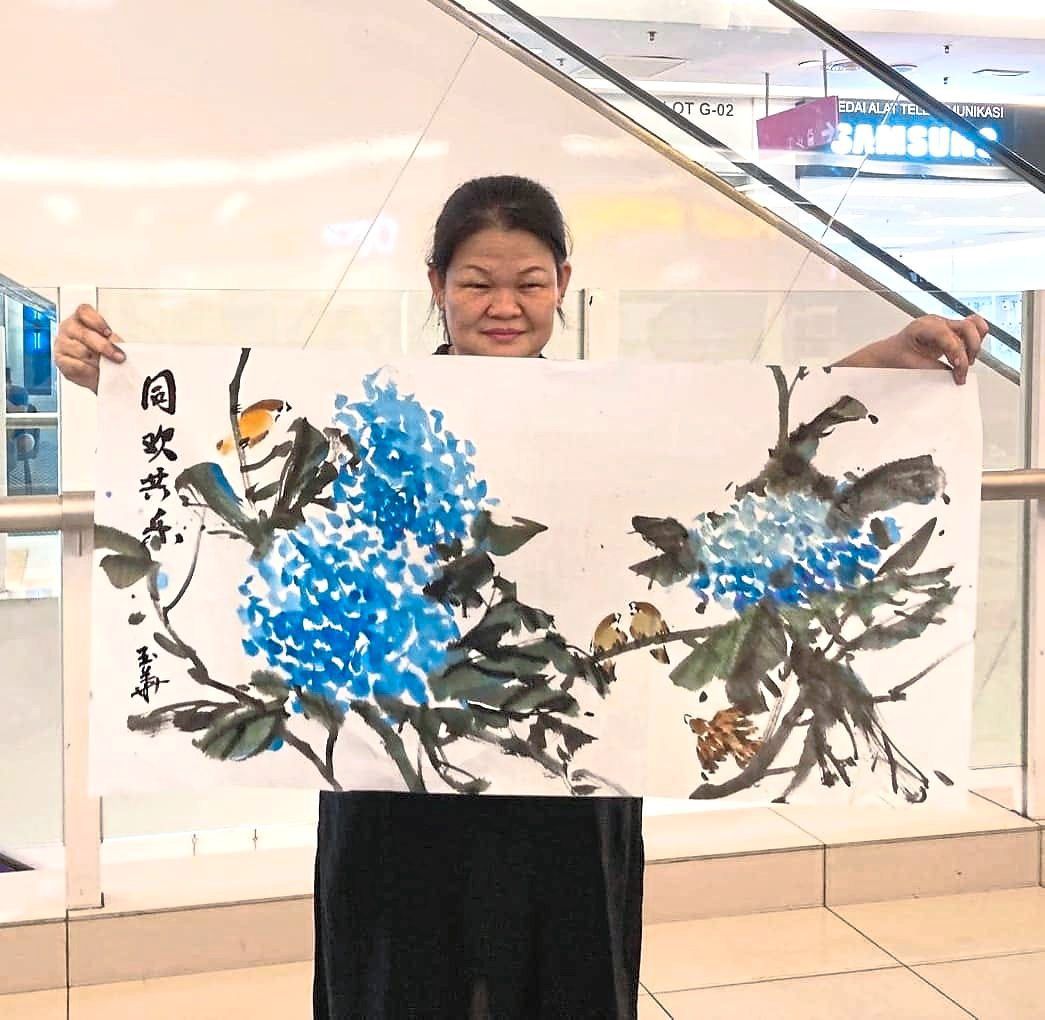
Chin currently runs two weekly classes: One at Amazing Seniors LAH at Paradium Mall in Petaling Jaya on Mondays and the other at Kelab Warga Emas Subang Jaya on Tuesdays.
For her, the purpose of her brush painting classes is not just about making beautiful scrolls, filling up time, or being in a community.
“It is about finding focus and the profound, peaceful assurance that their non-perfect, authentic self is already complete,” she says.
“Chinese brush painting is more than just a technique; it is a rapid, intense form of meditation that offers focus and purpose to her students.”
She also realises that her students gain more than just a painting skill: “They start to look at flowers or leaves in a different way.”
This change, she says, is rooted in an increased awareness of the natural detail of the subject.
Chin shares an example: “When I tell them how bamboo branches grow at the opposite sides of the stalk, the next time they see bamboo, they look for this detail.”
She believes the act of getting the soul of the subject, and painting it, instils a level of observation in her students that translates into deeper engagement with the world outside the classroom.
Chin also notes that the technical demands of the art itself cultivate focus, patience and resilience – traits essential for ageing well.
“Yes, when we enjoy and focus on doing the thing we like, we will forget about the thing that angers and stresses us,” she explains simply.
The philosophy of the stroke
For Chin, brush painting isn’t just a hobby, nor is it a learning subject. For her, it is an integrated philosophy that extends to every facet of her existence.
“I love painting, enjoy the process of painting, the view of the subjects, and I enjoy teaching it – the questions, the ideas from my students,” she shares.
She confesses that her personal well-being is naturally linked to this continuous creative and teaching process, while her motivation is fuelled by the exchange of energy in the classroom.
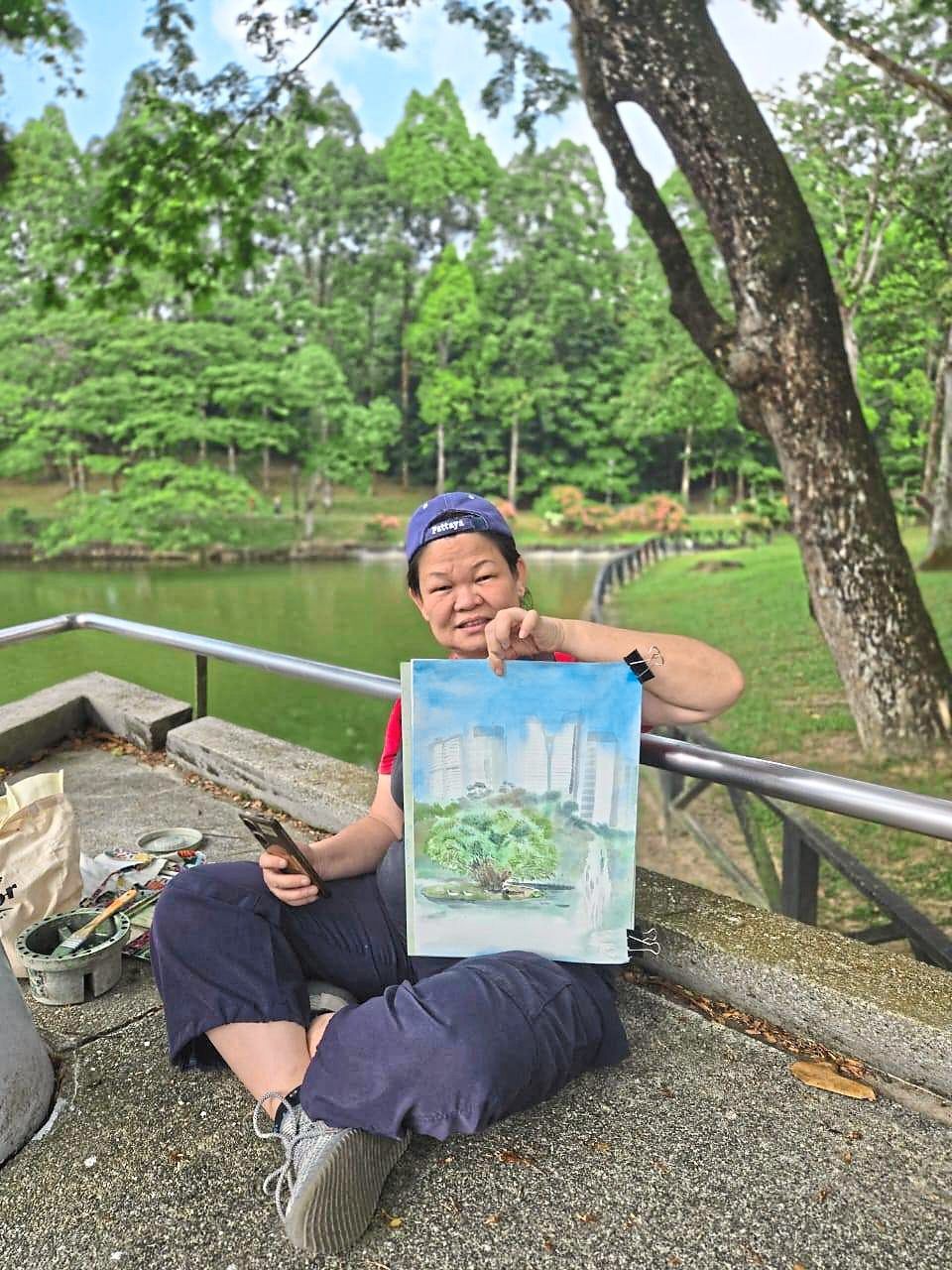
“I truly believe art is in our life – from dressing, colour mixing, household arrangement, even flowers in our garden – all these make us alive,” says Chin, who when not painting or teaching Chinese brush painting, actively joins art tours and exhibitions. On weekends, she joins Sketchwalk KL, a group of artists doing street paintings.
As the final hour of the Tuesday class winds down, senior students from the incoming line-dancing group start to trickle in. The quiet focus of the art session is broken by the gentle chatter and the promise of new energy.
Chin and her class of four slowly gather their now-dried paintings, and pack their brushes and paints. Their movements are not hurried, but calm; their faces are cheerful – a testament to the profound peace they’ve found in the precise, perfect imperfection of their strokes.