The days leading up to Deepavali are extra special for double-leg amputee and kidney dialysis patient Santhi Sellaperumal, 56.
This year, her family members and relatives have come together to add even more colour to the celebrations. They are helping her decorate her home and prepare a spread of traditional Indian dishes and festive snacks.
For the homemaker from Lukut, Negri Sembilan, nothing means more than having her loved ones by her side as Deepavali - which is on Monday - draws near.
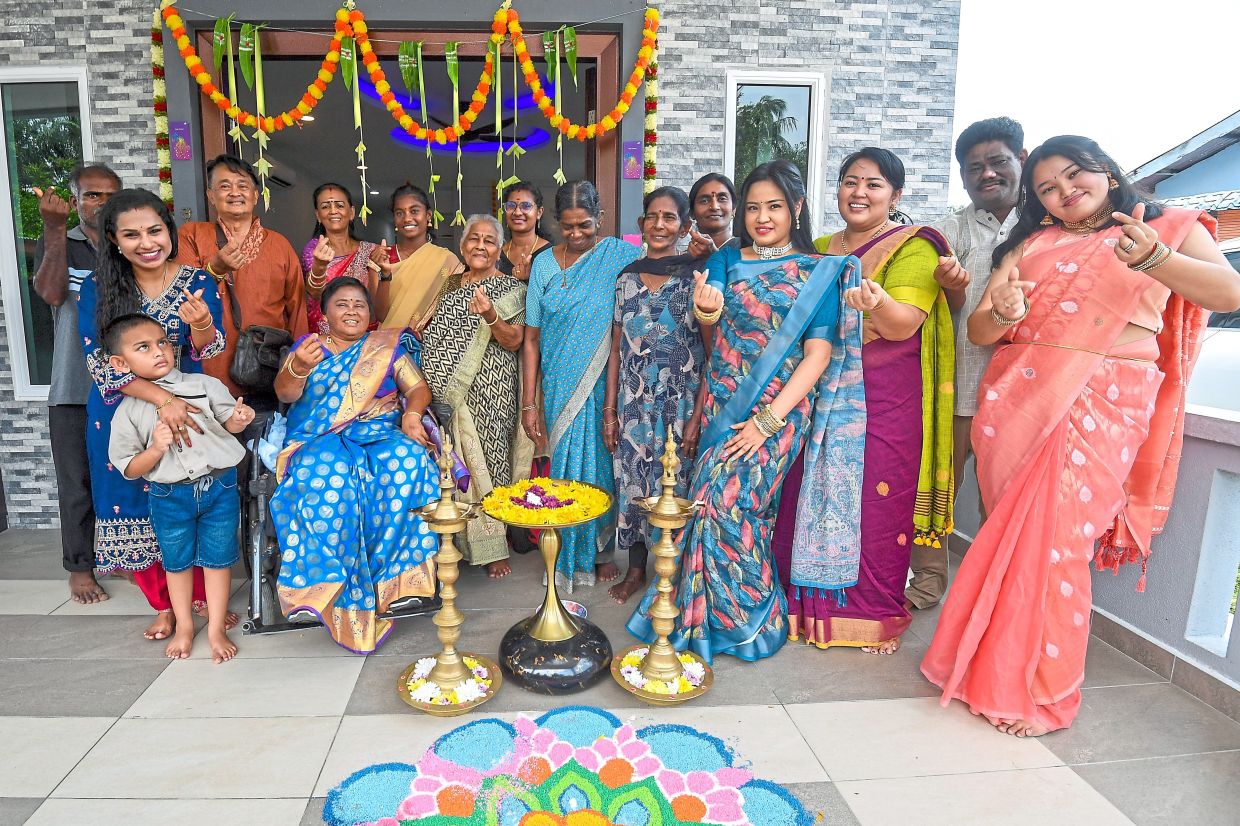
"Deepavali is always meriah (lively) and filled with love. When my siblings, children and grandchildren come home for the celebrations, the house feels complete again. It's so nice to have everyone together during Deepavali," says Santhi, who is of Indian and Chinese parentage.
Deepavali is observed by Hindus, Jains and Sikhs, and is celebrated in many different cultures around the world. The festival, which originated in India, is marked by the lighting of diyas (oil lamps) to symbolise the triumph of light over darkness and good over evil.
Festive spirit
Knowing that Santhi now moves around with the help of a wheelchair, her siblings and relatives have come together in full force to help her with Deepavali preparations.
In the living room, her older brother, retiree S. Gunasegaran, 61, and her brother-in-law, businessman Sundar Veeramalai, 52, are putting up a thoranam garland (made out of fresh mango leaves) at the front entrance.
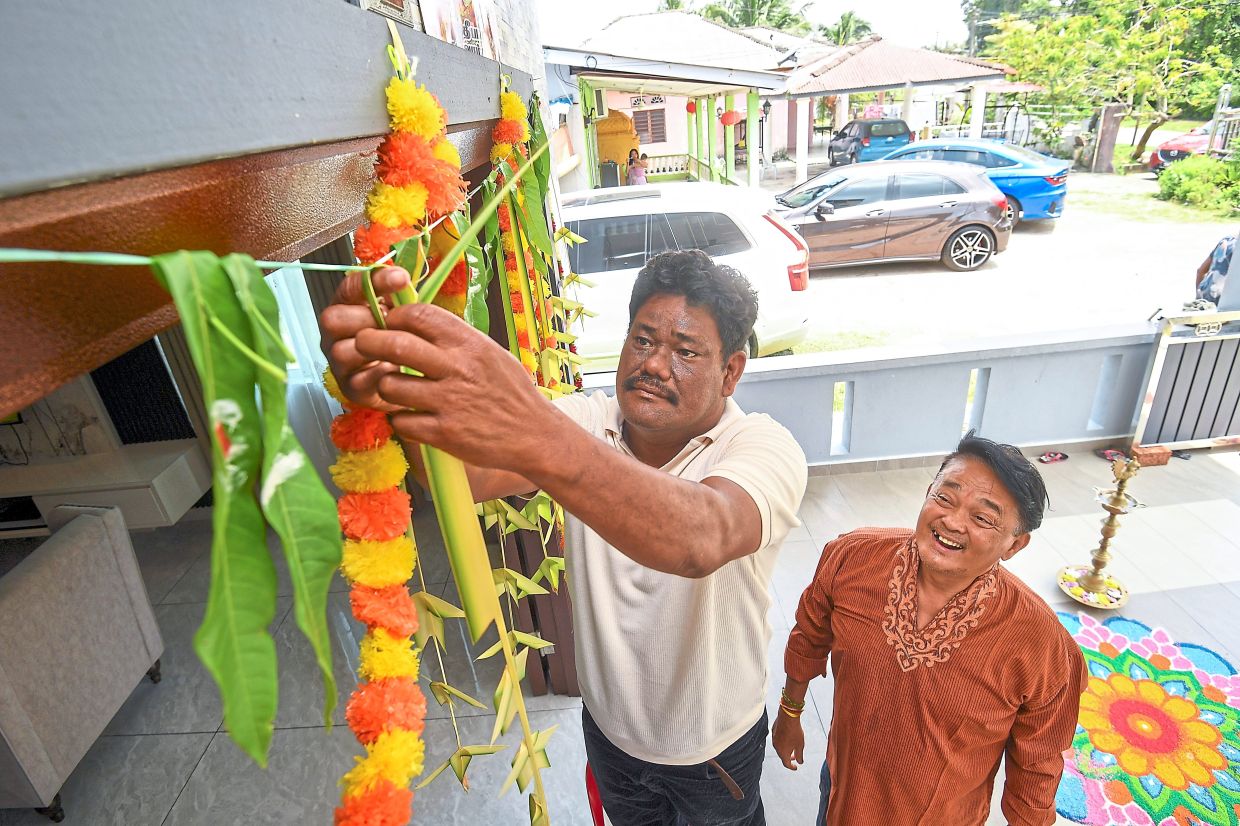
According to Gunasegaran, hanging mango leaves at the doorway is a common Hindu tradition believed to ward off evil and bring prosperity during Deepavali.
"We place it at the entrance to welcome Goddess Lakshmi (who represents prosperity) and Goddess Saraswati (knowledge).
"Some families tie an odd number of mango leaves - typically three, five, seven, nine or eleven - as these numbers are considered auspicious in Hindu culture and believed to attract deities, prosperity and positive energy," says Gunasegaran, who travelled from Nilai, Negri Sembilan to help Santhi with this year's decorations.
To spruce up the place, the men have also placed plastic marigold garlands around the living room and dining room.
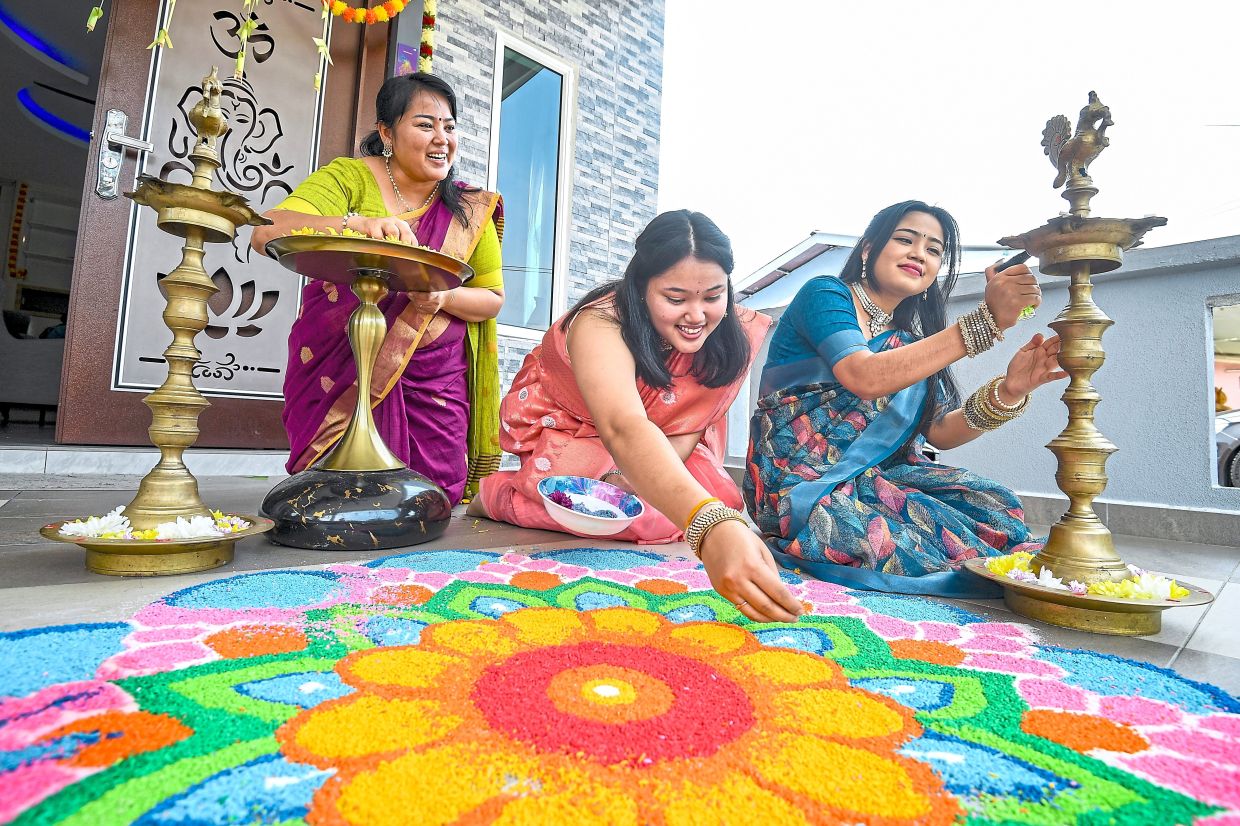
At the porch, Santhi's younger sister, homemaker S. Kalarani, 46, puts the final touches on the kolam - a traditional Indian art form created by drawing intricate patterns on the ground using coloured rice.
Kalarani's daughters - bank executive Mishalini Sundar, 26, and information technology executive Yashinavi Sundar, 23 - decorates the kuthu vilakku (traditional oil lamp) with flowers to complement the kolam.
This year's kolam theme features marigolds, which symbolise blessings and prosperity."The kuthu vilakku is a must-have during Deepavali as it symbolises light. We light it to welcome Goddess Lakshmi into our homes on this special day," explains Kalarani.
Family comes first
Family has always been Santhi's greatest source of strength through all of life's ups and downs. They have stood by her after her leg amputation and supported her through every stage of her dialysis journey.
Santhi operated an Indian restaurant in Lukut for nearly 25 years. Sadly, things took a turn for the worse in 2019 when she suffered severe burns after a hot water spill at the restaurant. She later developed an infection, which led to the amputation of her legs.
Since 2021, she has been undergoing dialysis three times a week due to kidney failure.
The grandmother of seven admits that adjusting to life as a person with disabilities hasn't been easy.
"I felt so down after the amputation. I cried a lot and felt like it was the end of my life," she says, her eyes welling with tears. "I am grateful to my family for always being there for me. Their love and encouragement gave me the strength to carry on.
"My advice to others with disabilities is to stay strong and never give up. Learn to adapt and keep moving forward. Even if I have to manage things from my wheelchair, I will," says Santhi, who has an Indonesian domestic helper to help her manage her home.
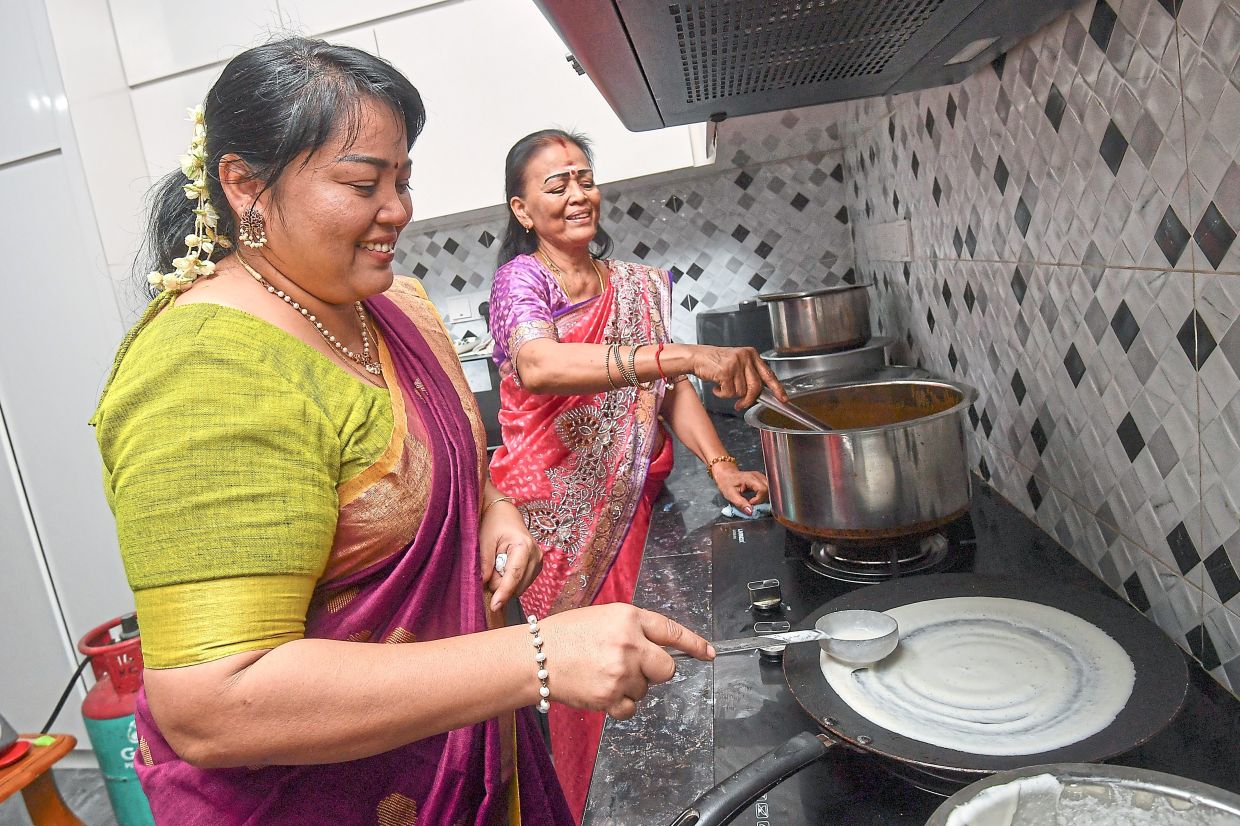
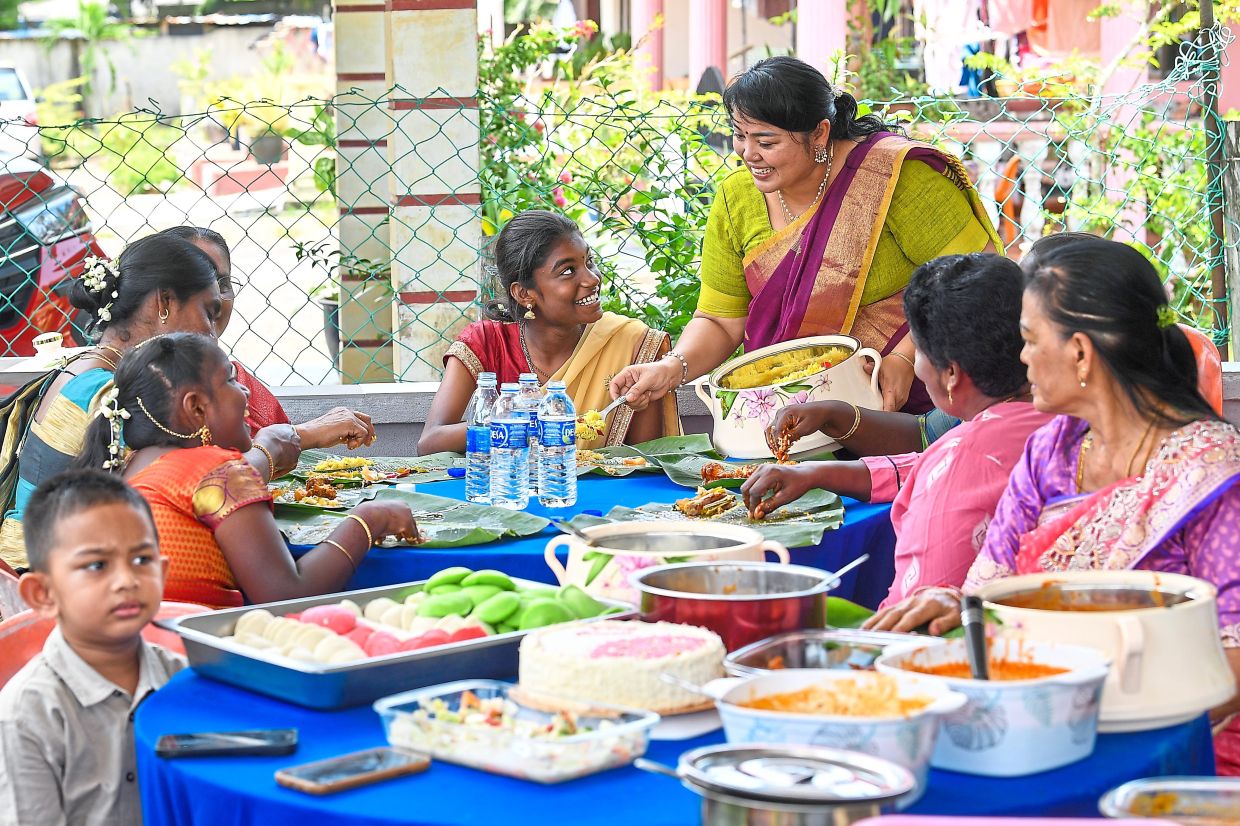
Having run a restaurant for many years, it's no surprise that cooking is one of Santhi’s greatest passions. And this year, as always, she will be preparing a scrumptious Deepavali feast including thosai, chicken curry, ghee rice, mutton peratal and idli.
Rock solid
Santhi is also gearing up to make her family's favourite traditional snacks for the festive season, which include achi muruku, muruku, nei urundai and chippi. Last on the list is kallu urundai, a South Indian sweet snack which translates to "stone balls".
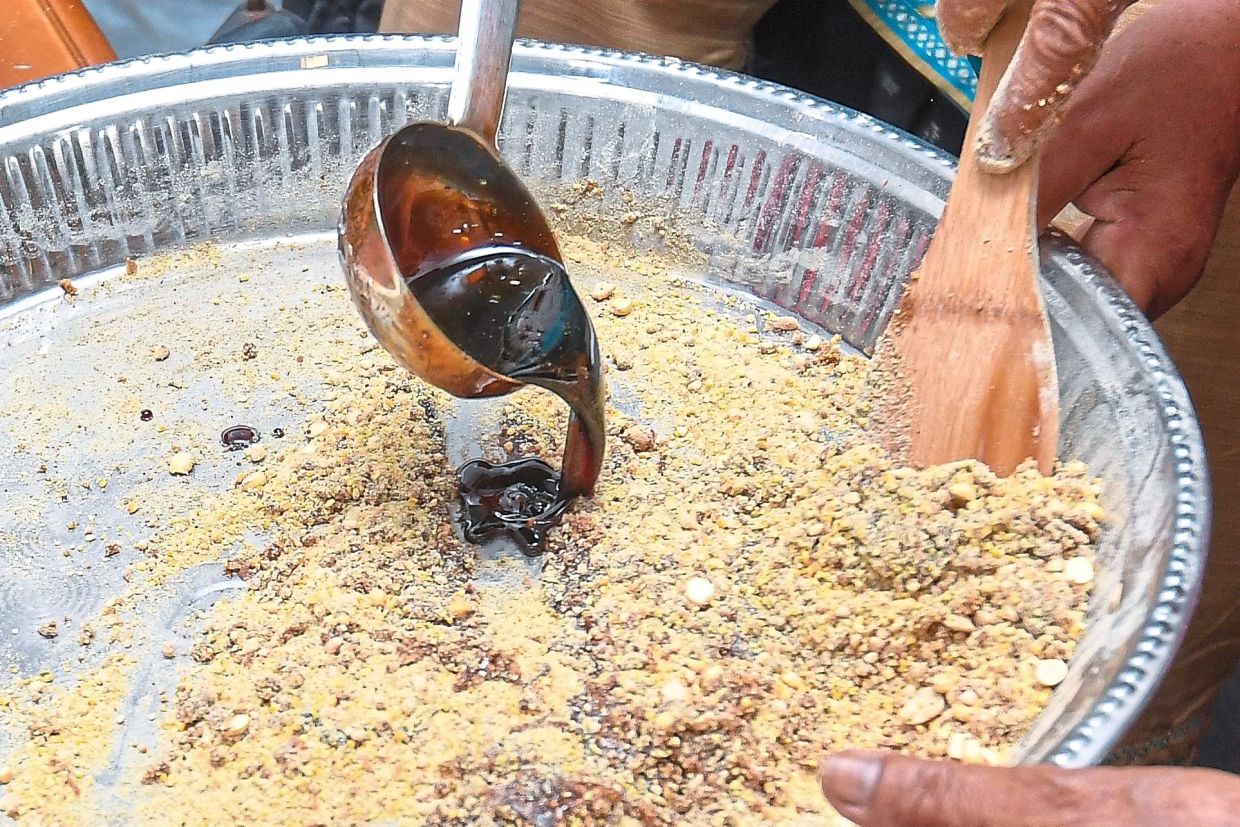
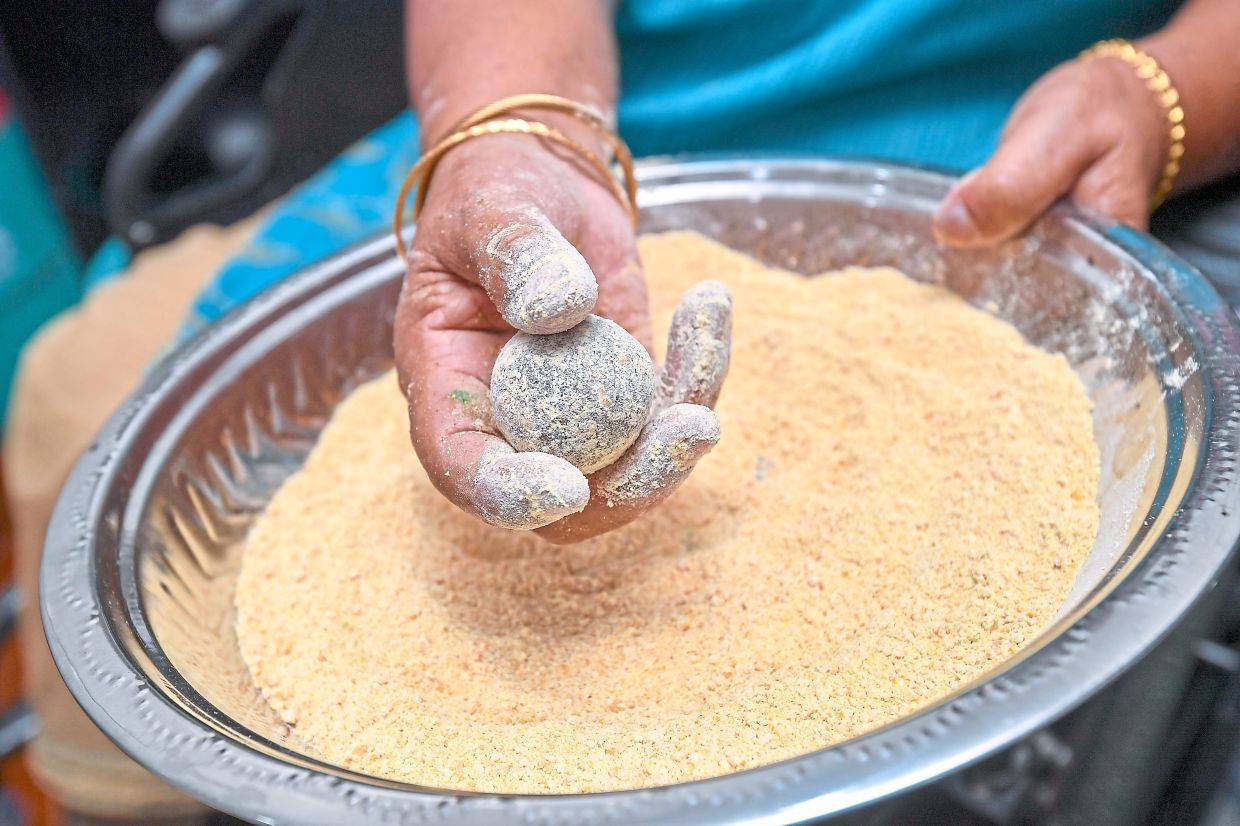
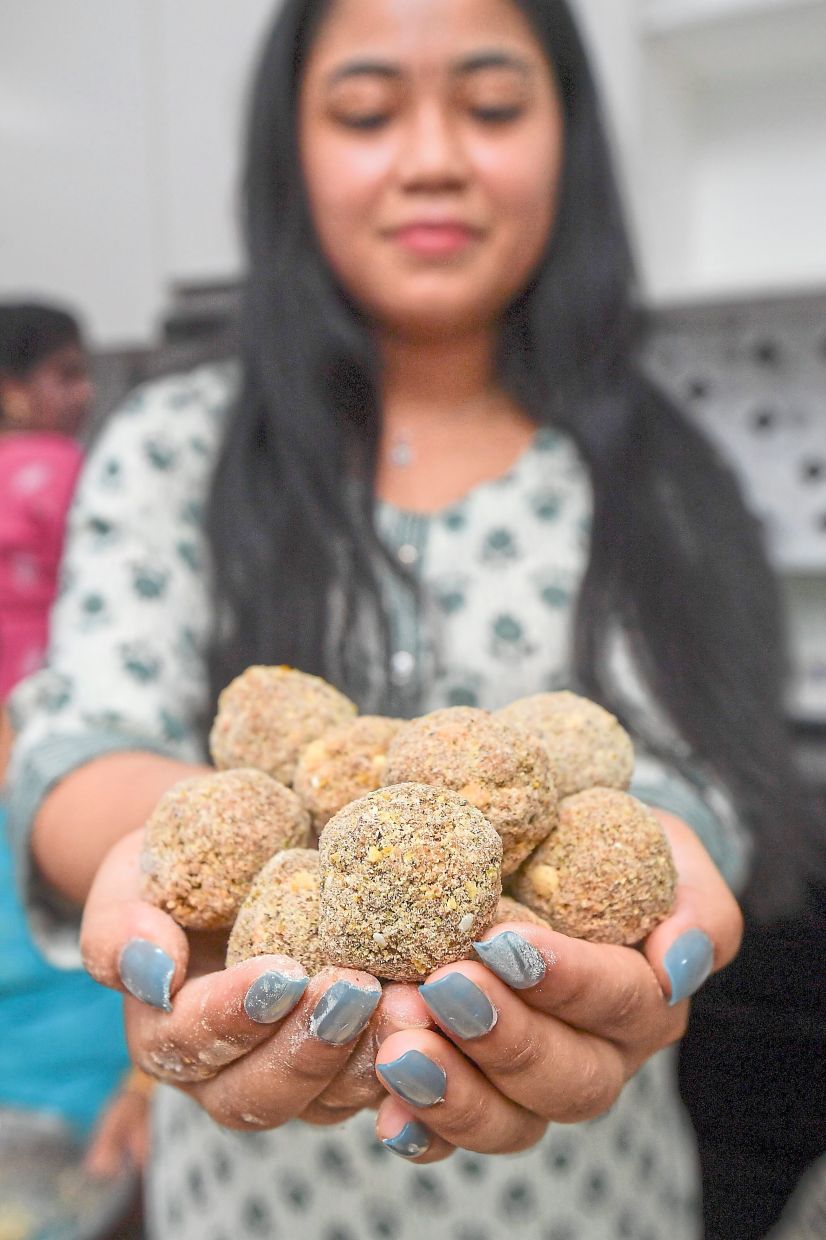
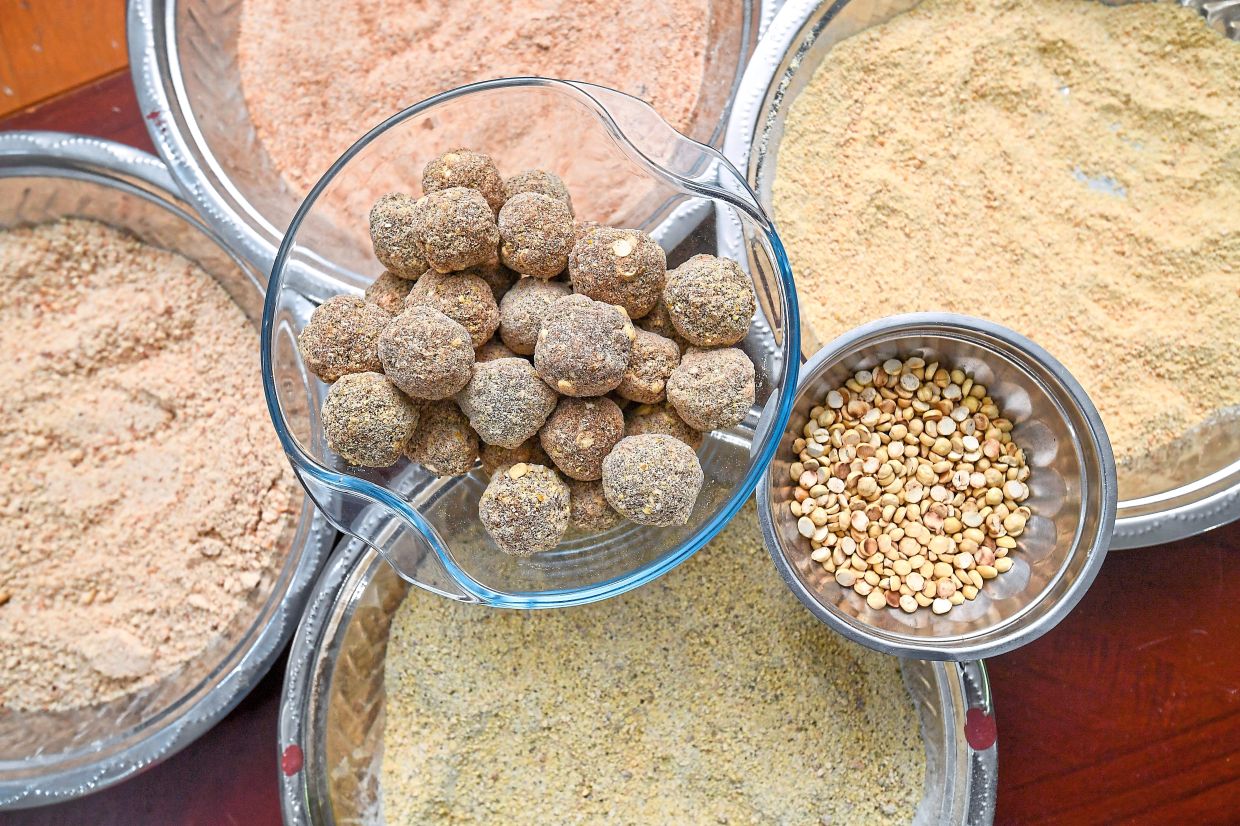
It is made from roasted and ground dry ingredients such as green gram, chana dhal, parboiled rice and peanuts. Hot jaggery syrup binds the mixture, which is then shaped into firm round balls.
"The most challenging part," Santhi says, "is getting the syrup just right. Everything depends on its texture - it must reach a one-thread consistency. When you drop a little bit of syrup into water and it forms a soft ball, that's when you know it’s ready.
"Kallu urundai must be shaped while the flour and jaggery mixture is still hot, so timing and precision are crucial. If there isn't enough jaggery syrup, the whole thing will crumble," she explains.
Unlike popular Deepavali snacks such as muruku and nei urundai, kallu urundai has become a rarity. Few people still know how to make this traditional treat, and it's seldom served during the festive season.
The process is lengthy and requires patience — from washing and sun-drying the ingredients to roasting, blending, preparing the jaggery syrup to the right consistency, and finally shaping the mixture into balls.
And these are the very steps Santhi continues to follow faithfully — despite her disability — to keep the traditional recipe alive.
"The younger generation says it's too much work to make kallu urundai and would rather skip it for Deepavali. It is sad because it is such a traditional sweet, and only the older folks know how to do it properly," says Santhi, who learned to make traditional Indian snacks from her mother and mother-in-law.
She is grateful that Mishalini has shown interest in learning how to make kallu urundai. Despite her busy work schedule, Mishalini has taken time off to learn and master the traditional snack.
Mishalini says: "Periamma's (Big Aunty) kallu urundai is the best. We always look forward to having it during Deepavali. By learning it, I can keep this recipe alive for years to come.
"The hardest part is knowing when the syrup has reached the right consistency," she explains. "The fire has to be kept low, and you must know exactly when to add it in. Another tough part is pouring the hot syrup into the flour — it is so hot that it burns my palms when I shape it into balls."
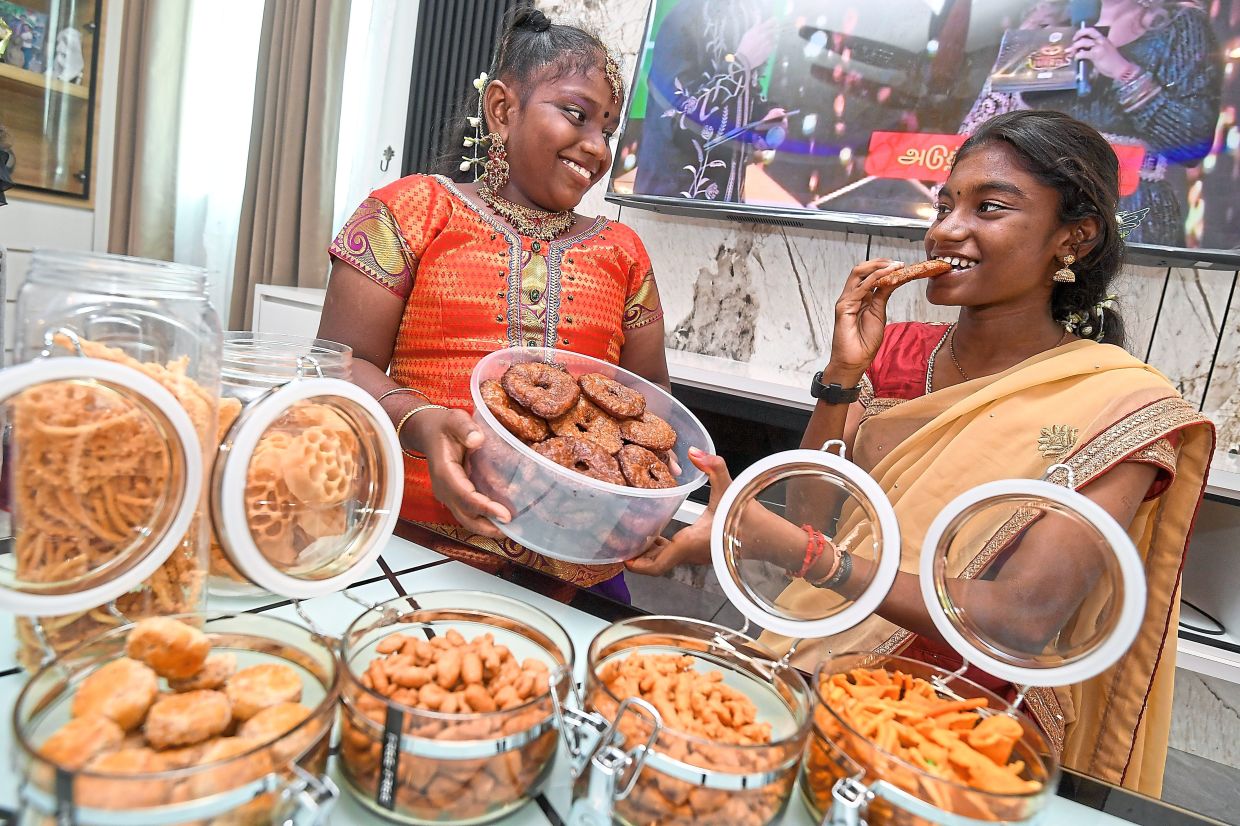
Mishalini admits that it’s much easier to buy ready-made snacks from online platforms, where there are plenty of choices at affordable prices.
"But the problem is, you never really know how they’ll taste," she says, shrugging. "I guess that's why Periamma always reminds us to learn how to make traditional snacks ourselves."
Santhi hopes that more of her family members - especially her children, in-laws and nieces - will take the time to learn this tradition.
"These snacks will slowly disappear if no one learns to make them the traditional way. My wish is for these recipes to stay in our family for generations to come," she says.
Sweet heritage
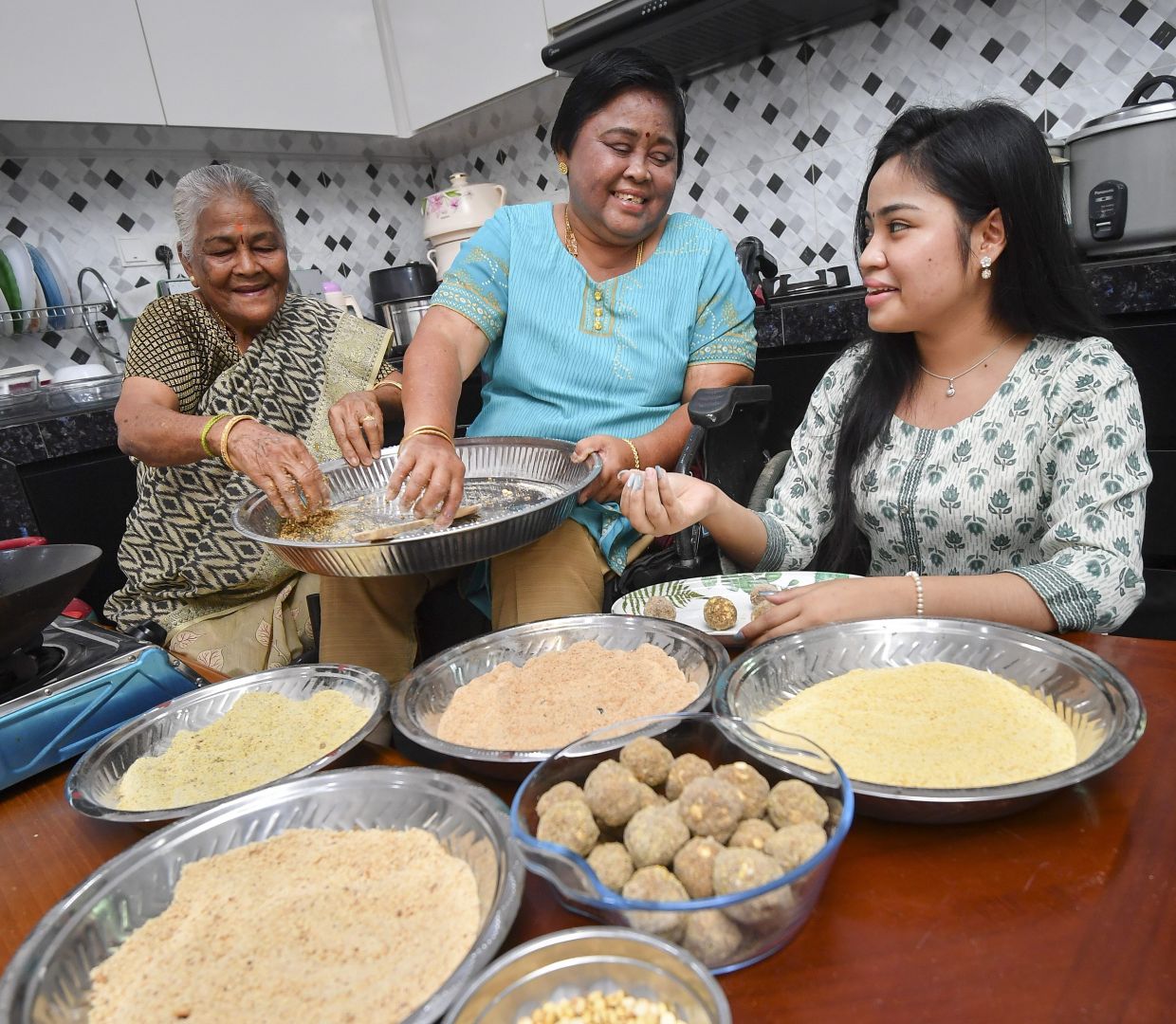
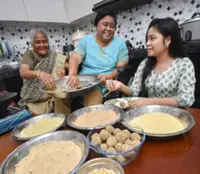
Three generations come together as Mishalini Sundar (right) learns to make kallu urundai (stone balls) from her aunt, double-leg amputee Santhi Perumal (centre), and her grand-aunt, Ramayee Letchumanan (left). Photos: The Star/Izzrafiq Alias
From left: Kalarani, Yashinavi and Mishalini add the finishing touches to a colourful kolam to welcome Deepavali.
Photo: The Star/Izzrafiq Alias
Kallu urundai has become a rare find today, with only a handful of people still keeping the tradition alive.
Photo: The Star/Izzrafiq Alias
Kallu urundai is among the many traditional Indian snacks that are slowly disappearing from modern kitchens.
Photo: The Star/Izzrafiq Alias
Hot jaggery syrup is poured into the mixture to bind the ingredients together.
Photo: The Star/Izzrafiq Alias
Sundar (left) and Gunaseelan work together to hang the thoranam at the doorway, a symbolic act believed to bring prosperity during Deepavali.
Photo: The Star/Izzrafiq Alias
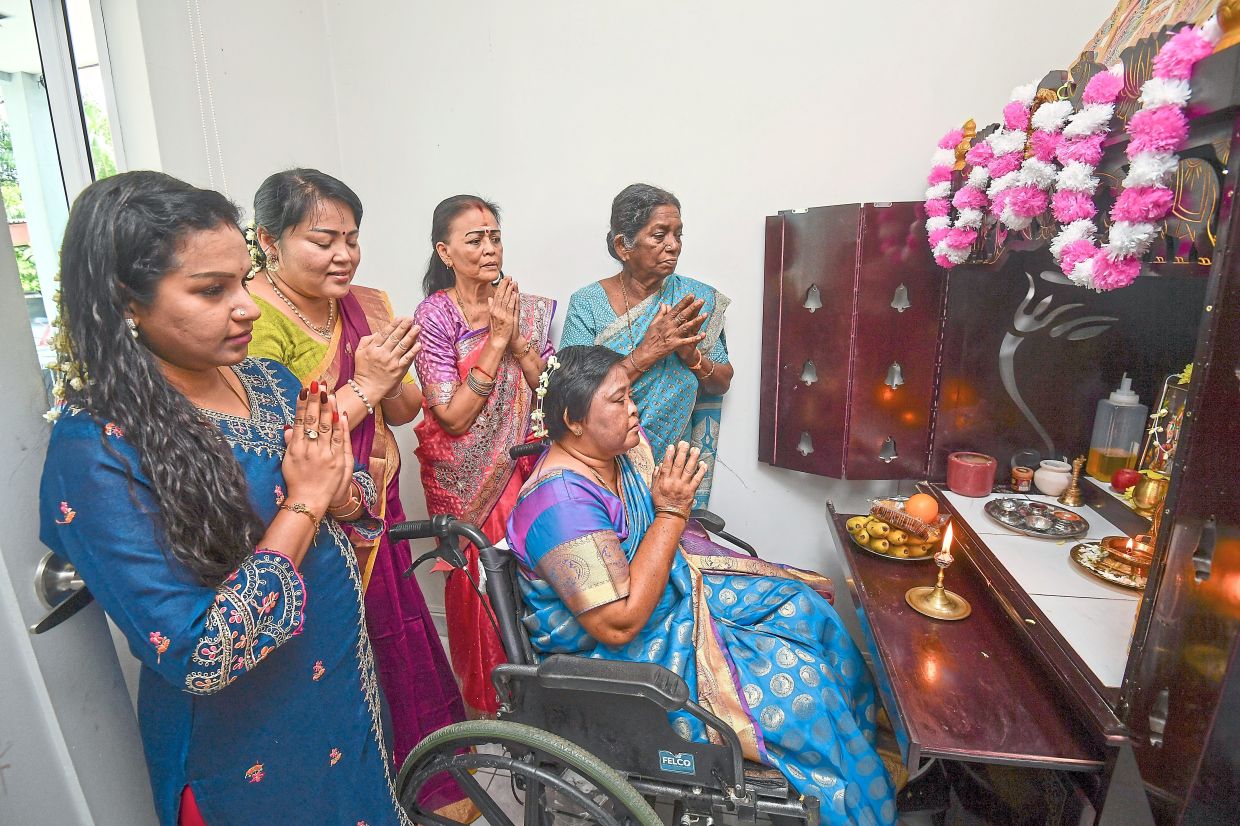
Santhi (in wheelchair) is happy to have her family by her side for Deepavali.
Photo: The Star/Izzrafiq Alias
Deepavali celebrates family bonds and togetherness.
Photo: The Star/Izzrafiq Alias
Harshani Rajendran, nine, (left) and Harini Loganathan, 14, enjoying traditional Deepavali treats prepared by Santhi.
Photo: The Star/Izzrafiq Alias
Sisters Kalavani (left) and Eles whip up Deepavali favourites such as thosai and chicken curry.
Photo: The Star/Izzrafiq Alias
For many families, Deepavali is a time to reconnect with loved ones.
Photo: The Star/Izzrafiq Alias
Kallu urundai, or ‘stone ball’, is known for its tough texture once the jaggery hardens.
— IZZRAFIQ ALIAS/The Star
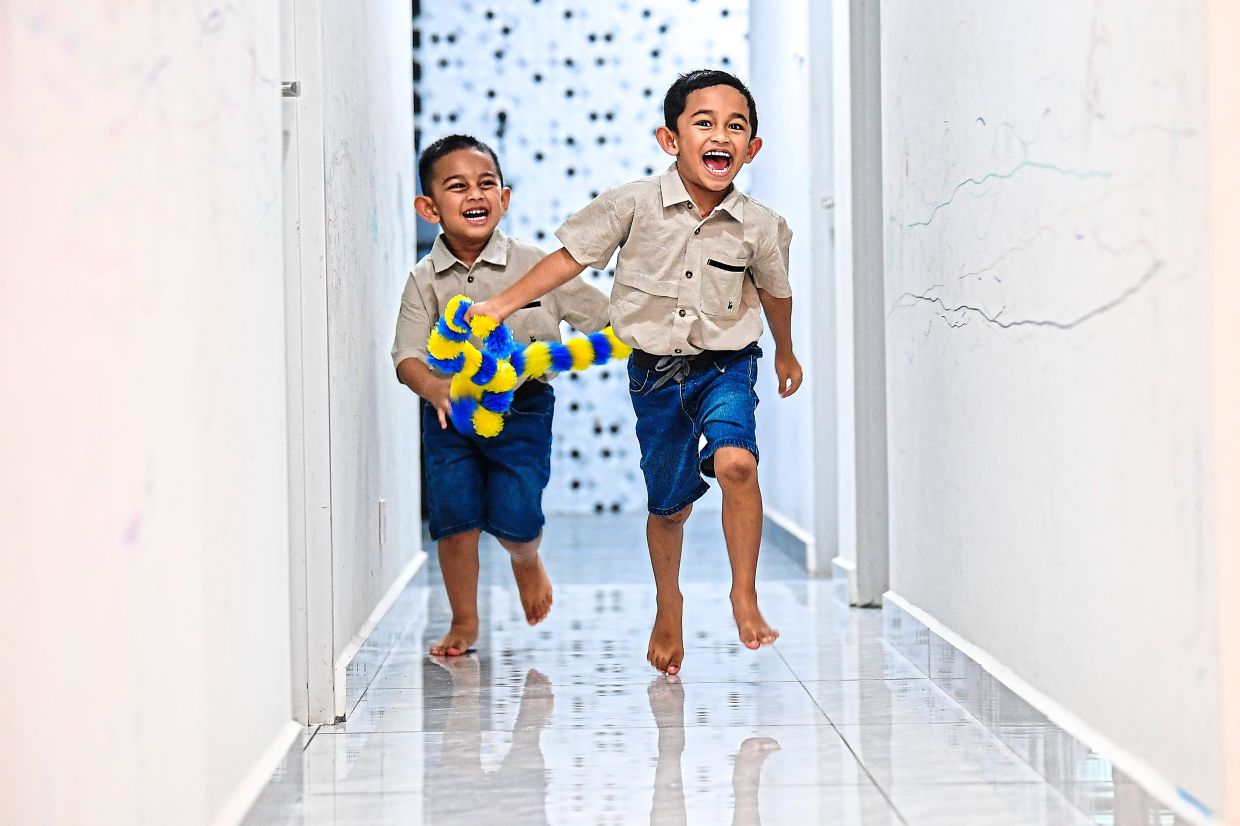
Kids find joy in the little things – even the thoranam – during Deepavali preparations.
— IZZRAFIQ ALIAS/The Star