



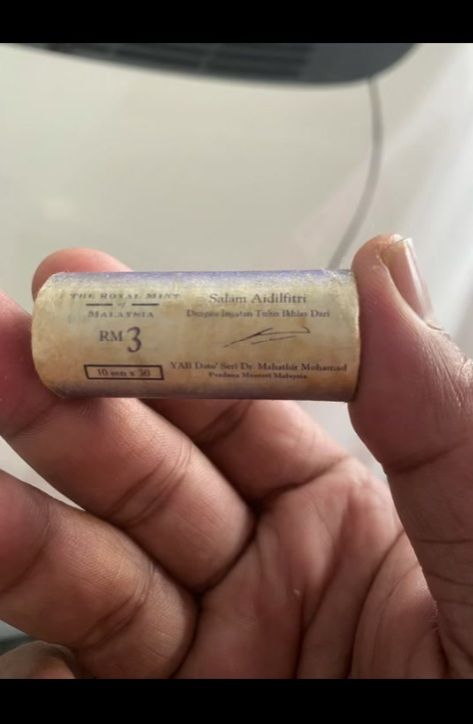
A rolled stack of 30 pieces of 10 sen coins may be worth RM3, but for Syamil Shuib, this is his priceless possession.
Still neatly wrapped in paper bearing the wish Salam Aidilfitri, it had the signature of former Prime Minister Tun Dr Mahathir Mohamad.
“Tun gave me duit raya 29 years ago, thank you @chedetofficial,” captions Syamil in his 30-second TikTok video, which features the rare duit raya (or money given during Hari Raya Aidilfitri) alongside a photograph of himself as a child with Tun Dr Mahathir.
The video garnered over 1.6 million views and 120,000 likes in just three days since its release on March 17, sparking a wave of nostalgia.
“The current generation might not come across duit raya like this anymore,” the caption adds.
For children, duit raya is one of the highlights of Hari Raya Aidilfitri, on top of a celebration with extended family.
But duit raya in coins — rolled-up or loose — are relics of the past, a stark contrast to the crisp bank notes and digital transfers that define modern duit raya.
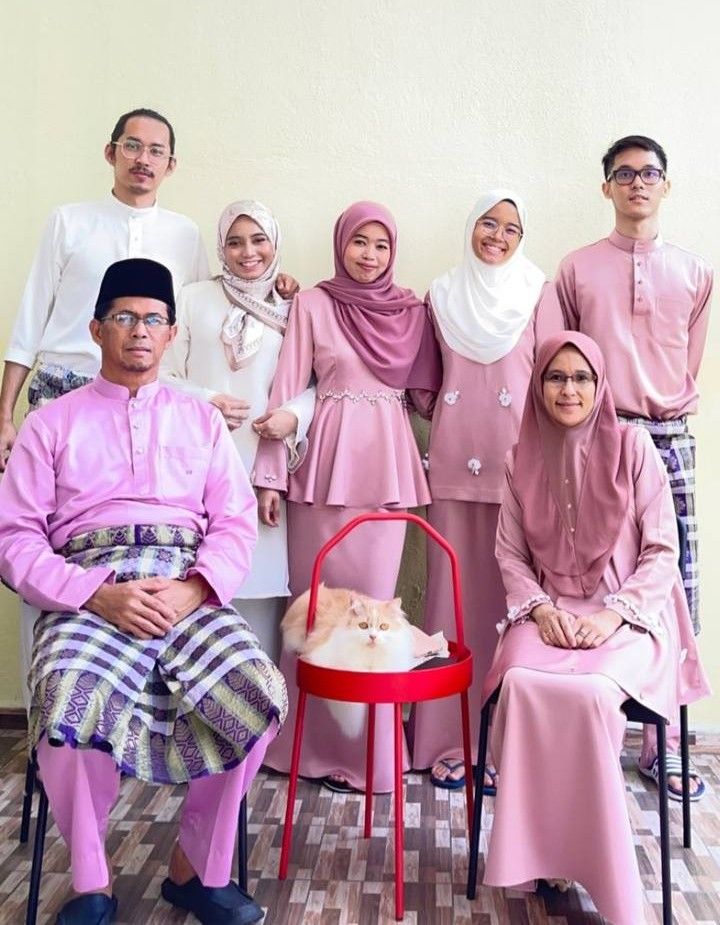
Raziah Osman, 58, remembers her childhood Hari Raya celebration and duit raya experiences vividly.
“When I was a child, receiving 50 sen or RM1 was the norm. In those days, kids eagerly waited for Hari Raya to collect duit raya from our elders,” says the retiree from Petaling Jaya, Selangor.
But it was not the amount that mattered. “We were very happy to receive any amount of duit raya,” she reminisces, “but those amounts are now almost non-existent.”
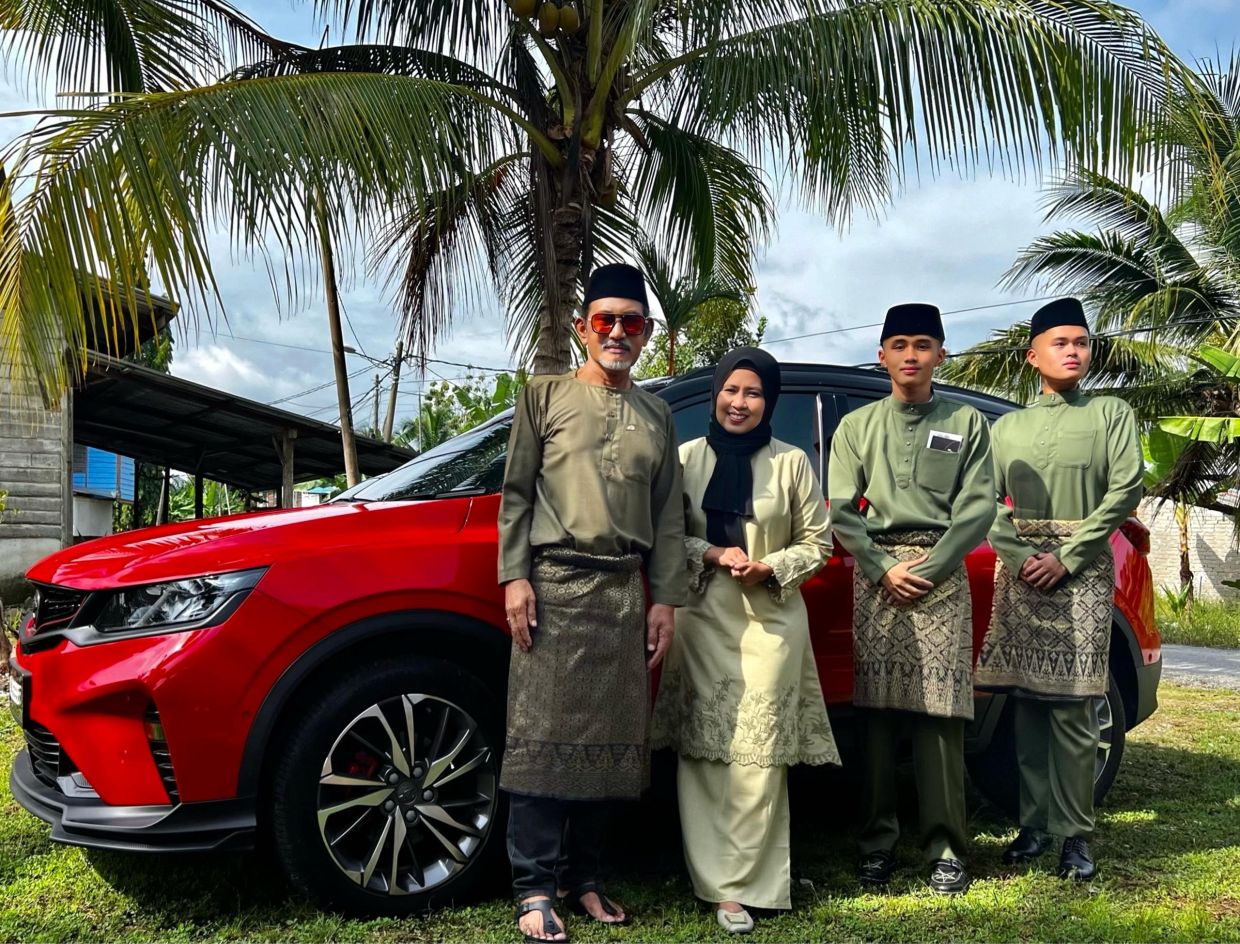
Muhammad Adam Muhawim, 25, recalls how a 50 sen duit raya surprised him and his cousins during Hari Raya at his father’s hometown in Bagan Datuk, Perak, 15 years ago.
“A 50 sen duit raya was new to us,” says the interior designer from Kuala Lumpur, “but we were still grateful for it and used it to buy snacks from the nearest sundry shop.”
Raziah acknowledges the increase in the amount of duit raya given now: “We hardly give 50 sen to children anymore. As a giver, I need to be realistic with the amount given, considering the current economic landscape,” says the grandmother of two.
Evolution of duit raya
Muhammad Adam agrees that this tradition has evolved from giving physical bank notes to e-wallet transfer.
As digitalisation rapidly takes over daily life, he says many of his family members have started giving duit raya via e-wallet transfer.
“It felt strange at first because it lacked the emotion that traditional duit raya carries, but we have adapted to it,” he says.
Traditionally, duit raya is given by the host when guests leave, followed by "bersalaman", a gesture that marks respect to elders, especially older family members. “But what I like about it is that some e-transfers come with voice messages, making the experience of receiving duit raya personalised.”
While he appreciates the convenience of technology, Muhammad Adam still values the personal touch of physical money packets and the tangible connection they represent.
“Back then it was all about the excitement of receiving colourful, beautifully designed money packets and the personal blessings within each 'sampul',” says the elder of two siblings.
So intrigued by the beautiful designs of those packets, he quietly hoped for his turn to give duit raya to his younger brother and cousins. And this Hari Raya will be his first year of giving duit raya.
“There’s an unspoken tradition that once you start work, you should give duit raya, and I am looking forward to seeing the faces of my younger relatives when they receive it from me,” says an excited Muhammad Adam.
To make it an even more special debut, he plans to have his packets match his baju raya, adding a personal and aesthetic touch to the experience.
Raziah remembers the joy she felt when she first gave duit raya after securing her own income.
“It was truly fulfilling to share my blessings with family members during Hari Raya and to see their joy in accepting it,” she says.
Now, her working children have taken up the tradition, ensuring its continuity in the family.
Cultural differences
In some aspects, duit raya is similar to the Chinese practice of giving ang pow during Chinese New Year.In Chinese tradition, the money packets are given out by married adults to both children and unmarried adults as a symbol of prosperity.
However, among the Malays, once a person works, he or she assumes the role of a giver, irrespective of marital status. Duit raya is given to both children and the elderly, like parents and older aunts and uncles, also irrespective of their marital status.
“While there are cultural differences between these two traditions, they both speak of generosity and sharing of 'rezeki' (blessings) during festive seasons,” says Raziah.
Traditionally, the Chinese prefer red ang pow packets, as the colour symbolises good luck. Duit raya packets are mostly in green.
“Green feels like a beautiful blend of tradition and modernity, reflecting the essence of the celebration and making it uniquely Malaysian,” Muhammad Adam says.
Beyond its amount, both Raziah and Muhammad Adam agree that duit raya is more than just about monetary value, despite society's expectations.
“It’s more about sharing our blessings and bringing joy to others, which align with the concept of charity in Islam. The amount given should depend on an individual's capability. Even a small amount carries a big meaning,” she says.
Attuned to the growing demand of giving a large amount – a trend fuelled by social media and the rising cost of living – Muhammad Adam, who feels a slight pressure himself, stands firm on the belief that it is the thought that matters.
“Hari Raya is about celebrating togetherness, passing on a little joy and spreading goodwill,” he says, “It's not about keeping up with appearances.”
Both Raziah and Muhammad Adam believe that the essence of giving duit raya and the values it carries will likely adapt to modern times.
“I believe duit raya will always be a part of Hari Raya, although its form may change,” Muhammad Adam says. “It might become less about giving out physical money, but more about the act of giving and connecting.
”Raziah too, remains optimistic. “Giving and sharing blessings is a beautiful tradition that should continue for generations,” she says.
"Giving duit raya is a practice that exemplifies values like generosity and altruism, cultivating a sense of purpose and a more compassionate society," she concludes.
