
After a prolonged absence, one of Penang’s iconic double-decker ferries has re-emerged as a star attraction along the Weld Quay waterfront.
But rather than shuttling commuters across the channel, it now takes visitors on a very different kind of journey – down memory lane.
The retired workhorse Pulau Pinang has been reborn as the Penang Ferry Museum, a floating repository of the 132-year-old ferry service’s history and legacy.
Moored along a promenade between the active Raja Tun Uda Terminal and Tanjung City Marina in George Town, the vessel has been returned to its original yellow livery.
Its once breezy car decks have been transformed into air-conditioned exhibition galleries showcasing original artefacts, photographs, videos, scale models and interactive experiences.
These trace the evolution of a vital service that not only shaped daily life for millions across the island and mainland, but also helped power the state’s economic development.
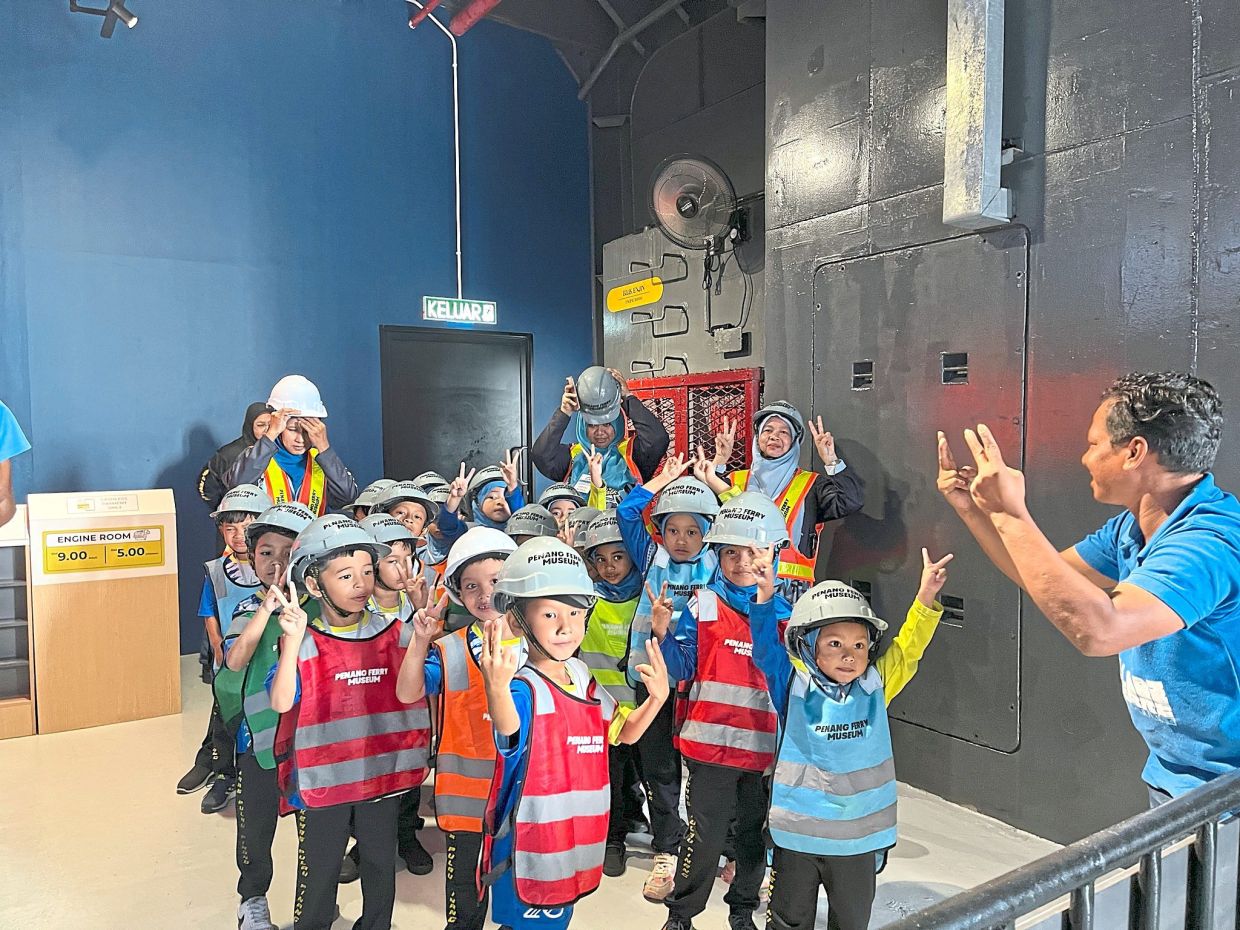
The engine room and navigation deck, previously off-limits, are now accessible, give visitors a glimpse into the ferries’ inner workings.
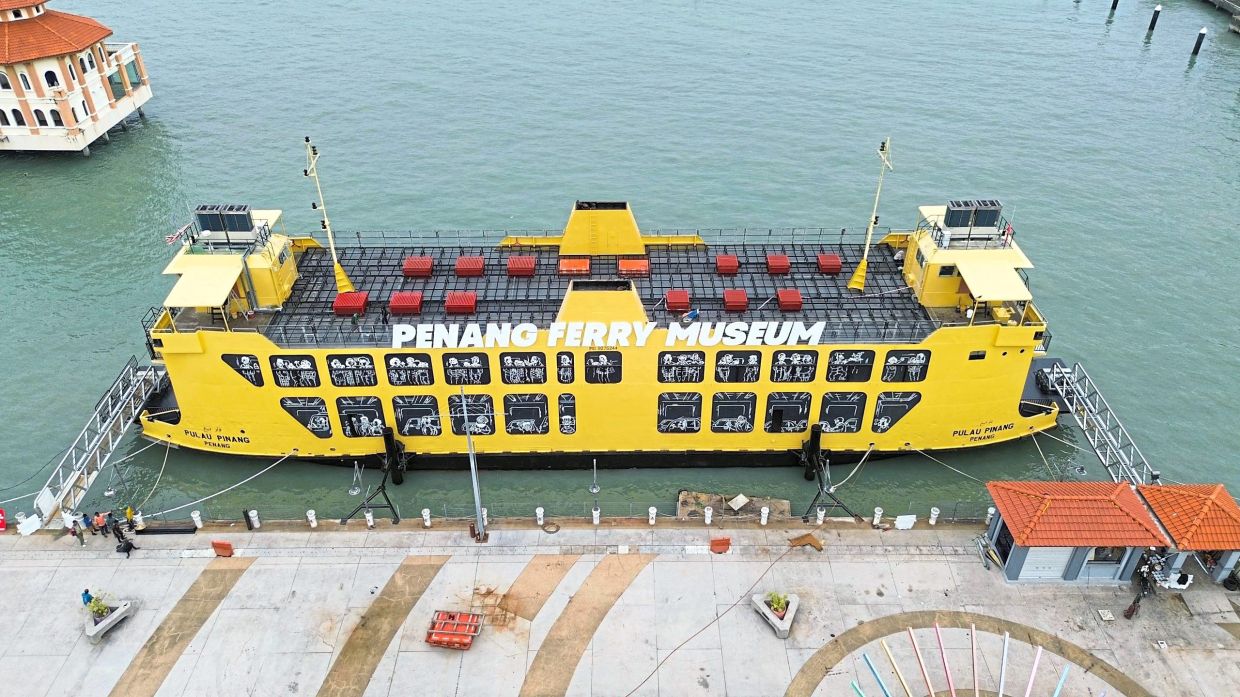
The museum had its soft opening on Malaysia Day last year and attracted over 13,000 local and international visitors by the time of its official launch on Jan 12.
Abdul Hadi Abu Osman, CEO of the attraction’s operator Printhero Merchandise, said it is the first floating passenger ferry museum in the world.
“Here, the vessel itself is the main artefact. When you come aboard, you not only get to view history but feel a part of it yourself.
“By mooring it to pylons, the ferry stays afloat and moves with the tides for a more authentic experience,” he said.
Steadfast survivor
This Pulau Pinang – the second ferry named in honour of the state – was the 16th and last, double-decker passenger-vehicle vessel used by the service.
Bearing International Maritime Organisation (IMO) registration number 9275244, it was commissioned in 2002 and made countless crossings between the Raja Tun Uda Terminal on the island and the Sultan Abdul Halim Terminal in Butterworth on the mainland.
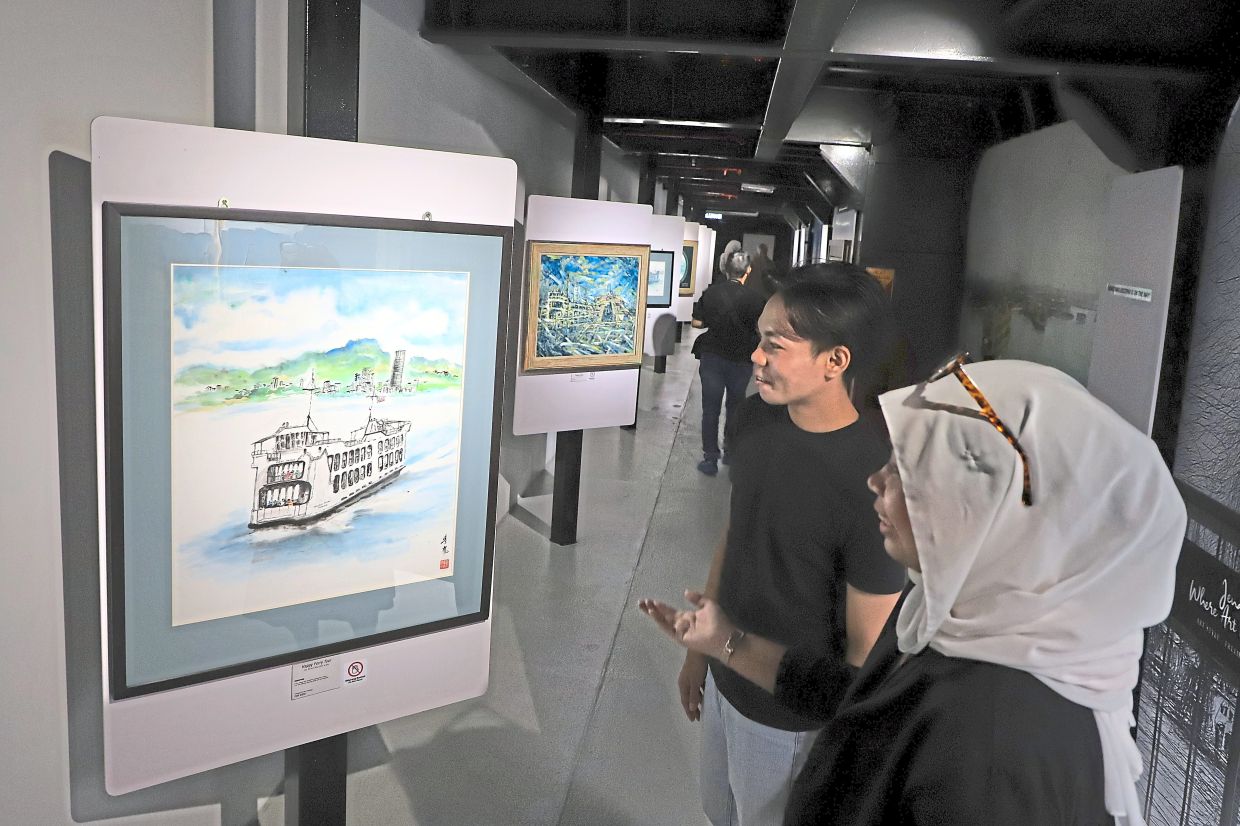
It sported unique paint schemes for most of its service life – a striking red, white and blue combo in the late 2000s and thereafter, green and white with sketches of Penang’s landmarks.
Persistent engine trouble, costly repairs and a lack of parts forced it out of service by November 2019, when it was laid up along the Bagan Dalam river. Exposed to the elements, it took on water in June 2021 and sank into the riverbed.
After being refloated, the Penang Port Commission (PPC) decided to convert it into a museum. Printhero Merchandise won the tender and was granted a 10-year lease. By October 2024, with conversion works about 80% complete, the ferry was ceremonially towed to Swettenham Pier Cruise Terminal for final fitting out.
Then disaster struck again: the hull sprang another leak and it nearly sank, with photos of the heavily listing vessel going viral.
“Our quick action in beaching it in shallower water averted a more serious outcome. After two weeks of extensive repairs, it was finally refloated.
“Restoration works had to begin from scratch. This incurred high additional costs but we had to continue the project due to its heritage significance for Penang,” said Abdul Hadi, who is also museum director.
Now returned to its former glory, the Pulau Pinang stands as a symbol of an enduring survivor of the state’s maritime legacy.
History revisited
Visitors enter the museum on the main deck – once used for vehicle embarkation – via a pierside gangway. A photo tunnel leads into the History Gallery, which traces a chronological timeline of the Penang port and ferry service.
The gallery also documents the tragic collapse of the Sultan Abdul Halim Terminal on July 31, 1988, which killed 32 people and injured 1,674. Memorialised in a diorama, it explains how an unusually large crowd, drawn by two major religious festivals that weekend, caused part of the upper-floor structure to give way.
Next is the Replica Gallery, featuring scale models charting the evolution of Penang’s ferries since the service began in 1894. It starts with the steam-powered launches S.S. Thye Seng, S.S. Lum Seng and S.S. Tung Seng, operated by the Beng Brothers company.
When the Penang Harbour Board (the precursor to PPC) took over in 1924, it introduced purpose-built vessels such as Seberang, Tanjong, Kulim and Bagan.
Heavy losses during World War II led to their replacement with converted British Z-type military landing craft – Senangin, Lidah, Tenggiri and Talang. These single-ended ferries, which required turning around at each crossing, soon proved inefficient as demand grew in the 1950s.
This prompted the development of a new double-deck, double end-loading design, separating vehicles below from seated passengers above. The prototype, delivered in 1957 and christened Pulau Pinang, not only set the template for Penang’s iconic ferries but also established the tradition of naming vessels after Malaysian islands.
Its success led to the Aman and Lumut classes: Pulau Aman, Pulau Tioman, Pulau Pangkor and Pulau Langkawi entered service in 1959, followed by Pulau Lumut in 1965, and Pulau Redang and Pulau Labuan in 1971.
In naval terminology, a “class” is a group of ships built to the same general design or dimensions.
The Undan Class brought a leap forward in 1975. Its members Pulau Undan, Pulau Rawa and Pulau Talang-Talang now carried vehicles on both lower and upper decks.
The larger and more modern Rimau Class with Pulau Rimau, Pulau Angsa and Pulau Kapas joined the fleet in 1981.
For decades until the opening of the Penang Bridge in 1985, these ferries were the only connection between the island and mainland.
The Pinang Class - comprising the museum’s Pulau Pinang and her sistership Pulau Payar - were the last of their kind when entering service in 2002.
Most of the ferries were sold off or scrapped after retirement. The passenger-vehicle service ended in 2020, replaced by passenger and motorbike-only fast boats in 2023.
To prevent confusion that often arose with the ferries’ old island naming convention, the new boats are called Teluk Bahang, Teluk Duyung, Teluk Kampi and Teluk Kumbar.
Beyond the museum, two old ferries remain – Pulau Rimau as a floating restaurant in Bayan Lepas, and Pulau Angsa, slated to become a tourist attraction at Gurney Bay.
Ferry back in time
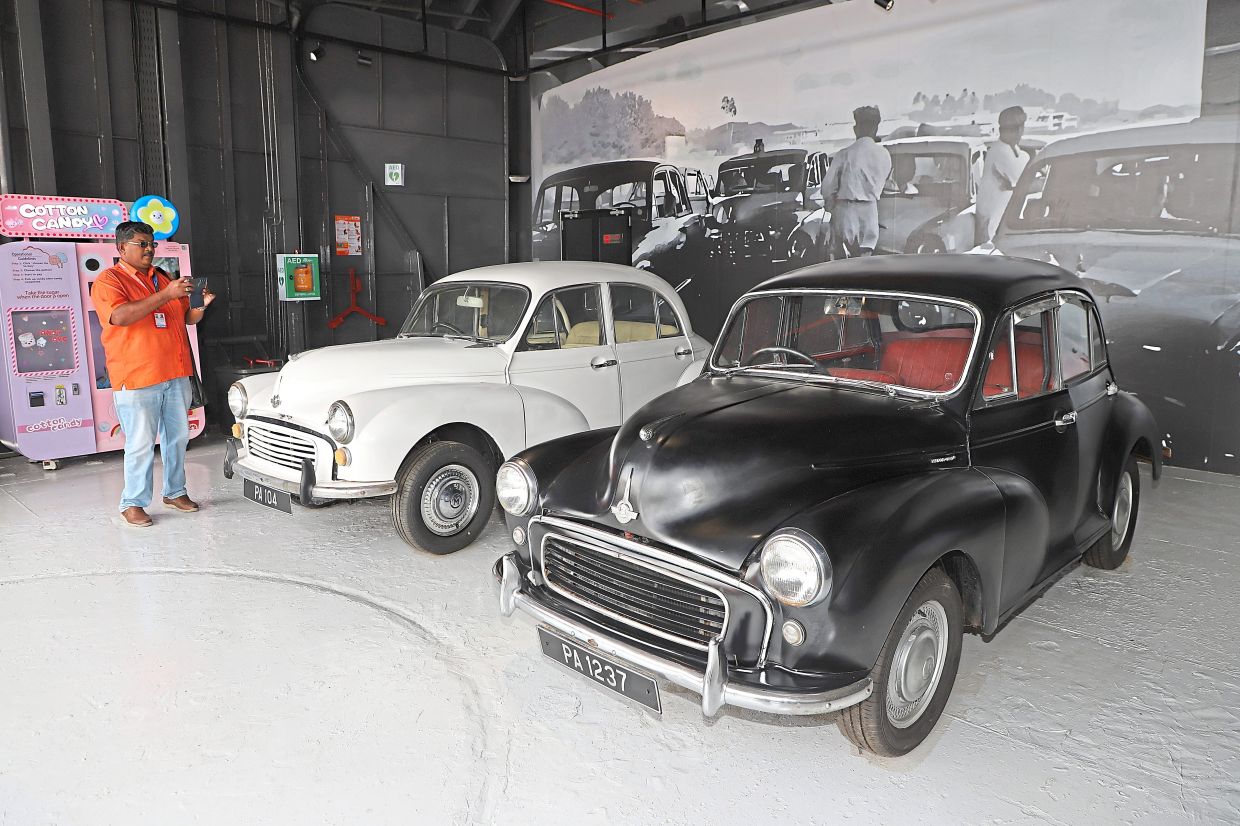
Elsewhere on the lower deck, the Ferry Collection displays salvaged artefacts such as nameplates, ship’s bells, horns and even a Voith Schneider propeller.
A screening room, fitted with old ferry benches, recreates past crossings through colourised archival footage, complete with the blare of the horn and iconic announcements like “Pulau Pinang akan bertolak sekarang!”
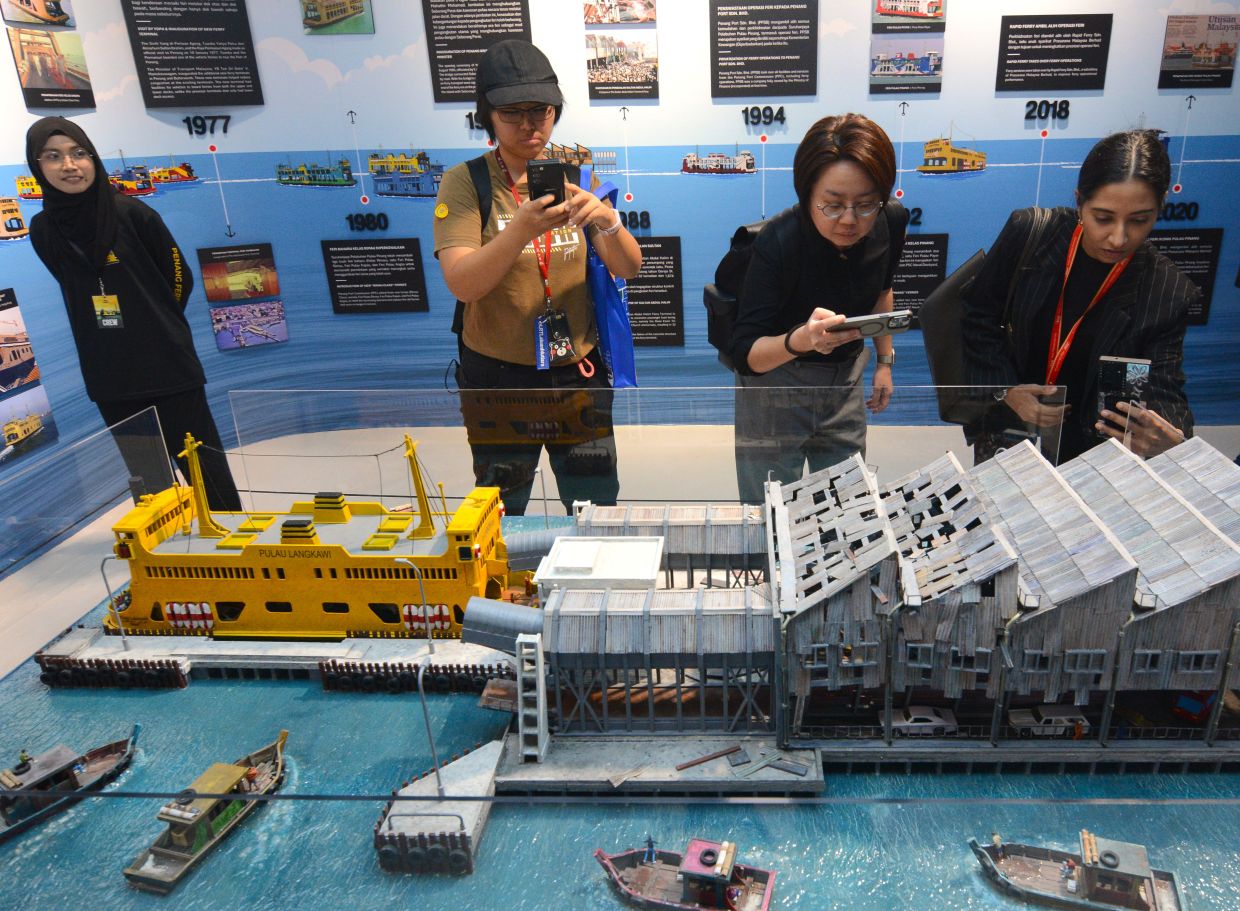
For many, it stirs memories of salty sea air, the tang of marine diesel and the groan of steel riding the waves. Upstairs, the Diorama Gallery features miniature ferries criss-crossing the Penang channel alongside an early-1900s Weld Quay scene. An art gallery and merchandise store round things off, with ferry-themed collectibles and a giant augmented-reality book that lets visitors flip through history.
There is also a children’s activity space, which conducts educational programmes for school groups.
Visitors who pay extra for VIP tickets gain access to the engine room to view the ferry’s massive diesel engines and control room, enhanced with a virtual reality experience. The ticket also includes entry to the rooftop navigation bridges, offering a taste of what it was like to take the helm.
Journalist Siti Nur Mas Erah Amran, 41, whose late father Amran Borhan captained the ferries from 1979 to 2004, recalled: “I went to school on the mainland, and when my commute matched my dad’s shift, I’d wait for his ferry and sometimes join him on the bridge.
“Up high, the breeze was a welcome relief from the tropical heat. It was exhilarating, and I often rode back and forth several times before heading home,” she added.
The museum stirred many memories for Erah, reminding her of how much her dad loved his work and would have loved this.
“At least now there’s a place that celebrates the crucial role these humble vessels played in Penangites’ daily lives,” she said.
The rooftop features relaxation areas with panoramic views of the historic waterfront, with a cafe planned.
The Penang Ferry Museum is open daily, 9am to 6pm.