Dressed in a red-and-white warrior costume, Peking opera actress Zhang Wanting balances on one foot on the narrow handle of a rosewood chair.
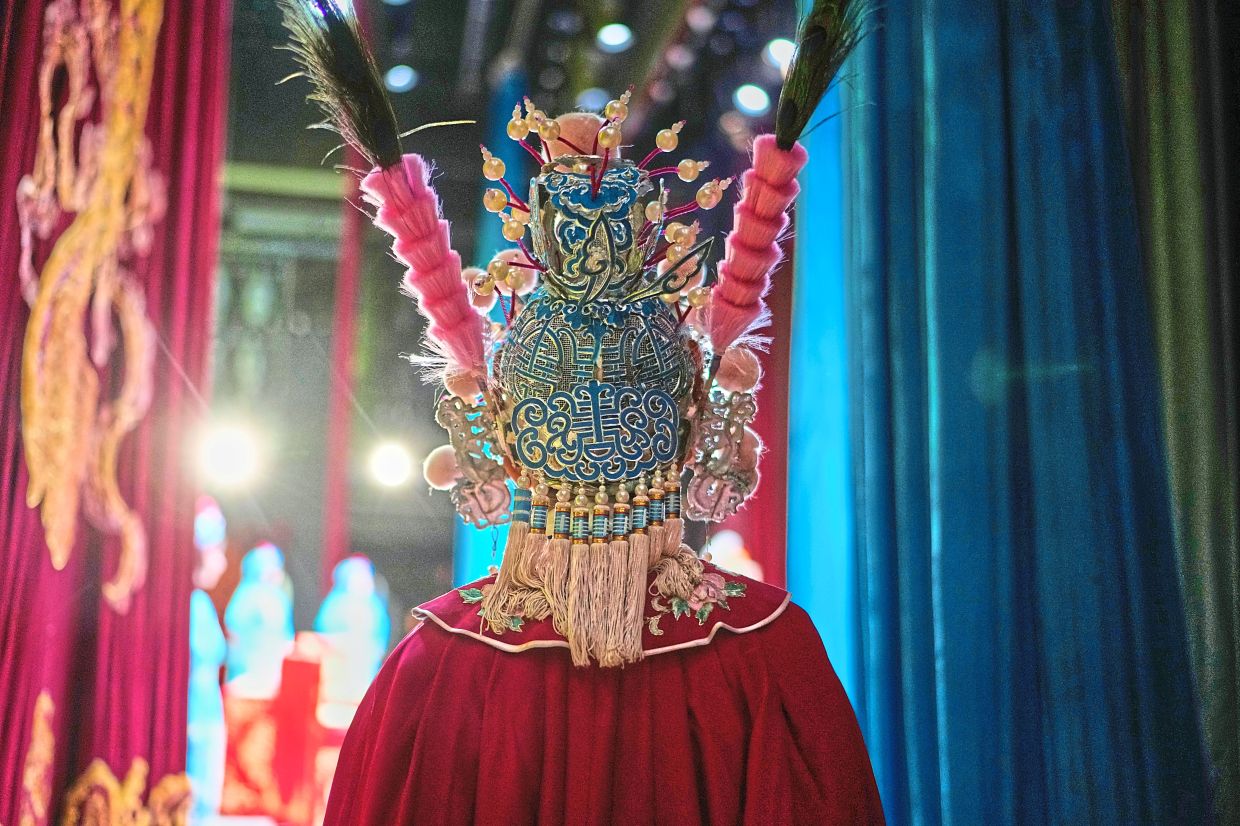
She bends forward, lifts her other leg high and grasps the two long pheasant plumes on her helmet to strike a pose like a flying swallow.
From more than 100 spectators in a modern Beijing theatre in China, cheers and applause rise.
It is a Sunday afternoon in early September, and Zhang is leading The Masked Heroine, a signature play from the Song School of Peking opera, founded in the early 20th century as part of a Chinese tradition centuries old.
It is the 30-year-old actress’s first time starring in the role in a full production, but also the fruit of over a decade of hard work that begins when she was a child.
“Ever since I first started learning this play,” she says, “I’ve always dreamed of performing it in full.”
Growing up in China’s northern Hebei province, Zhang first encountered Peking opera when she was seven and saw children practising at a cultural centre.
Fascinated, she joined them – and soon realised she had the talent and determination to pursue the art professionally. After primary school, Zhang left home for a theatre school in Jiangsu province in the east.
Most performers in Peking opera – its name comes from a now-obsolete way of saying Beijing in English – start training at a very young age to lay the foundation for good physical strength and flexibility. The process, full of repetitive practice, leaves participants soaked with “sweat and tears”.
The pose Zhang does on the chair requires balancing on one leg, arching backward, and stretching her arms forward with absolute stillness.
It derives from a basic skill in Peking opera called tanhai – literally, “gazing over the sea” – that most performers learn at the beginning of their career. Originating in Chinese martial arts, the skill demands immense balance, flexibility, and control.
At theatre school, Zhang started her training at 5am daily.
“After each session, I’d lie on the floor and cry,” she recalls.
Throughout the school’s training, Zhang had her first exposure to Song school’s plays and became fascinated.
In 2015, at college, Zhang finally got the chance to study with a Peking opera artist named Song Danju, the daughter of the Song School’s founder.
At a time when Peking opera troupes traditionally favoured roles like qingyi (a role type for dignified, virtuous female characters) as headliners, the Song School brought female martial roles to the stage centre with their creative stunts and a fresher performance style.
The chair trick is a Song family specialty.
Zhang’s teacher inherited it from her father and revived it by blending martial arts and acrobatic movements learnt from folk opera performers in northwestern China.
The sequence includes moves like jumping through the chair’s frame in one go, standing on its handle on one leg, spinning the chair using the palm of one’s hand, hooking the chair leg with one’s instep and hopping forward – and so on.
Though Zhang had a good foundation in skills like tanhai, incorporating them into the chair technique, she says, is “another level”.
“The first thing I have to overcome is my fear,” she says.
Zhang spends an entire semester repeatedly standing on a chair handle about 8.5cm wide and more than 70cm off the ground, just to conquer her fear and master balance.
“I carried a chair everywhere and practiced whenever I could,” she says.
Each move might take months to practice. For the jumping move, Zhang sets a goal of about 50 leaps into the narrow open space of the chair’s back each day. By day’s end, her muscles tremble and her thighs are pocked with bruises.
But the practice continues. And there came a moment when Zhang knew she had broken through.
“The moment standing on the chair no longer feels so strenuous, and this is when I know I have truly advanced.”
For much of the 19th and early 20th centuries, Peking opera had developed into a popular form of urban entertainment. Its roots, however, stretch back even further into the Qing Dynasty, when performances were closely associated with the imperial court in Beijing’s Forbidden City.
Today, the art form faces strong competition from digital entertainment and modern performing arts, and some worry it may be losing its appeal.
Yet a growing number of young Peking opera artists like Zhang continue to devote years to perfecting its demanding techniques – and, they hope, to capture today’s audiences.
Yang Hecheng, 26, a teacher at the Beijing Film Academy, came to watch Zhang’s performance in September.
“It’s my first time seeing the full production and the chair sequence,” he says, “What attracts me most is the beauty and spirit shown in the performer’s techniques on stage.”
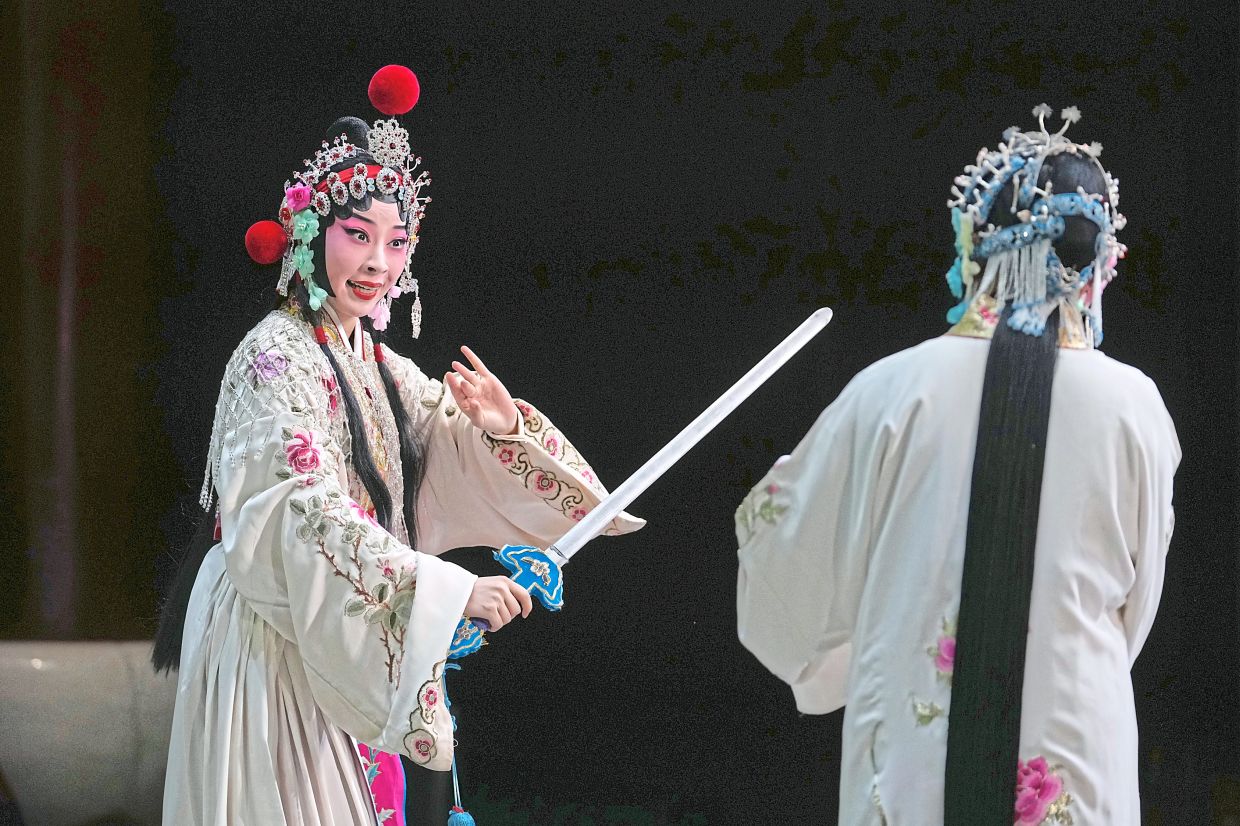
In The Masked Heroine, Zhang plays Wan Xiangyou, a chivalrous woman who fights injustice and protects the weak.
She leaves her family and becomes a militia leader in ancient China. During a confrontation scene, Zhang performs the tanhai pose on the chair handle while interrogating a male character. Zhang thinks the coherent integration of the trick into the play’s plot makes it compelling for the audience.
“We have the classic saying: ‘A play without skill is not amazing; a play without emotion is not moving’,” she explains.
Now a professional performer with the Jingju Theatre Company of Beijing, one of the top Peking opera troupes in China, Zhang has delivered more than 150 shows in nine years. Each production requires learning new stunts – or refining old ones to perfection.
Zhang says improving her technique in Peking opera remains a lifelong pursuit.
“I just want to make progress step by step and perform each show the best I can,” she says.
“The most rewarding moment is when the show ends and the audience applauds.” – AP