
Kuala Lumpur’s storied Sentul neighbourhood is stepping into the spotlight with its very own heritage walk – complete with a handy pocket guide to navigate its hidden past.
Released earlier this month, the digital pocket guide was created by volunteers from Sentul Then And Now (STAN), a collective of residents and enthusiasts of Sentul, and is freely available for public download.
“STAN began with a simple goal: to capture life around the Central Railway Workshops before those memories slipped away. With the pocket guide, we hope to offer a compact resource for anyone curious – locals, students, researchers, or even those far beyond Sentul,” says Manjeet Dhillon, 50, one of STAN’s founding members, which was established in May 2023.

“We created this guide to honour the families, workers, and communities that shaped Sentul, and to help the next generation understand both what the neighbourhood once was and how these lives and stories shaped the Sentul we know today,” she adds.
Research and interviews for the pocket guide began nearly two years ago, during which the group built an archive of interview recordings, paper documentation, and anecdotal stories. Compilation of the materials began just this August.
Manjeet, along with Choo Lub Hei and Guna Ramachandran (author of Sentul Gems), led the creation of the guide, supported by fellow members Dennis Ong, Fred Ooi, and Joelynn Chin, who contributed to the research and community engagement.
“For several years, we’ve been collecting Sentul’s stories through research, interviews, and community sharing sessions. While many are familiar with heritage areas like Chinatown, Kampung Baru or Brickfields, Sentul is often overlooked, despite its history as a major railway township,” says Manjeet.
“We wanted a guide that presents Sentul through the eyes of those who lived, worked, studied, and worshipped here. The pocket guide is our way of saying: these stories matter too,” she adds.
She also praised illustrator Jevick Wu, whose work in mapping Sentul and illustrating its landmarks brought clarity and visual life to the guide.
“He did this in his spare time, often cycling around to sketch on site.”
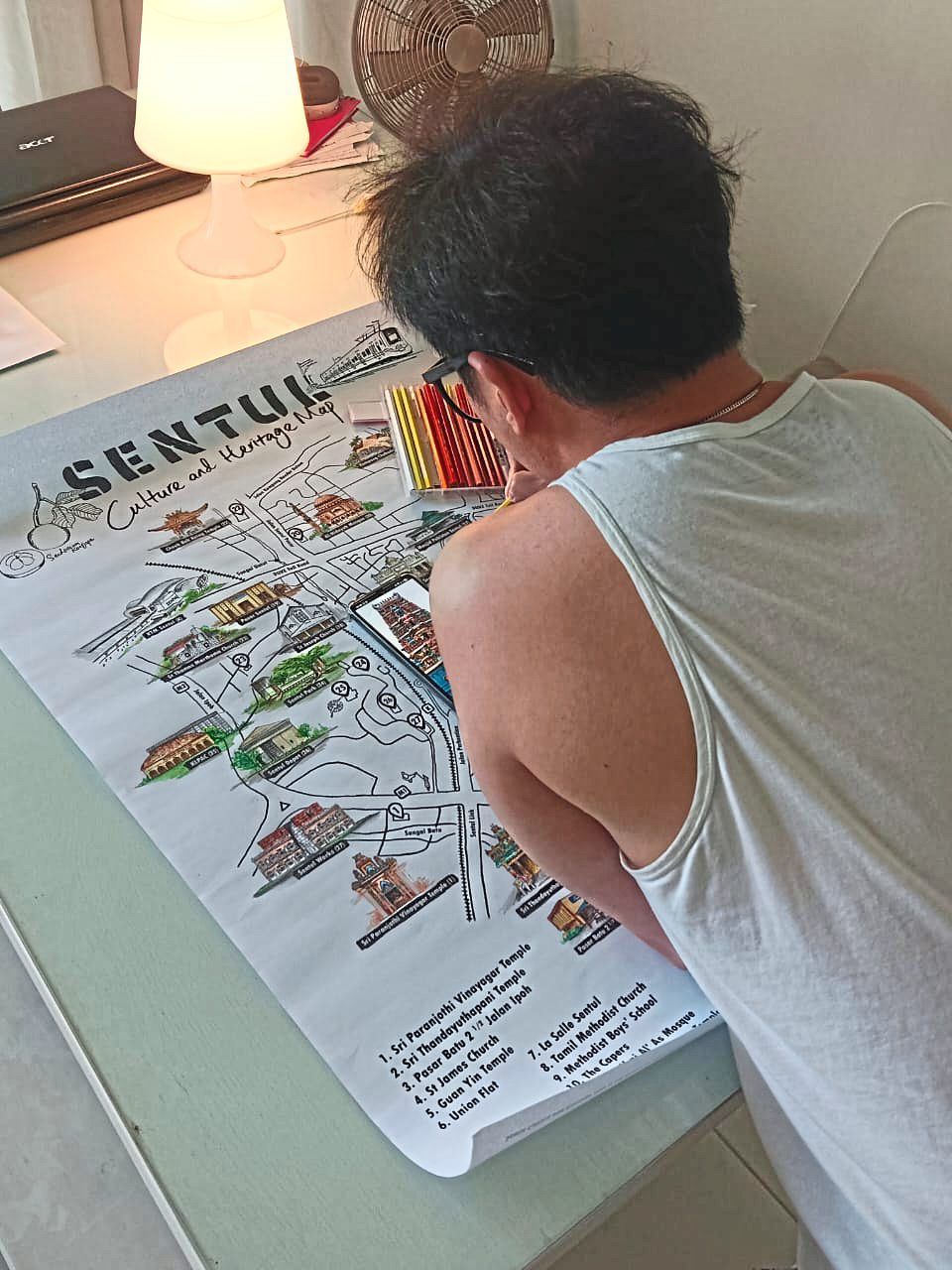
However, the current digital pocket guide does not include the full illustrated map.
“Jevick’s full map will be featured in the next phase as a foldable guide, with information printed on the reverse. The aim is for people to use it while exploring, keep it as a memento, or even enjoy it from the comfort of their home,” says Manjeet.
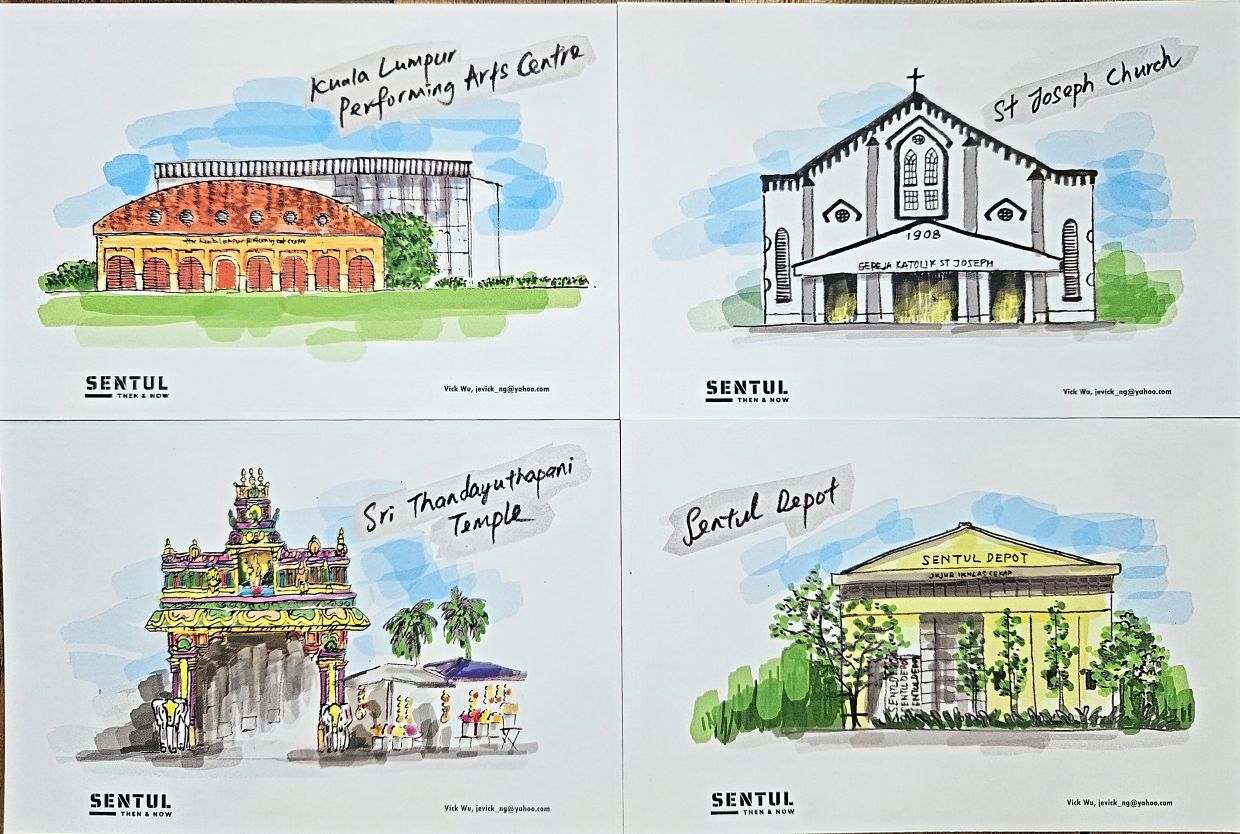
For now, STAN has released a postcard series featuring selected landmarks from the map, perfect for collecting, sharing or gifting, priced at RM15 for a set of four.
A walk back in time
The digital guide leads visitors through the heart of Sentul, starting at St Joseph’s Church, established in 1908.
From there, the route goes past SMK Convent, SJK Tamil, and Sentul Market, before looping back to Sree Ahthi Eeswaran Temple and the Sri Lanka Buddhist Temple.
It then continues towards Jalan Haji Salleh, passing the Masjid Jamek Pekan Sentul, Gurdwara Sahib Sentul, and Guru Nanak Punjabi School. Heading south along Jalan Sentul, you will reach Jalan Sultan Azlan Shah.
Turning northwest on Jalan Sultan Azlan Shah, the walk takes you past Sri Thandayu-thapani Temple, Chettiar Hall and the shophouses of Jalan Ipoh before entering the former site of the Central Railway Workshops.
Constructed between 1903 and 1905, the workshops once spanned some 20ha, serving as the heart of the Federated Malay States Railways – later the Malayan Railway. They handled everything from locomotive overhauls to the construction of carriages and wagons. The walk concludes at the Kuala Lumpur Performing Arts Centre (KLPac), located in what was once the railway workshops’ sawmill.
Throughout the guide, “Side Frames” highlight fascinating aspects of Sentul’s history, from the origins of its name to its connection with Botak Chin, one of Malaysia’s most notorious gangsters in the 1970s.
The guide was also structured around the “Three I” framework – institutions, individuals, and ideas.
“The framework was introduced to us by Professor Lee Kam Hing, and it helped us move beyond simply listing facts. It asked us to consider how a neighbourhood develops: the institutions that shape daily life, the individuals who give it character, and the ideas that influence how people live together.
“It encourages reflection long after the walk is over,” says Manjeet.
Keeping up the momentum
Touching on some of the challenges in creating the pocket guide, Manjeet cited factors such as limited resources, restricted access to certain sites, and the difficulty in finding reliable information.
“Everything was done on our own time and budget, from fieldwork to design. Research involved hours spent in archives and libraries, combing through online newspaper collections, and reading key works on migration, rail history, and community life by scholars and writers.
“Some historical locations now sit on private land, so we could not document them as thoroughly as we had hoped. We respect these boundaries, but it serves as a reminder of how easily community history can disappear without access,” says Manjeet.
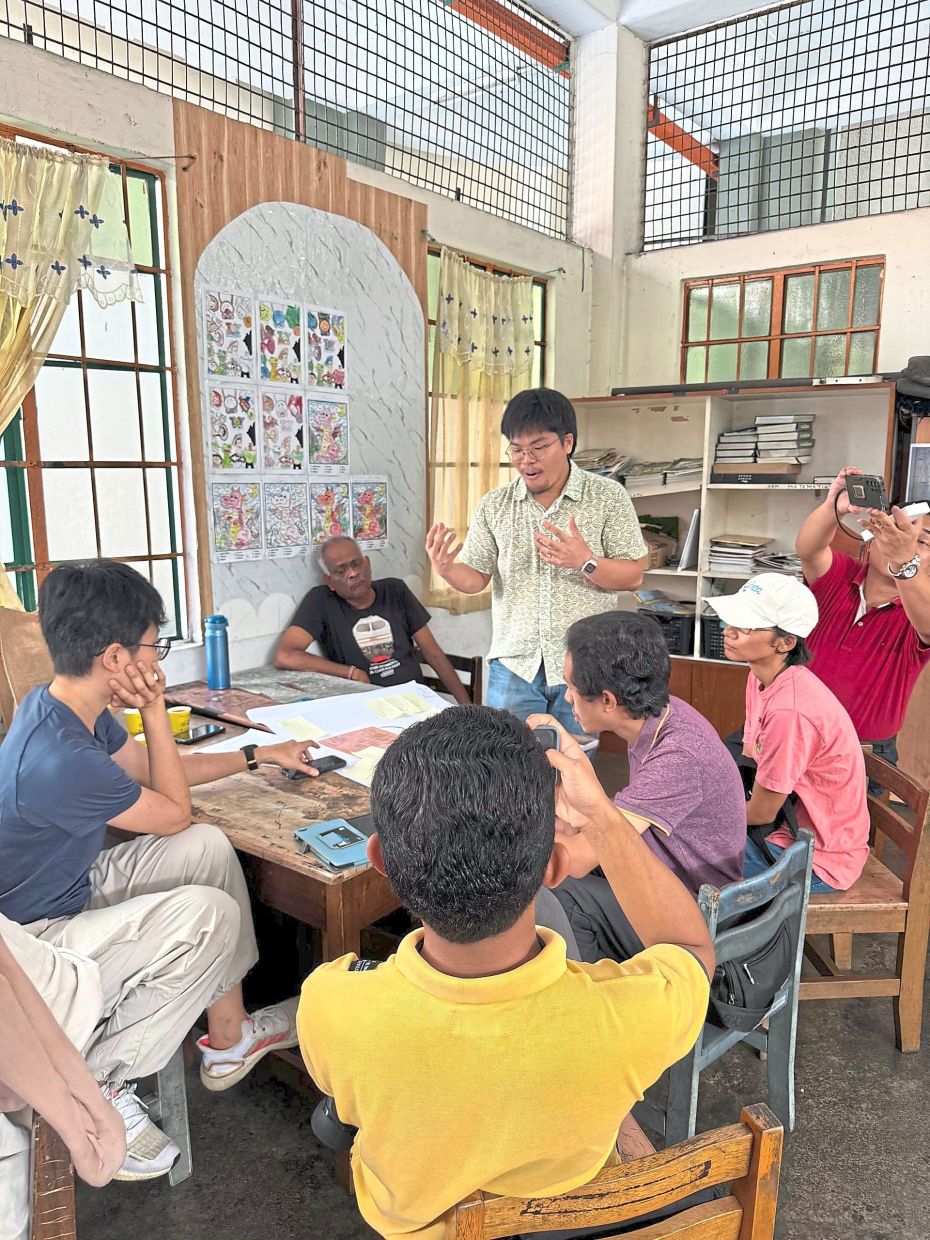
The team also relied on a mix of oral accounts and printed sources, which posed its own challenges.
“Some details are hard to verify – not because they’re untrue, but because everyday life often leaves few records. Despite these limitations, the upside is that more former Sentul residents are reaching out to share memories, and that keeps us motivated,” says Manjeet.
STAN plans to continue developing the pocket guide, with updated versions and new content in the pipeline.
“We’re already planning the next edition, which will include places such as Kampung Chubadak, Chi Man Chinese Primary School, and sections of Jalan Ipoh that were historically connected to Sentul.
“Beyond print, we aim to build a permanent online home as a repository for stories, images, and research. We also hope to involve children in future activities, possibly through family-friendly walks or a heritage bingo game. Our goal is to sustain the momentum and expand the guide as more stories are shared with us,” concludes Manjeet.
Download the pocket guide via STAN's Facebook and Instagram (@sentulthenandnow).