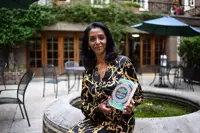
Margaret Atwood doesn’t like being called a prophet.
“Calm down, folks,” was the withering response when I asked why her fiction often seems eerily predictive. “If I could really do this, I would have cornered the stock market a long time ago.”
Still, she concedes she’s been right on occasion.
When she published The Handmaid’s Tale in 1985, some critics were sceptical of Atwood’s vision of a future authoritarian America, where the government controls women’s reproduction and persecutes dissidents.
Since then, events in the novel that once struck unimaginative reviewers as implausible have come to pass. Abortion has been outlawed in parts of America.
The rule of law feels increasingly fragile. Insurgents attacked the Capitol. Censorship is rampant – Atwood herself is a frequent target.
When I point out these parallels to Atwood, she still brushes off the idea that she can sense where things are heading.
“Prescient is not the same as prediction,” she told me recently when we met for lunch in Toronto.
“People remember the times when you were right, and forget the times when you were wrong.”
At 85, Atwood is as droll, slyly funny and blunt as ever, prone to turning questions she doesn’t particularly like back on the interrogator. “And?” she’ll say in her low, gravelly monotone.
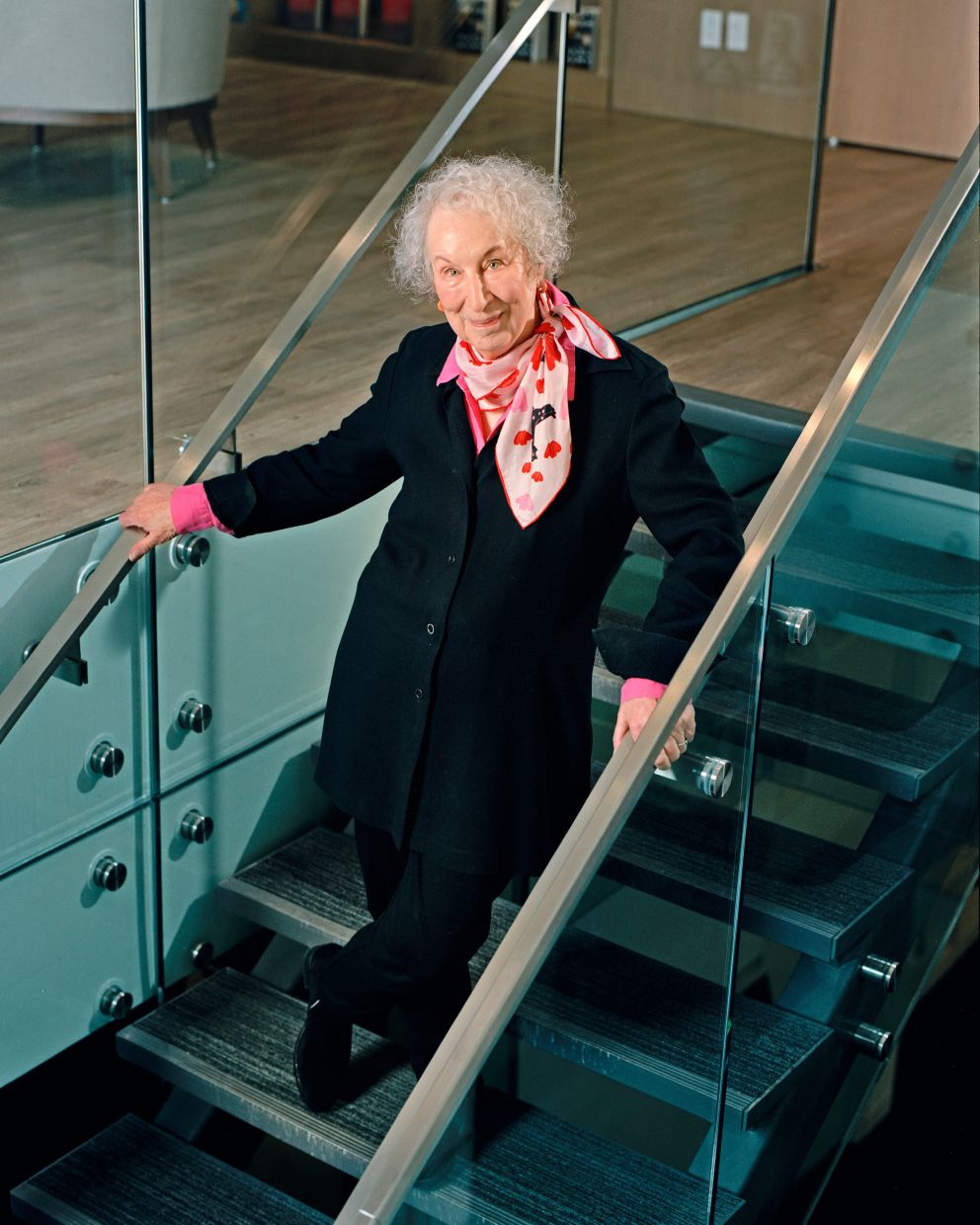
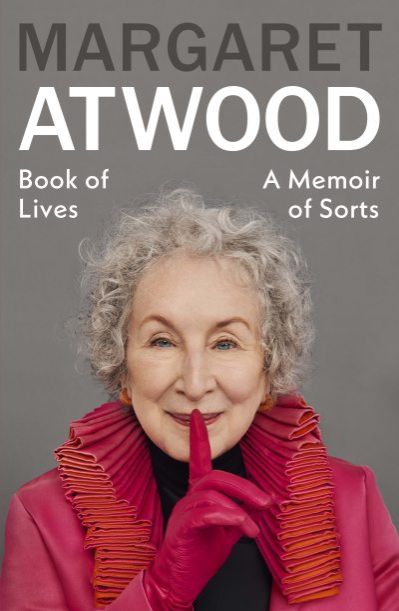
Wearing a bright pink and orange scarf that accentuated her piercing blue eyes, Atwood seemed energetic and upbeat. She had just returned from a two-week trip to the Arctic Circle, where she saw whales, polar bears and other wildlife, and was preparing for a global publicity blitz to launch Book Of Lives: A Memoir Of Sorts.
Memoir is one of the few literary forms Atwood hasn’t already tried. In a career that spans nearly six decades, she’s published more than 50 books, including poetry, short stories, nonfiction, speculative fiction, psychological thrillers, children’s books, graphic novels and historical fiction.
Her work has been adapted into ballet, opera, film and television, including an award-winning television series based on The Handmaid’s Tale. She’s won the Booker Prize twice, and has sold more than 40 million copies of her books worldwide, in 50 languages. She’s a perennial contender for the Nobel Prize.
For years, Atwood maintained that she had no interest in writing a memoir; she thought it would be tedious. When I asked her what changed, she at first blamed her publisher.
“They wore me down,” she said.
Then she was quiet for a moment, and offered another answer.
“Two words: People died,” she said. “There’s things you can say that you wouldn’t say when they were alive.”
Book Of Lives isn’t a blistering, score-settling tell-all, though there’s a dose of that. Atwood lays into childhood bullies who tormented her, blasts male critics and interviewers who condescended to her, questioning how she could write and still do the housework, and reveals how the Canadian literary scene was at times a hotbed of vicious gossip, jealousy and backstabbing, particularly among poets.
“Poets are not, generally speaking, a fully balanced or unenvious lot,” she writes.
Atwood admits that, once crossed, she holds onto her resentments, and that she has occasionally taken revenge in her fiction.
“And?” she replied when I asked about her tendency to hold grudges. “It’s not an admirable trait, but why deny it?”
Mostly, though, Book Of Lives is a book about the experiences that shaped Atwood as a writer.
“The story of your life is a story, and we’re always rewriting it, whether you’re a writer or not,” she said.
Atwood was born in Ottawa, Ontario, in 1939. Nicknamed Peggy, she grew up spending long stretches in the wilderness in northern Quebec, where her father, an entomologist, studied insects that caused forest infestations.
Books were one of few forms of entertainment. Atwood devoured Grimms’ Fairy Tales and staged plays and made comics with her siblings. In first grade, she started writing poetry and fiction; one early story was about a heroic ant named Annie.
An awkward child who had a caterpillar for a pet, Atwood sometimes struggled to fit in. At nine, she was tormented by a group of girls who subjected her to degradations, like leaving her out in the snow and burying her in a hole. She drew on the experience in her novel Cat’s Eye, about a woman who was viciously bullied by other girls as a child. But she always dodged when asked if the story was autobiographical because the “chief perp,” as she writes, was still alive (she no longer is).
Other villains from Atwood’s past escape public shaming. She describes a frightening night when she blacked out after her drink was spiked at a party, and woke up being groped by a boy on a couch in the basement: “I know your names, but won’t mention them here because it was a long time ago and anyway you are probably dead,” she writes.
Atwood got her start as a poet. She self-published her first book of poems, Double Persephone, in 1961, and sold copies for 50 cents.
A few years later, she started to gain recognition when another poetry collection, The Circle Game, won a prestigious award.
Her provocative debut novel, The Edible Woman, a biting satire about a young woman who develops a strange relationship to food and struggles to eat, made waves in 1969. Some readers and critics saw it as a feminist manifesto – a framing that Atwood still disputes.
“I suppose if you squint really hard, you could say I was an early feminist,” she said. “But did I think the feminist movement was coming? No.”
The novel generated debate – female critics saw it as groundbreaking, men generally found it unsettling, she writes – but was far from an overnight success. Her first book signing was held in the sock and underwear section of a department store in Edmonton, Alberta, where she sold two copies.
Atwood’s international breakthrough came with the release of The Handmaid’s Tale, a bestseller that went on to become a classic of political dystopian fiction.
It became an even bigger cultural landmark with the arrival of an acclaimed TV series. (Atwood herself appears briefly as a cruel indoctrinator who slaps the handmaid Offred, played by Elisabeth Moss.) To date, the novel has sold more than 10 million copies in English alone.
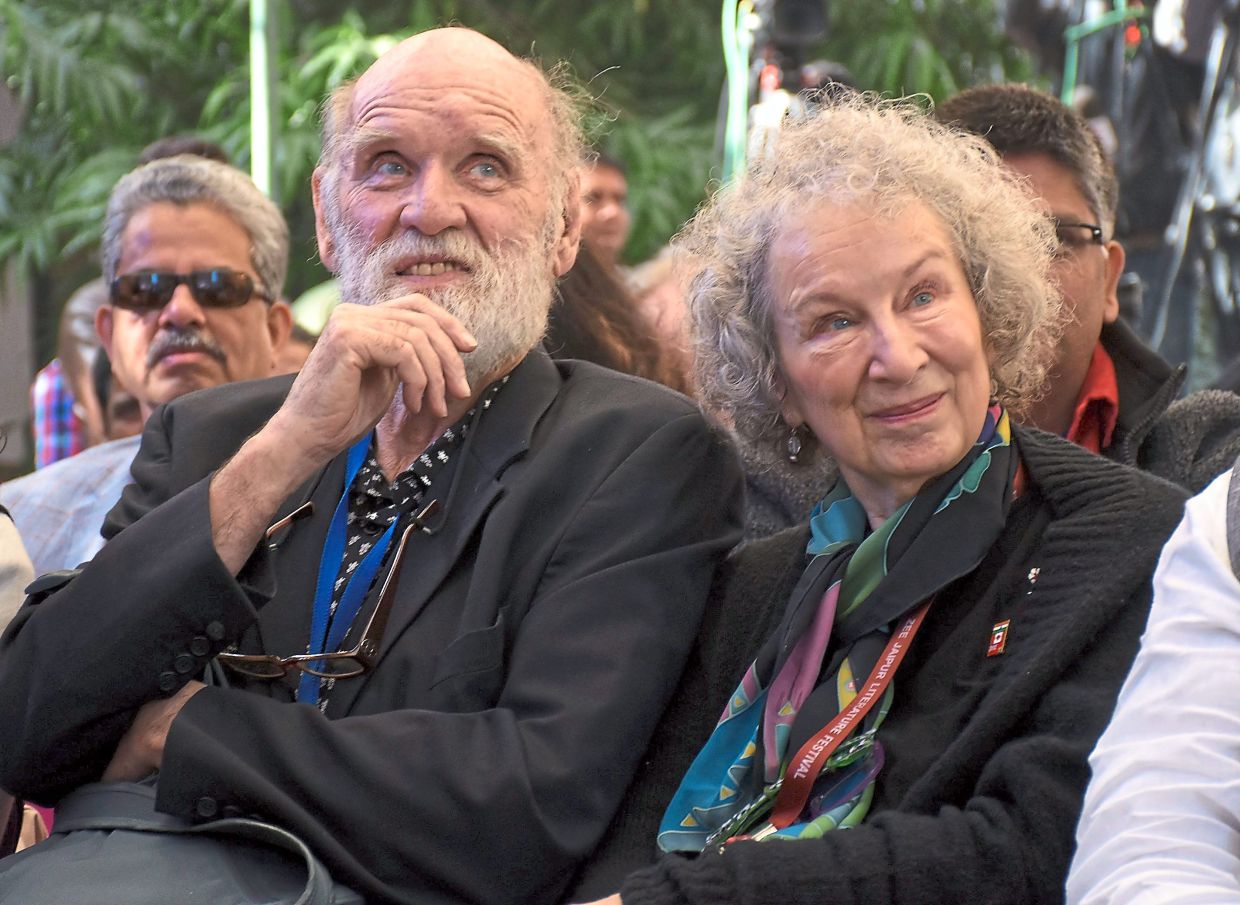
In 2019, Atwood published a sequel to The Handmaid’s Tale, titled The Testaments, which she’d been mulling for decades. While she was promoting the book, her longtime partner, novelist Graeme Gibson, died after a cerebral haemorrhage, following a years long decline into dementia.
Rather than face an empty house, Atwood went on with her tour, in a daze.
Later, she wrote about the disorienting experience of living without him in her story collection, Old Babes In The Woods.
She cried while writing the stories, but also found it comforting to imagine Gibson’s amused reaction. Sometimes, she can’t shake the certainty that “Graeme is in the next room,” she said.
The Testaments was a risky gambit – when it was announced, some readers questioned whether a sequel could live up to the revered original – but it became a bestseller and won Atwood a second Booker Prize. It’s now being adapted into a television series; Atwood has a cameo. “I can’t tell you what it is,” she said.
With the resurgent popularity of The Handmaid’s Tale, Atwood has gone from being a literary giant to a cultural icon, “a combination of figurehead, prophet and saint,” she writes. The adulation, and the subsequent pressure to represent all of womankind, can be wearying, she said.
“You have to watch out for being idolised too much,” she said.
“It can very quickly go from that to, ‘I thought you were God and you didn’t solve my problem, you betrayed everything you stand for,’ which was actually not everything you stood for, it was something they decided you stood for.”
While The Handmaid’s Tale has been taken up as a rallying cry by the left, Atwood, who has been an outspoken advocate for free speech, has attracted criticism from across the political spectrum.
“I’ve had periods of being denounced for this or that,” she said.
“The centre is harder to defend, because you’re being attacked from both sides.” – ©2025 The New York Times Company