There are no neon safety vests, thermal blankets, or barbed-wire fences in sight at award-winning artist Zulkefli Jais’ first solo exhibition.
For the Teluk Intan, Perak-born artist, best known for his large-scale installations, it’s perhaps the first time he hasn’t had to worry about measurements, scaffolding, or the logistics of taking over an entire gallery space.
The past two years have been eventful for Zulkefli, who clinched the National Art Gallery’s Young Contemporary Major Award (Bakat Muda Sezaman 2023) with his Project Temporary Marking installation. The work was later featured at the gallery’s Single exhibition series last year before travelling to the 2024 Gwangju Biennale in South Korea. Earlier this year, Zulkefli unveiled a new work, Anything But Prison, at the reopening of Galeri PETRONAS in Kuala Lumpur.
His new exhibition, titled $omeone, $omething, $omewhere, currently showing at Galeri Sasha in Kuala Lumpur until Oct 26, marks a turning point for Zulkefli.
Bringing together 12 collage works on plywood alongside a single installation, the exhibition reveals a deliberate shift in scale and sensibility for the 29-year-old artist.
'Quite playful'
Where his earlier projects engaged public space – notably when he buried a Proton Saga Iswara Aeroback for his Found Fossil project (2022) at Kapallorek Artspace in Seri Iskandar, Perak – and explored collective memory through material and structure, this new body of work carries equal weight, but within the confines of a conventional gallery setting.
“It’s been an overwhelming experience, but I’m grateful for this good run of shows,” says Zulkefli in a recent interview at Galeri Sasha, known for exhibiting new artists.
“As an artist still early in my career, my main focus has always been on creating. You don’t set out thinking your work will travel that far – you just make it. But somehow, it did,” he adds.
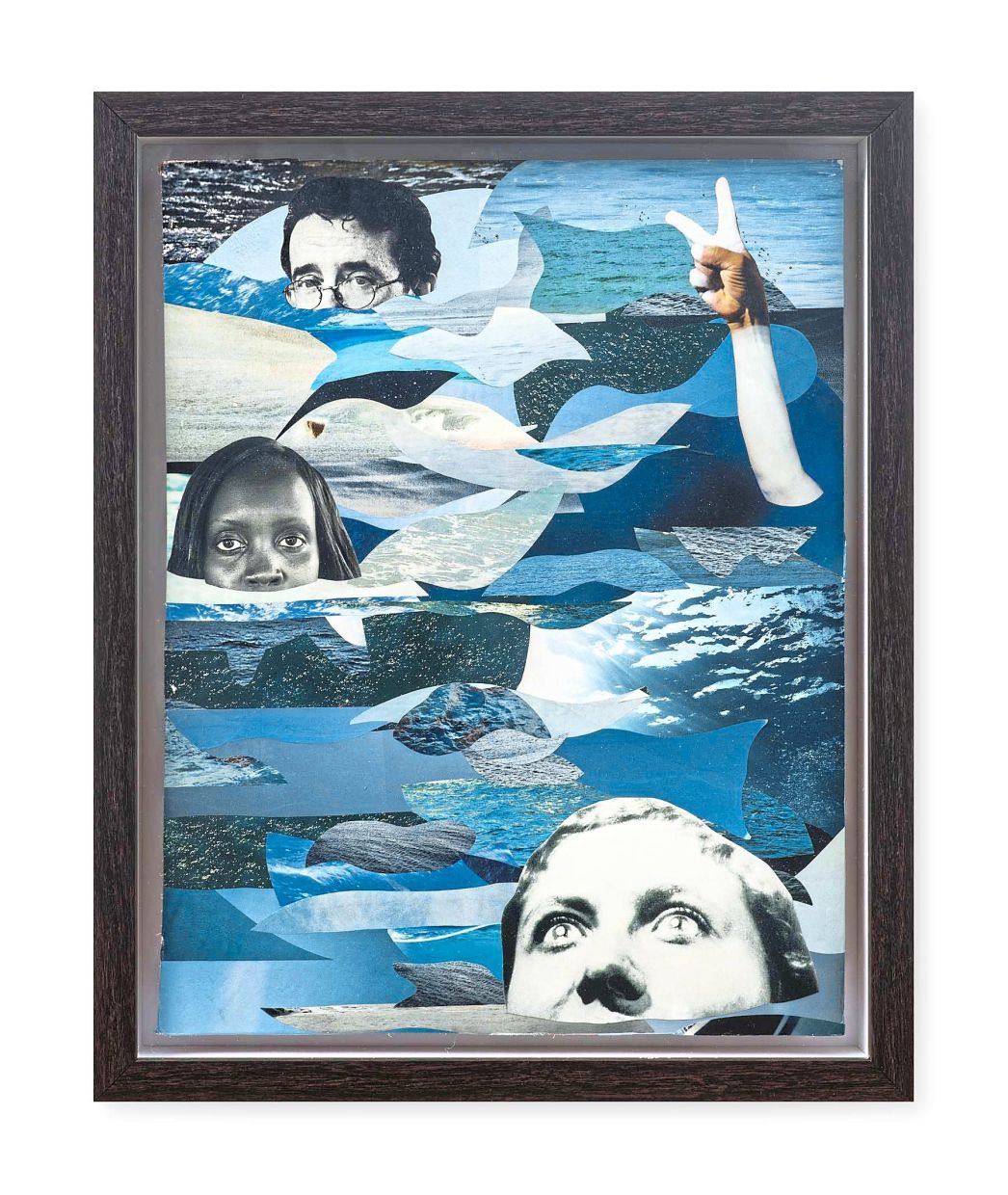
$omeone, $omething, $omewhere offered Zulkefli the chance to embark on a new series created entirely from his personal magazine archive – drawing on nearly a decade’s worth of Newsweek issues as reference, research, and raw material.
“The process of making the work itself wasn’t that long – it was actually quite playful,” said Zulkefli, a UiTM Shah Alam graduate who majored in sculpture.
“What took more time was deciding on the theme and imagining how everything would come together. I was curious to see how audiences would respond to it.”
The faceless crowd
Zulkefli’s practice centres on themes of migration, displacement, and the power structures that define them.
His years supervising factory and construction projects in the Klang Valley shaped this focus, as friendships with migrant workers revealed stories of forced migration, family separation, and the constant fear of displacement.
“In this series, people of different ages, races, nationalities, and social backgrounds come together,” he explains.
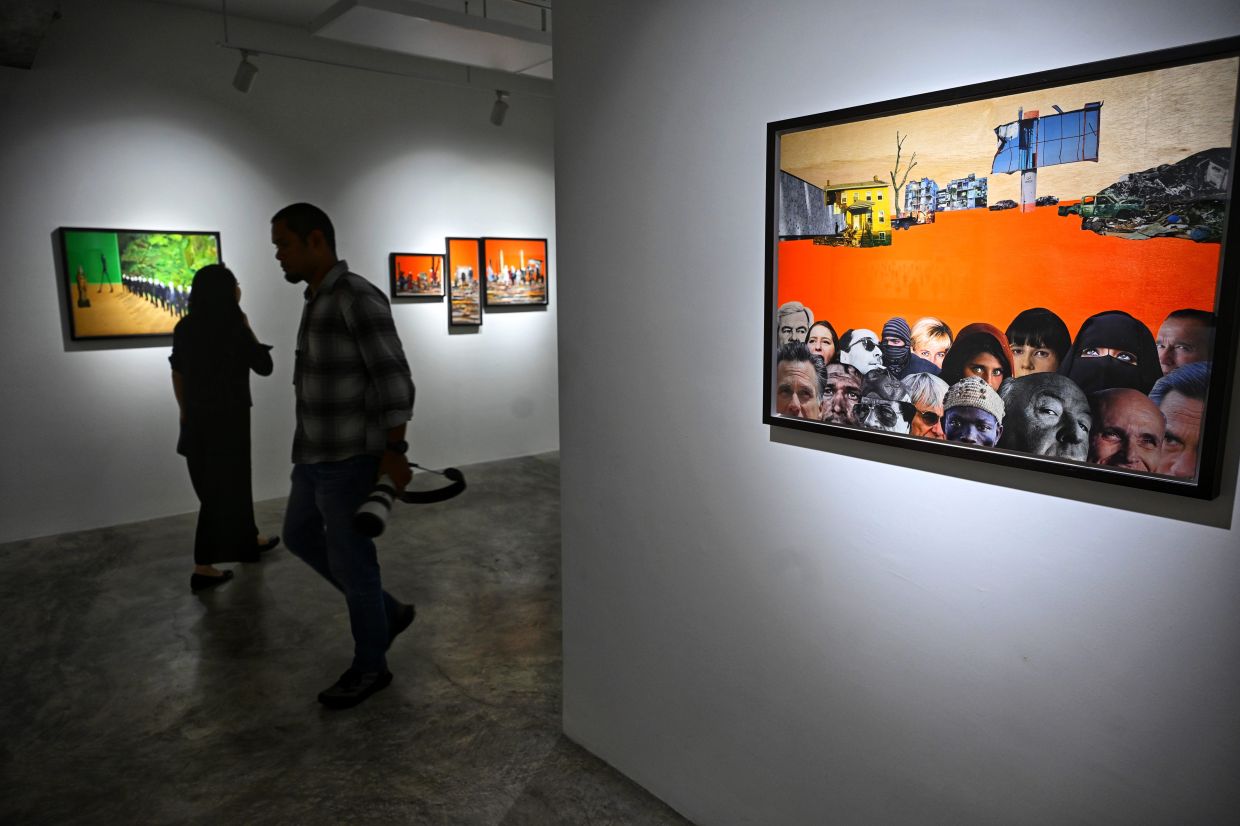
“It reflects how conformity and social norms shift in times of need – how, in the struggle to survive, people can become blinded by power and obey without question.”
For over a decade, Zulkefli stashed away old Newsweek magazines, drawn to their depictions of conflict, migration, and over-consumption.
Every collage in the $omeone, $omething, $omewhere exhibition is composed of cut-outs from the publication.
“I didn’t want to mix sources. By keeping to one magazine, I could build a consistent visual language,” he says.
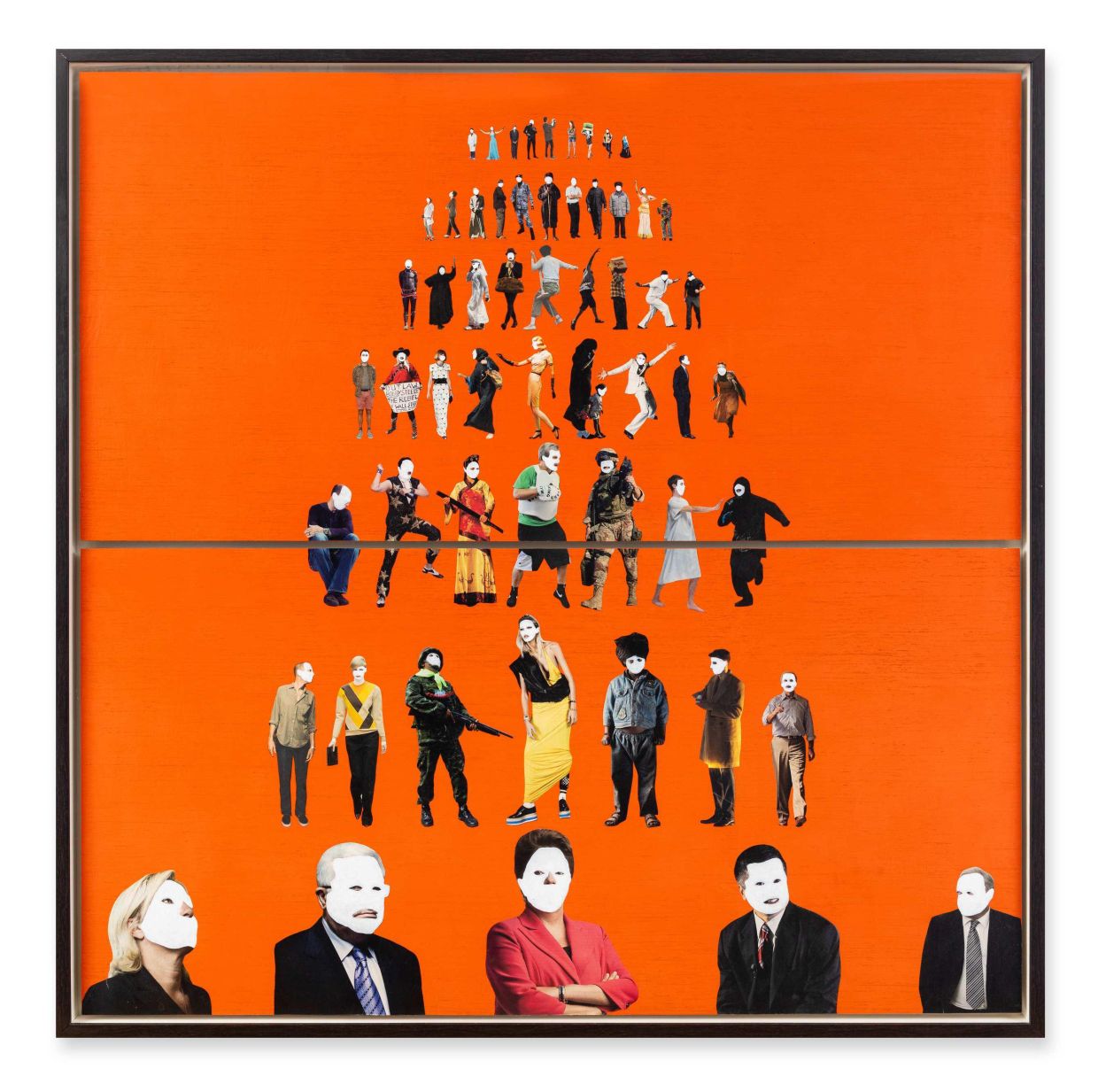
At the gallery, many works feature orange and green backdrops – colours Zulkefli links to construction zones, migrant sites, and border checkpoints. His faceless figures evoke both anonymity and universality.
Among the highlights are Muted Promises, featuring an anonymous figure before a stark “For Sale” sign that hints at the commodification of people in crisis, Under The Same Sky, where faceless silhouettes gather beneath a shared horizon and Unwanted And Unwelcomed Anywhere, a poignant meditation on statelessness. Together, these works form a fractured yet collective portrait of human movement and survival.
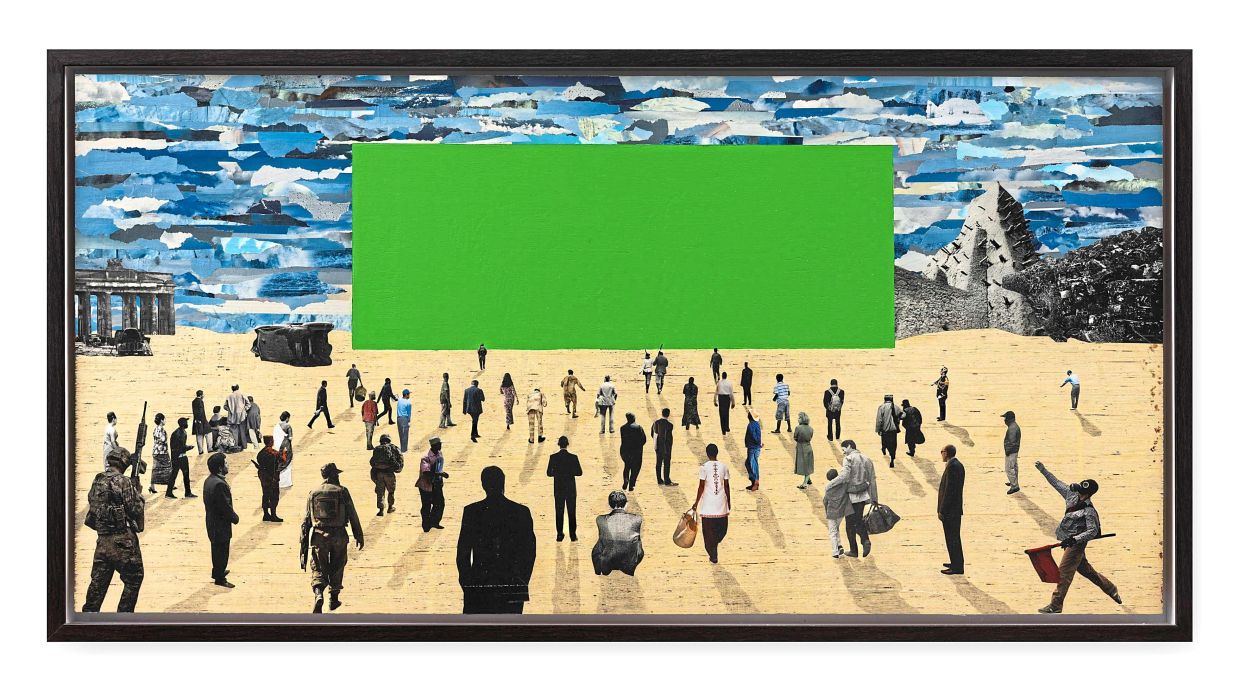
“I’m drawn to anonymity – to how ambiguous figures hide their true nature and intent,” he says.
“People choose to be anonymous either to express themselves or to cause harm. In this series, it’s worth asking: who is the victim, and who holds the power?”
Being watched
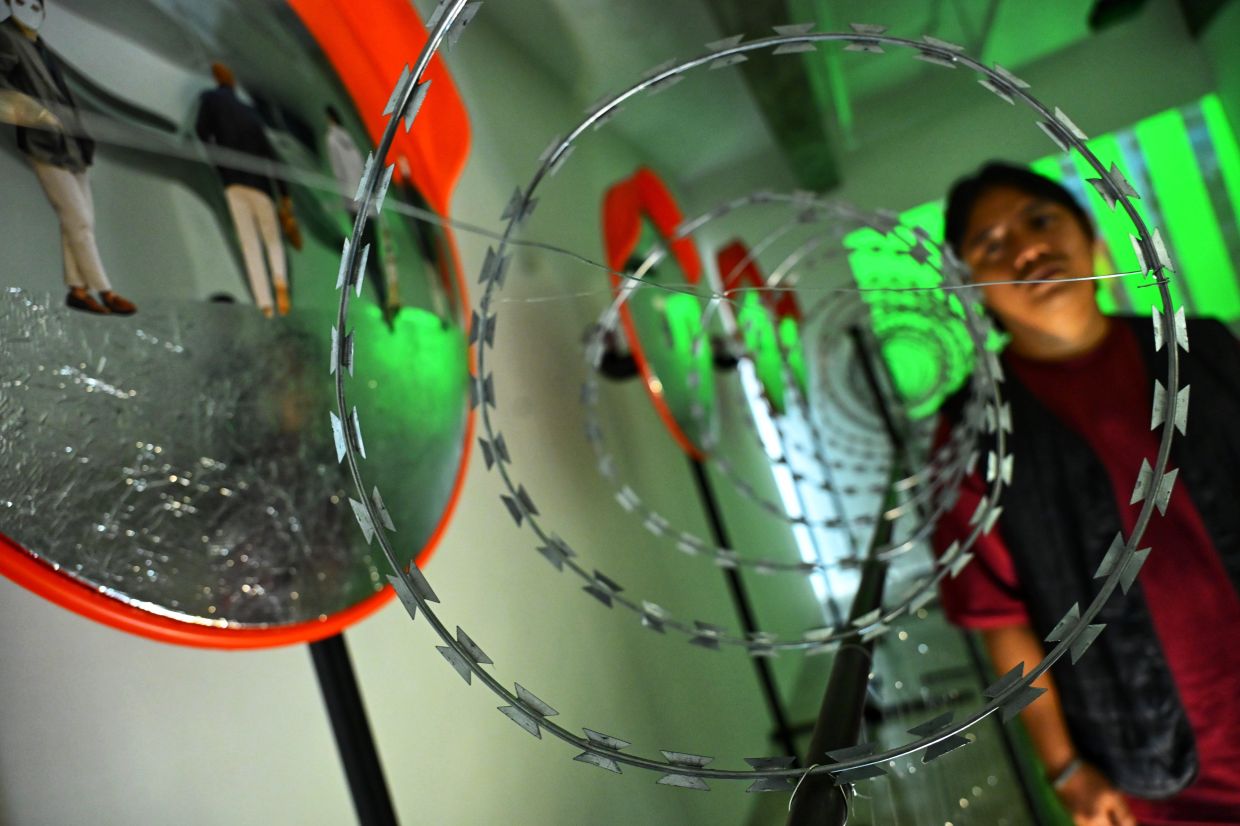
The exhibition’s centrepiece, Watchtower, revisits the visual language of Zulkefli’s earlier installation at Galeri PETRONAS while introducing new psychological depth. Built from convex mirrors, fencing, steel pipes, barbed wire, and collage, it draws on (French philosopher) Michel Foucault’s concept of the panopticon – the idea that the possibility of being watched shapes behaviour. A looping video beside the structure heightens the atmosphere of surveillance.
“Even without being watched, the possibility alone makes people adjust their behaviour – much like how border regimes and migration policies shape lives and identities,” says Zulkefli.
His interest in these dynamics stems from personal experience.
“I have worked in factories and construction sites, mostly alongside migrants,” he shares.
“We came from different circumstances, yet there was always a human connection. My own position keeps shifting as I reflect on it.”
In shaping his ideas, Zulkefli often draws inspiration from the late Nirmala Dutt, a pioneering figure in Malaysian contemporary art who not only explored migration and displacement but also employed collage as a medium of critique and reflection.
“I’ve always admired how Nirmala approached migration not just politically, but as deeply human stories,” he says.
“It’s something I hope to keep learning about through travel and meeting people.”
Now entering his 30s, Zulkefli, based in Klang, Selangor, approaches this new phase with humility and quiet determination.
"Though this solo exhibition marks a milestone, he sees it as part of a longer journey shared with his wife, Surekha Revindran, whom he credits as a key pillar in shaping his artistic vision. Surekha also helped develop the exhibition catalogue, giving voice to the ideas behind his latest body of work.
"I want to keep going out, seeing, and understanding more,” he concludes.
$omeone, $omething, $omewhere is showing at Galeri Sasha, Taman Tun Dr Ismail in Kuala Lumpur until Oct 26. Open: Friday to Sunday, noon to 7pm. Wednesday and Thursday, by appoinment.