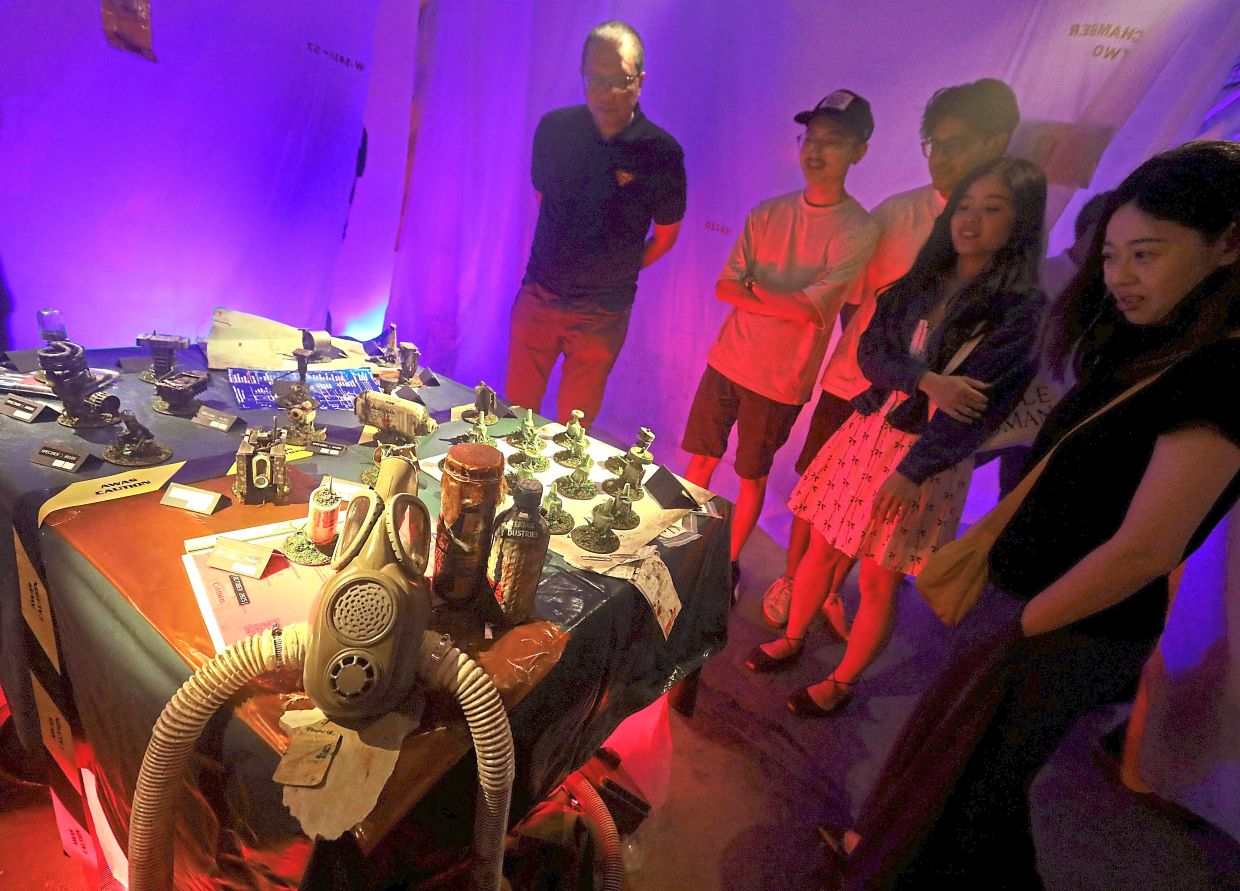
Walk through the doors of Awegallery in Petaling Jaya and it feels like entering the ruins of a forgotten sci-fi tale. Rows of robot figurines stand in formation, relics of a vanished civilisation surrounded by cryptic traces of life – a vial of blood, a worn jumpsuit, skeletal remains, faded ID cards.
The scene blurs past and future, fiction and memory. It feels less like an exhibition and more like an (miniature) excavation – a bruised glimpse of humanity reflected through the remains of its own creations.
In The Automaton Project, the debut solo exhibition by multidisciplinary artist and filmmaker Jonathan Jayasuria, 28, these elements come together to create a cinematic experience for every visitor.
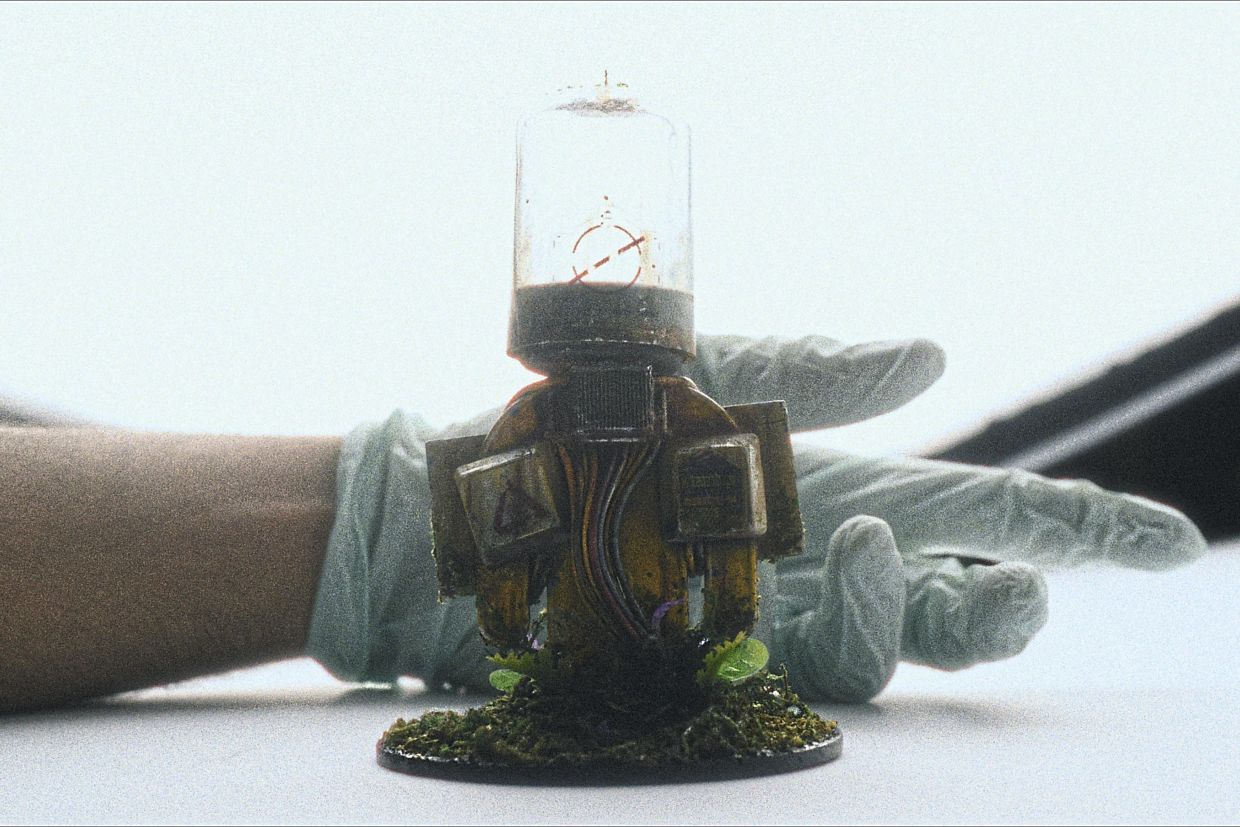
The show, running until Oct 20, features 66 handmade robot figurines crafted from upcycled computer parts, displayed among props and installations that suggest scenes from an unseen film.
Jayasuria spent much of this year preparing for the exhibition, carefully painting and arranging the pieces in his home studio in Petaling Jaya.
Setting the scene
For the exhibition, visitors enter through the adjoining cafe and find themselves in a dim, atmospheric world shaped by light, sound and careful detail. Spotlights illuminate the figures while ambient hums and scattered props give the sense of a movie set frozen mid-scene.
Jayasuria, who studied film in New Zealand, has long been fascinated by the retro-futurist design of classic sci-fi cinema, the faded logos of forgotten brands, the utilitarian forms of old spacecraft, and the tactile look of a future imagined by past generations.
“Growing up with classic films like Star Wars, Blade Runner and Alien, I was always captivated by the physicality of their worlds, how the vehicles, machines and props looked used and lived in,” says Jayasuria in a recent interview.
With his father being a sci-fi enthusiast, he got an old-school start – diving into the original Star Wars trilogy before venturing into other worlds of science fiction.
His Automaton Project also traces its roots back to the lockdown days.
“Most of the figurines here were handmade from upcycled materials, mainly discarded computer parts that I started collecting during the pandemic. Coming from a film background, I think a lot about composition and atmosphere,” says Jayasuria.
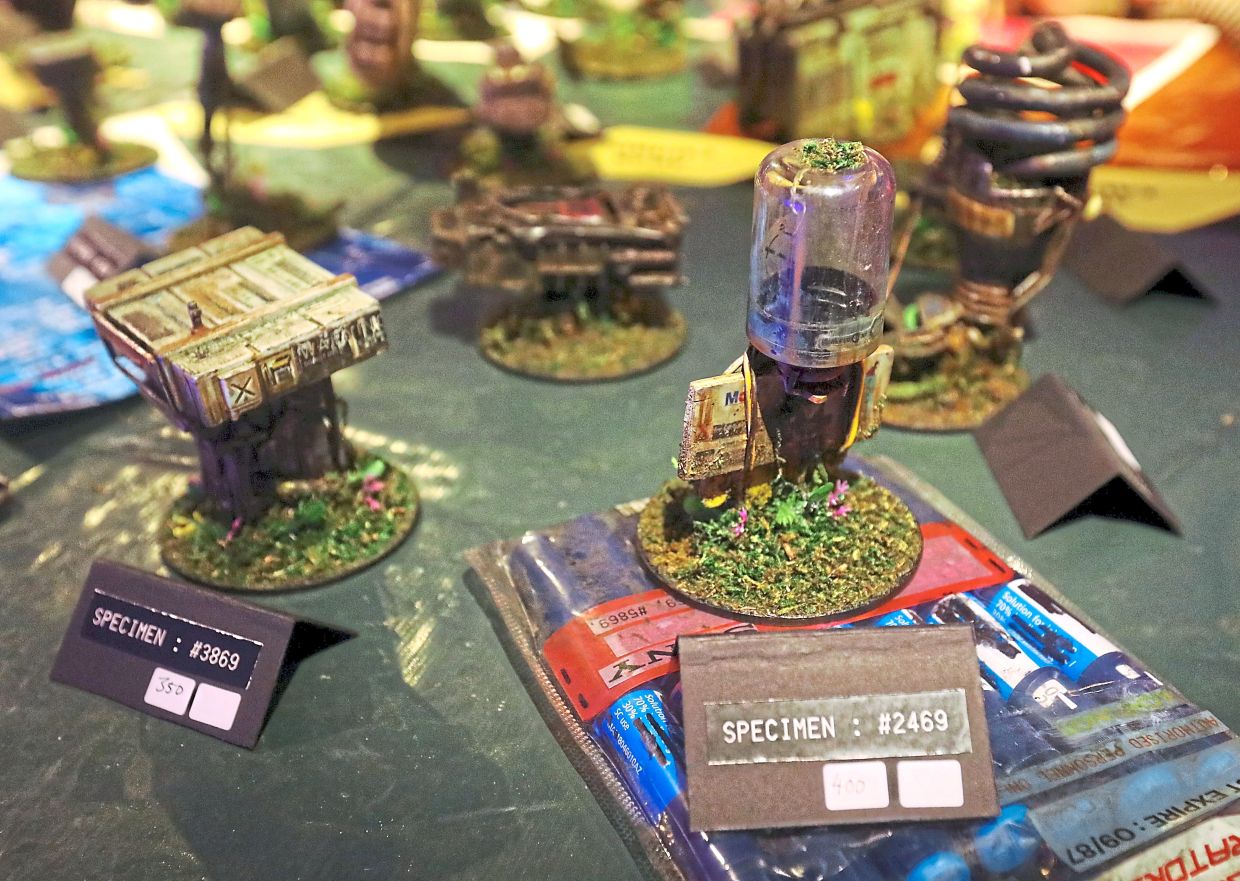
“I didn’t want the figurines to simply stand as sculptures, but to exist within a scene. Every element from the lighting to the objects around them is meant to feel like part of a larger frame,” he explains.
Rather than presenting a clear storyline, the exhibition unfolds like a world caught mid-narrative. There are plastic curtains to “isolate” the scenes, each figurine is also surrounded by objects hinting at what came before or after.
The atmosphere is further shaped by three original soundtracks composed by Pete Wong – a friend from the film and sound art scene – which enhance the mood.
“I wanted it to feel like stepping into a science-fiction lab, a capsule filled with practical effects and hidden messages. There are Easter eggs and small details that reward people who look closer, and when someone buys a figurine, they’re essentially taking a piece of that filmic world with them,” says Jayasuria.
‘Kitbashing’
The method known as kitbashing, a model-making technique that originated from George Lucas’ production team during the original Star Wars trilogy, where parts from different kits were combined to form new, hybrid designs, inspired Jayasuria.
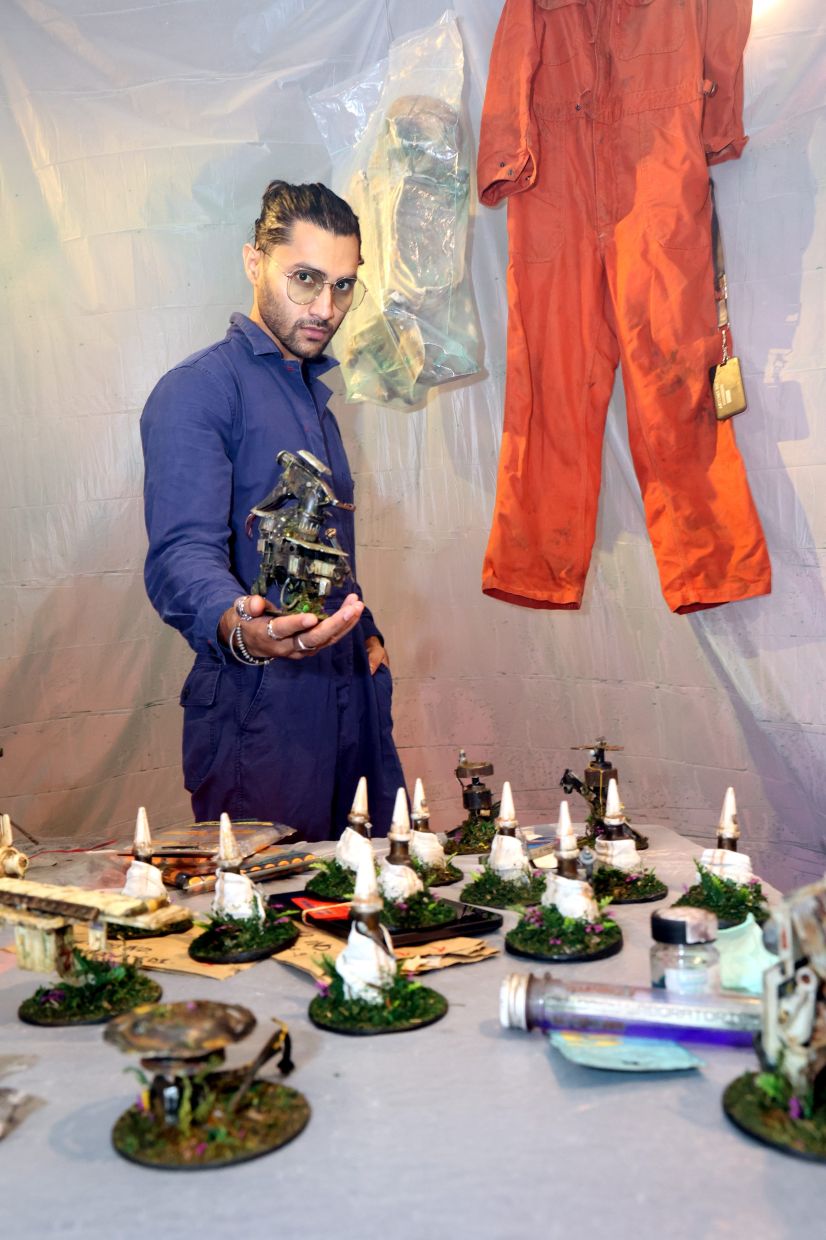
“Kitbashing has become a language of its own. It celebrates ingenuity and resourcefulness, the kind of craftsmanship that shaped the sci-fi films I grew up admiring. This approach trickled down to hobbyists, scale model makers and artists like myself, and I’ve always respected that tradition of making something new from what already exists,” he says.
For Awegallery, usually known for its painting shows, this transformation into a sci-fi environment marks a bold new direction.
“This is the first time Awegallery has transformed itself into something more experiential rather than purely visual, so I’m really excited to see how audiences respond to it. It’s a different rhythm of viewing, less about standing before an artwork and more about moving through a space that feels alive,” says Dora Ong, the gallery owner and curator.
In an age where technology evolves faster than we can keep up, Jayasuria’s world of imperfect machines feels like a reminder of something more familiar, a return to the kind of imagination that first made science fiction so enduring.
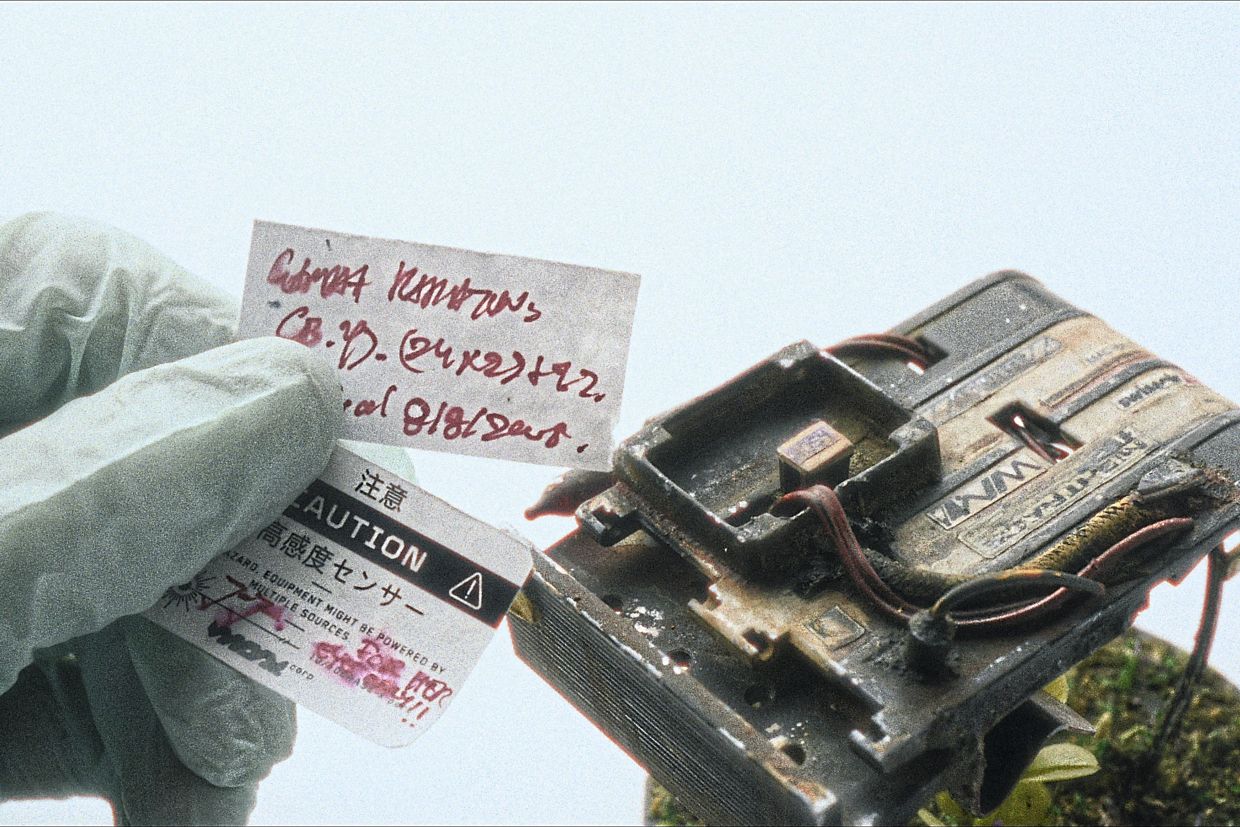
“Every visitor fills in the gaps themselves. It’s not full reality and not fully abstract either, but something that sits between a movie prop and a collectible,” he says.
Looking ahead, Jayasuria plans to expand The Automaton Project with more robots and an extended world-building narrative.
He also acknowledges that the concept might feel niche to traditional art collectors, but believes its emotional core lies in the experience itself.
“It’s not meant to be taken too seriously. If someone walks through the exhibition, looks at the props and thinks this is eerie or fascinating, then the art has already done its job. It’s about evoking a response,” he says.
“People will always be fascinated by robots, especially now with the rise of AI. There’s curiosity about how far we can push technology, but ultimately, nothing beats the human spirit. I hope this exhibition reminds visitors of how they first felt watching the sci-fi films that sparked their imagination,” he concludes.
The Automaton Project is showing at Awegallery in Taman Paramount, Petaling Jaya, Selangor until Oct 20. Free admission.