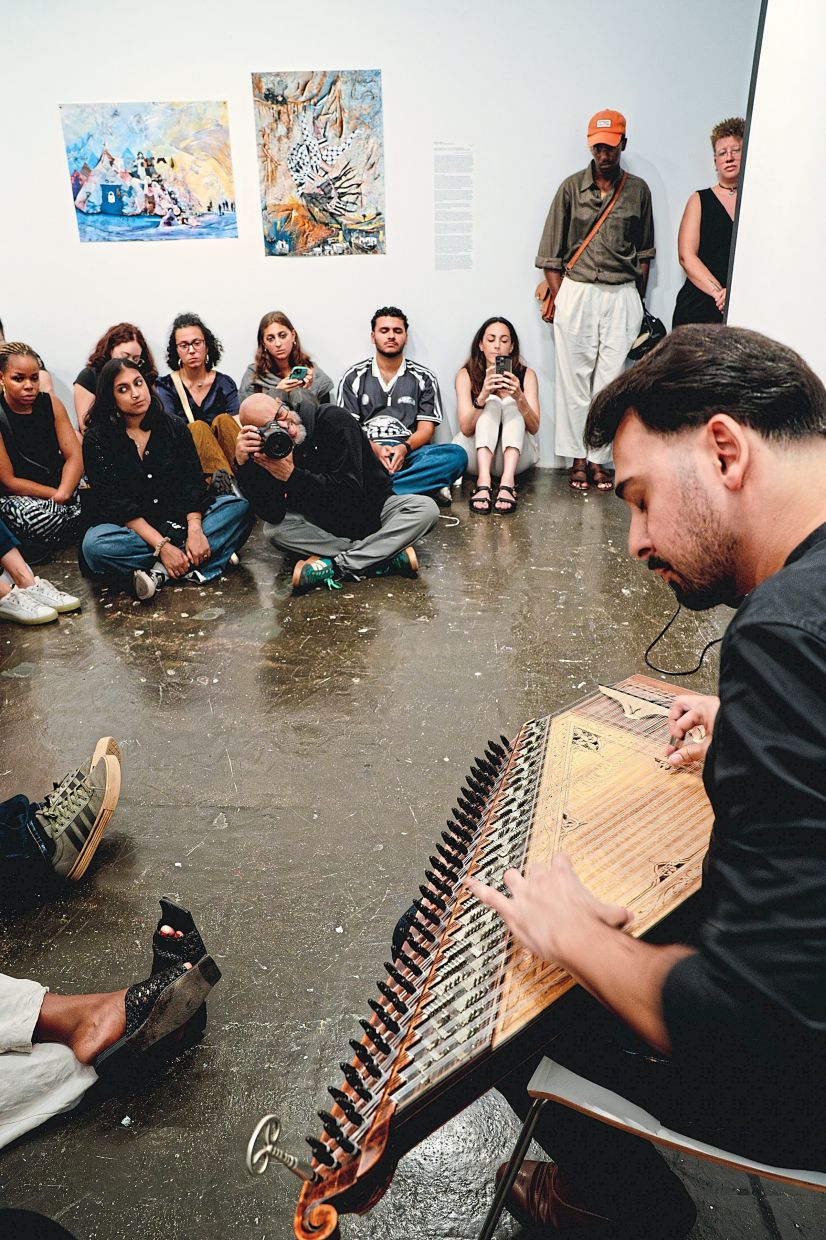
As Firas Zreik strummed the harplike kanun at the opening of the Gaza Biennale in New York last month, visitors were surrounded by artistic renderings from the war zone in the Middle East. There were images of mortal wounds, of rubble, of survival.The melody by Zreik, a 29-year-old Palestinian-born musician, set a sombre tone for the show, which was staged at Recess Art in Brooklyn as the first leg of a brief American tour.
Participants hoped this edition of the show, named From Gaza To The World, would help Americans understand the perspective of Palestinians who are experiencing violence at a time when some institutions are rejecting Palestinian art.
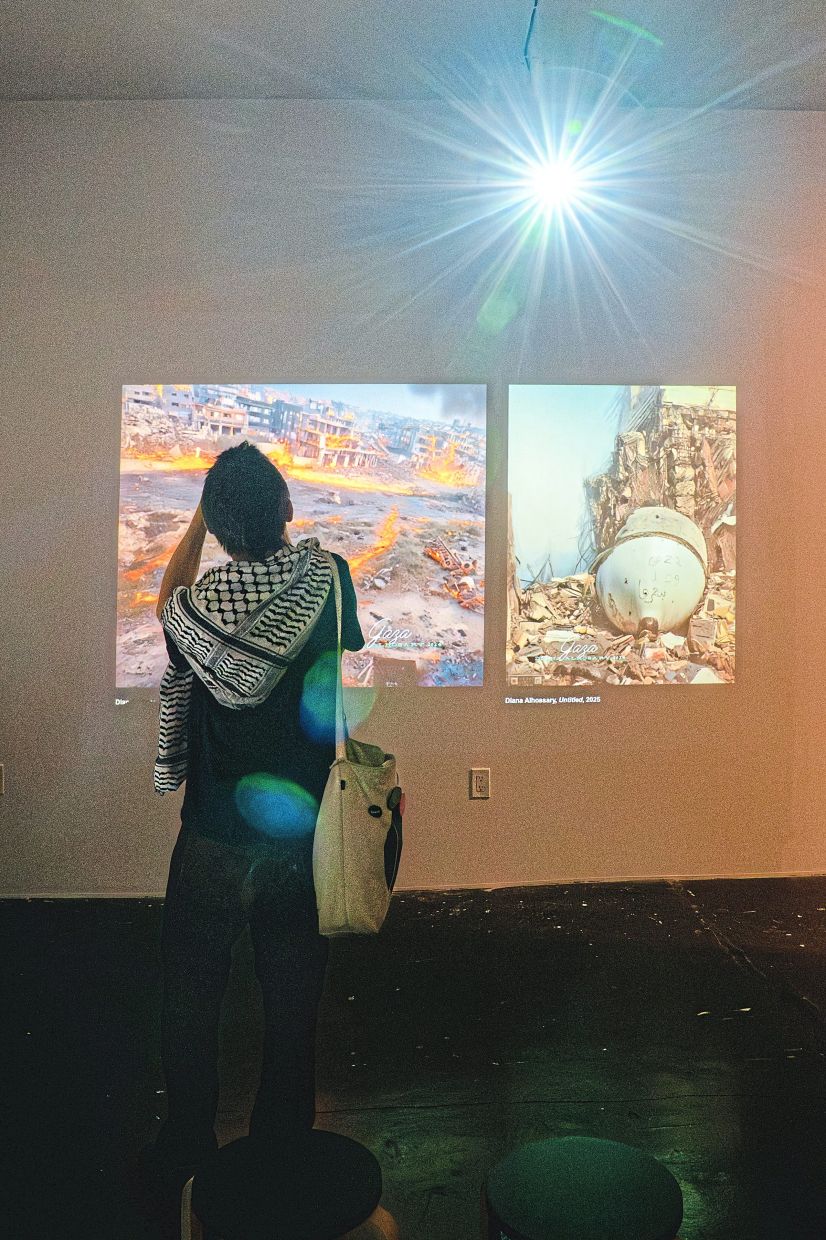
Most of the paintings, illustrations and sculptures were reproductions made from digital photographs and carried out by instructions from the artists, who are unable to transport their work outside the Gaza Strip.
In a video projected behind Zreik, 22-year-old artist Yara Zuhod flipped through a book of drawings. “I don’t have the right to travel, to share my work,” she said.
Lindsay Harris, co-director of Recess Art, said the nonprofit organisation considered that it could lose financial support for staging an exhibition on a politically sensitive topic. But when organisers reached out this year, she found it difficult to say no.
“If these artists have the courage to continue their practice, then we can have the courage to be a platform for those stories,” said Harris.
While the full New York exhibition ended last week, a selection of works will remain on view through Dec 20. Other editions of the show have been staged in France and Denmark, and more will open in countries including Greece and Turkey.
Organisers are also planning to bring the exhibition to Washington.
The Gaza Biennale, which describes itself as a collective that includes artists in the West Bank, Gaza and abroad, forges partnerships with local curators and institutions in various cities to present the works. The group said in a statement that it aimed to present an image of Palestinians that “goes beyond breaking news, media coverage and statistics.”
One of the artists, Malaka Abu Owda, said in an email that painting was a release when it felt like she would collapse.
“I find balance by treating each piece as a scream and a memory,” she said. “Not just art, but a way to lessen my pain and give voice to those who no longer can speak.”
The war in Gaza began after Hamas attacked Israel in October 2023, killing 1,200 people and taking about 250 hostages. Israel has since bombarded much of Gaza, killing more than 60,000 Palestinians, according to the local Health Ministry.
Health experts warned last month that the area was under famine.
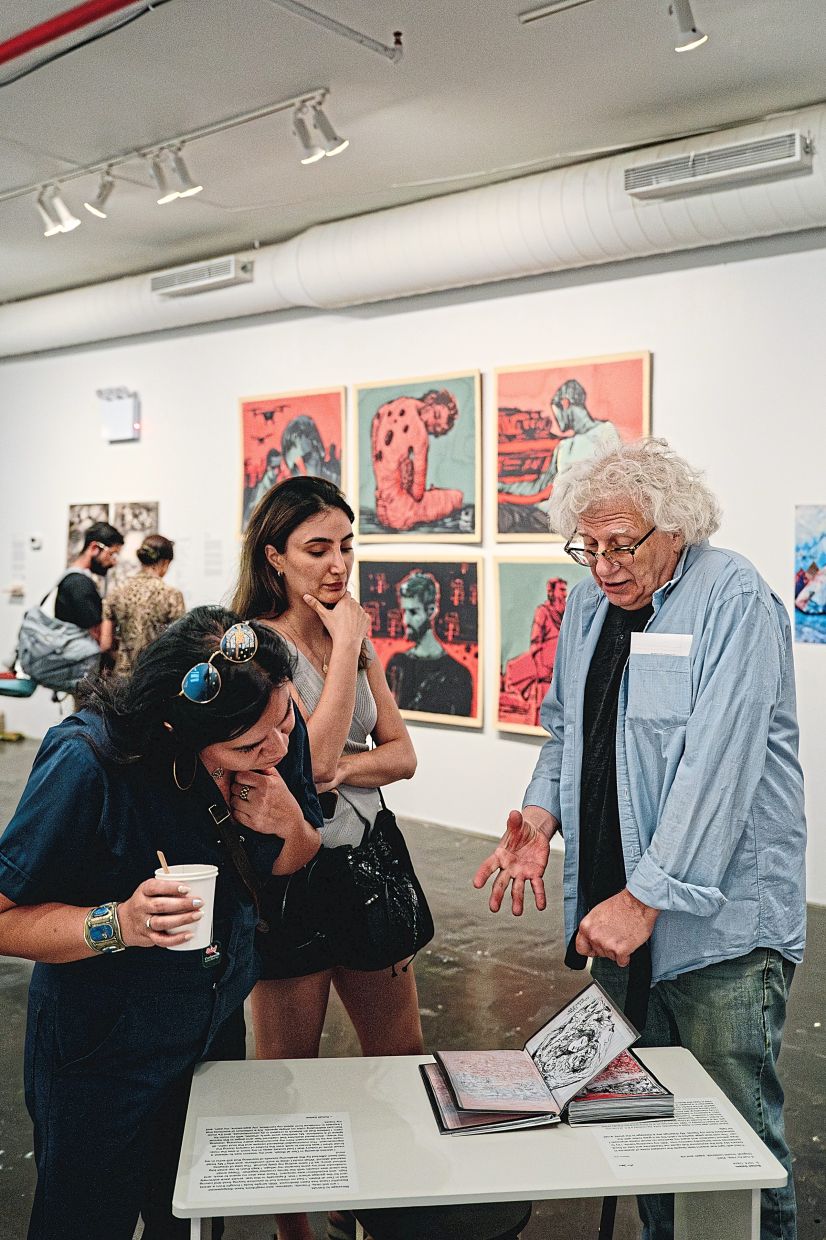
During the recent exhibition in New York, poet Ammiel Alcalay flipped through a notebook of illustrations by Sohail Salem.
“With my trembling hands, I try to draw without hesitation and share my sketches on social media whenever I can,” the artist wrote in a statement.
“These small notebooks and my pens became my refuge.”
Alcalay said the exhibition was a special opportunity for American audiences to discover Salem.
“There is a presence of mind to be able to record – emotionally and conceptually – both beauty and destruction,” said Alcalay, drawing comparisons to the artistic responses of Pablo Picasso and Francisco Goya to the wars of their eras.
“Art is supposed to represent the possibilities of the human spirit under duress, and the art that we should be looking at is coming from Gaza.”
Other visitors who were less familiar with the artists came away with a similar feeling. While the exhibition was centred on Palestinian suffering in Gaza, there were a few mentions of Israel, including an installation by Ghanem Alden called The Rocket And The Carrot, which satirises the Israeli government’s “carrot and stick” approach to the conflict.
Yolande Macon, a fashion content creator, found herself staring at six digital drawings by artist Ahmad Adawy, including an image of a nude man sitting on the ground; his back is pockmarked with holes that represent wounds. The haunting image was accompanied by other scenes of daily life for Palestinians in Gaza living in tents and surrounded by military vehicles.
“This one is really staring back at you,” said Macon.
As the second anniversary of the war approaches, the Gaza Biennale was more than just an outlet for the artists. It was also a test of how much visibility Palestinian artists could have in the United States as the Trump administration scrutinises pro-Palestinian activists and suspends visas for the territory’s passport holders.
Zreik, who played the kanun, struggled with his role in the show.
“I have to be very delicate in not romanticising the tragedy and not taking away from the exhibition,” he said a few hours before his performance.
“What I feel or don’t feel is irrelevant. This is about the artists of Gaza.” – ©2025 The New York Times Company