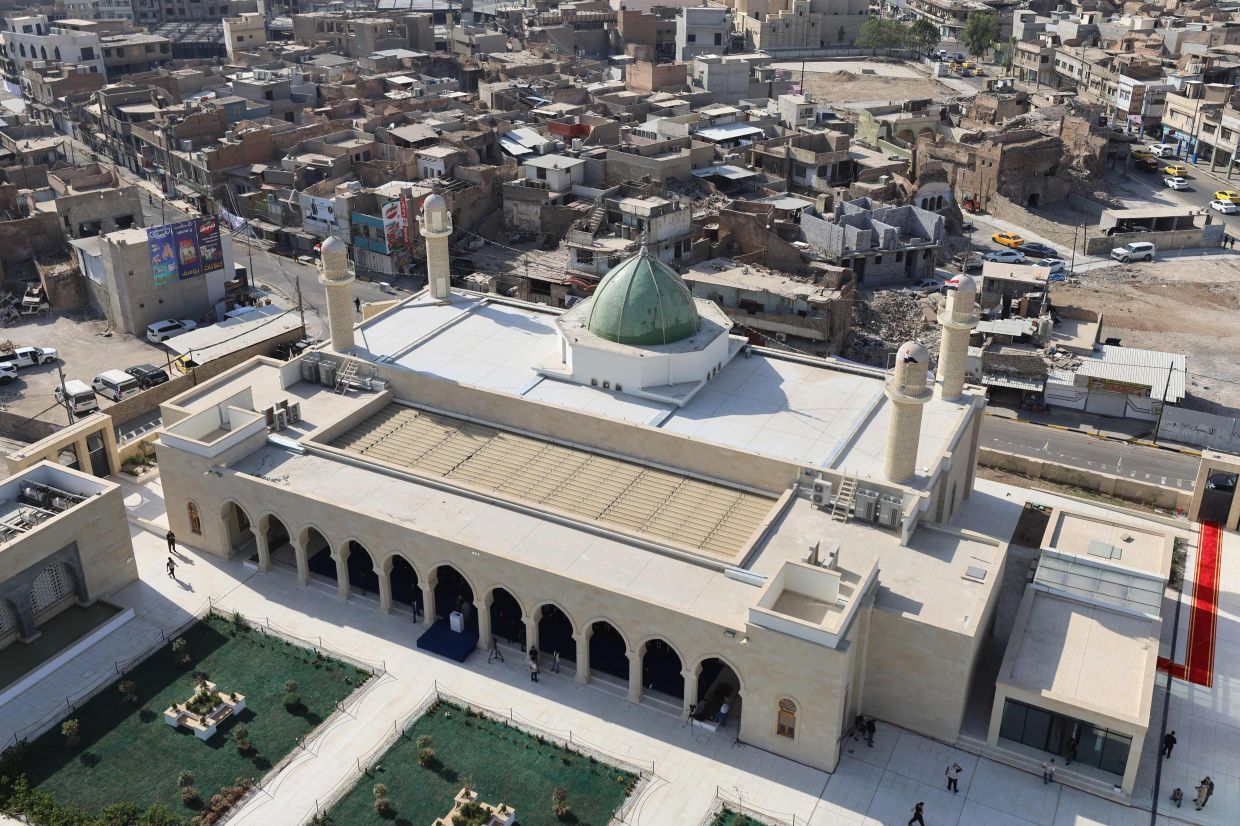
Iraq’s prime minister presided over the official reopening of the historic al-Nuri Grand Mosque and its leaning minaret in the heart of Mosul’s Old City on Monday, eight years after the mosque was destroyed by militants.
For some 850 years, the leaning minaret of the mosque stood as an iconic landmark. In 2014, IS leader Abu Bakr al-Baghdadi declared the so-called "caliphate” there.
The militant group later destroyed the mosque by detonating explosives inside the structures as it faced defeat in a battle with Iraqi military forces for control of the city in 2017.
Unesco, the UN’s scientific, educational and cultural organisation, worked alongside Iraqi heritage and Sunni religious authorities to reconstruct the minaret using traditional techniques and materials salvaged from the rubble.
Unesco raised US$115mil (RM486mil) for the reconstruction project, with large shares coming from the United Arab Emirates and the European Union.
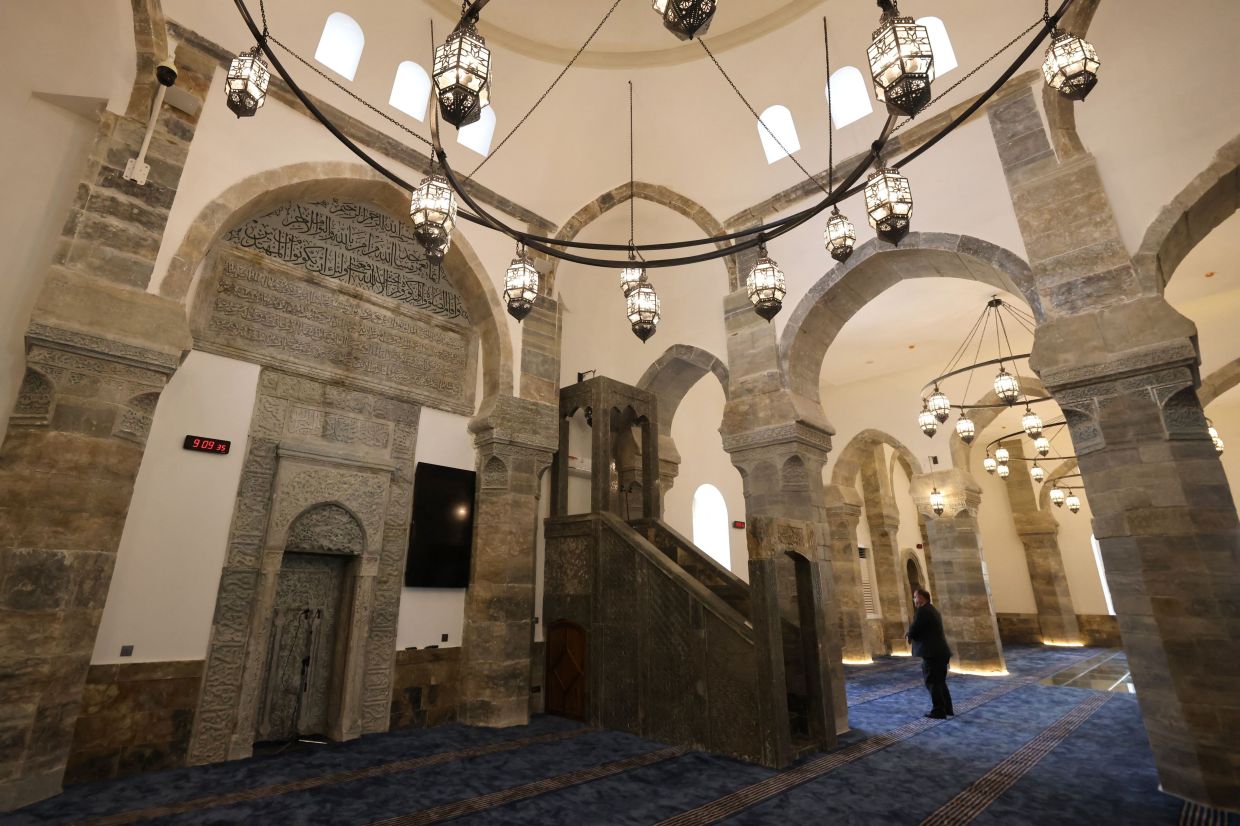
Prime Minister Mohammed Shia al-Sudani said in a statement that the reconstruction of the mosque "will remain a milestone, reminding all enemies of the heroism of Iraqis, their defense of their land, and their rebuilding of everything destroyed by those who want to obscure the truth.”
"We will continue our support for culture, and efforts to highlight Iraqi antiquities, as a social necessity, a gateway to our country for the world, an opportunity for sustainable development, and a space for youth to innovate,” he said.
At its peak, the miltants ruled an area half the size of Britain in Iraq and Syria.
In addition to the mosque, war-damaged churches were rebuilt as part of the reconstruction project, aiming to preserve the heritage of the city’s shrinking Christian population. Sudani said the city of Mosul embraces all of its communities and "embodies all the characteristics of Iraq’s diverse society.”
Most of Mosul's small population of Christians fled when the militants launched its offensive in 2014. In 2003, Mosul’s Christian population stood at around 50,000.
Today, fewer than 20 Christian families remain as permanent residents in the city, although some who resettled in the semi-autonomous Kurdish area of northern Iraq still return to Mosul for church services.
The reconstruction project in Mosul could serve as a model for restoring other cultural sites in war-torn areas - including neighbouring Syria, which is starting to emerge from nearly 14 years of civil war after the fall of former President Bashar Assad last year. - AP