
The five-foot way, or “kaki lima” in Bahasa Malaysia, is ubiquitous in Malaysia, Singapore and Indonesia, providing residents much-needed shelter from the tropical elements, be it the scorching heat of the sun or the heavy deluge of a sudden rainstorm.
A remnant of the British colonial era, these covered arched walkways found in front of heritage shophouses occupy a strange grey area between a public space and a commercial space.
In Kaki Lima: Pictures And A Story, published under independent publisher Buku Fixi imprint Fixi Novo, writer Shih-Li Kow and photographer Malek Hue explore this fine, and often fragile, balance in a fictionalised story written by Kow, inspired by photos taken by Malek.
Kow, now a familiar name at Fixi, released Bone Weight And Other Stories in 2023, with her earlier books Ripples And Other Stories (2008) and The Sum Of Our Follies (2014) also reissued by the imprint.
In the Kaki Lima book, we’re introduced to a colourful cast of characters in a small, nondescript Malaysian town, whose lives orbit around the kaki lima.
Drama and conflict come along when municipal council officials begin to lay down the law, cracking down on the small businesses that had appropriated the kaki lima for commercial use.
Kow’s storytelling complements Malek’s photos, tying them into a coherent and memorable narrative that highlights the significance of kaki lima in Malaysian lives.
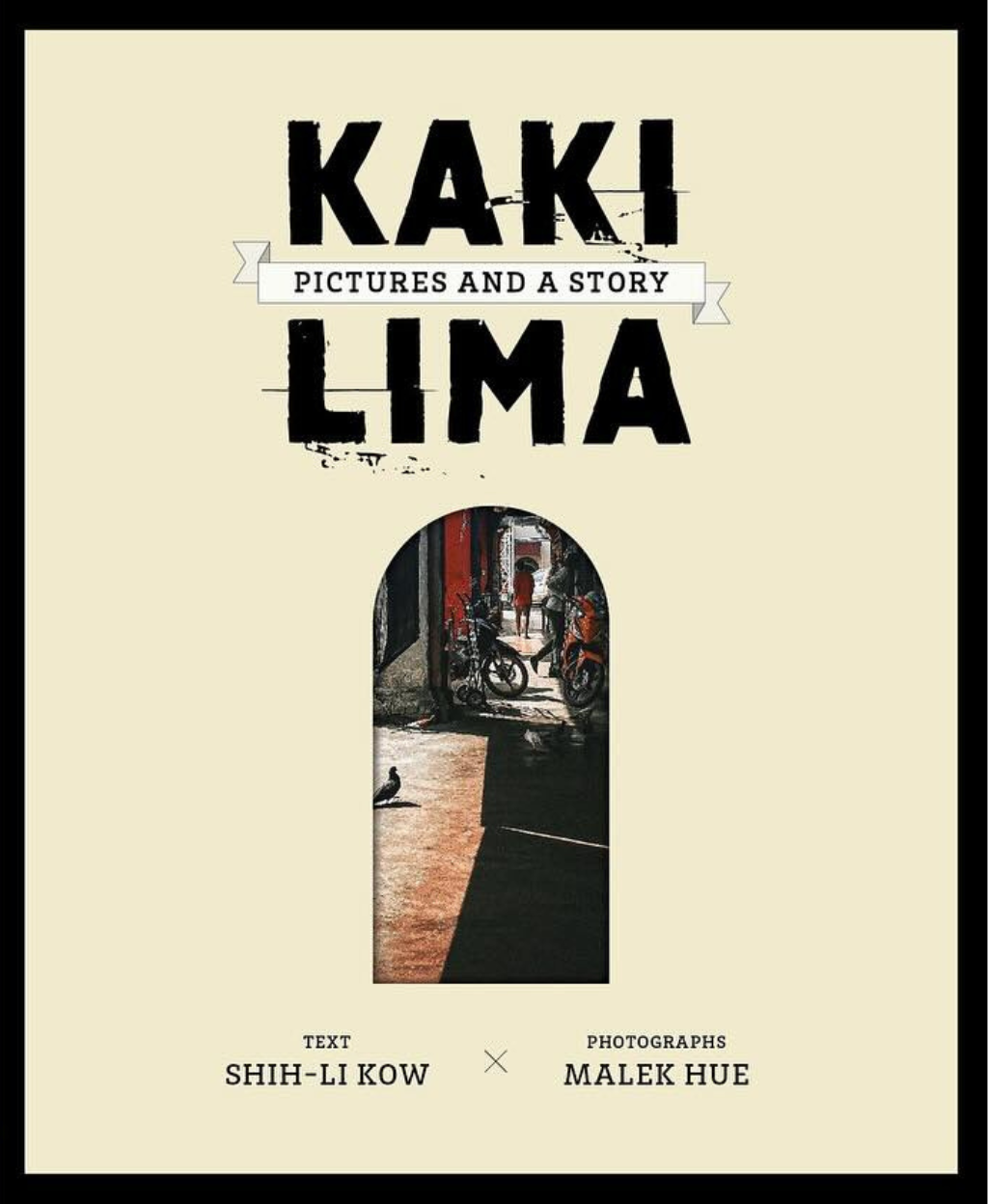
Though fiction, a part of the story was inspired from a real-life incident. In an interview, Kow shares that she came across the Verandah Riots while reading up on kaki lima.
In February 1888, after local authorities cleared away obstructions along five-foot ways in the Kampong Glam area (in Singapore), dissatisfaction among the shopkeepers and Chinese secret societies blew up into a riot and deadly clashes with police, which was quelled by the third day.
“Besides being an interesting incident which happened in Singapore during the British administration, it brought home to me how important the kaki lima space was for business and how much of a shared entity it once was.
“I had to incorporate a version of the incident in my story, especially when it pulled together some elements that I wanted to write about – the triads, a brief violence, a curfew, the tension between shopkeepers and authorities,” says Kow.
On the same wavelength
Malek shares that he and publisher Amir Muhammad discussed the idea for the book soon after the pandemic lockdowns had ended.
“It was February 2022, and the initial idea was for myself and Amir to go on a road trip around Malaysia together, taking photos and collecting stories about kaki lima, but I ended up going alone.
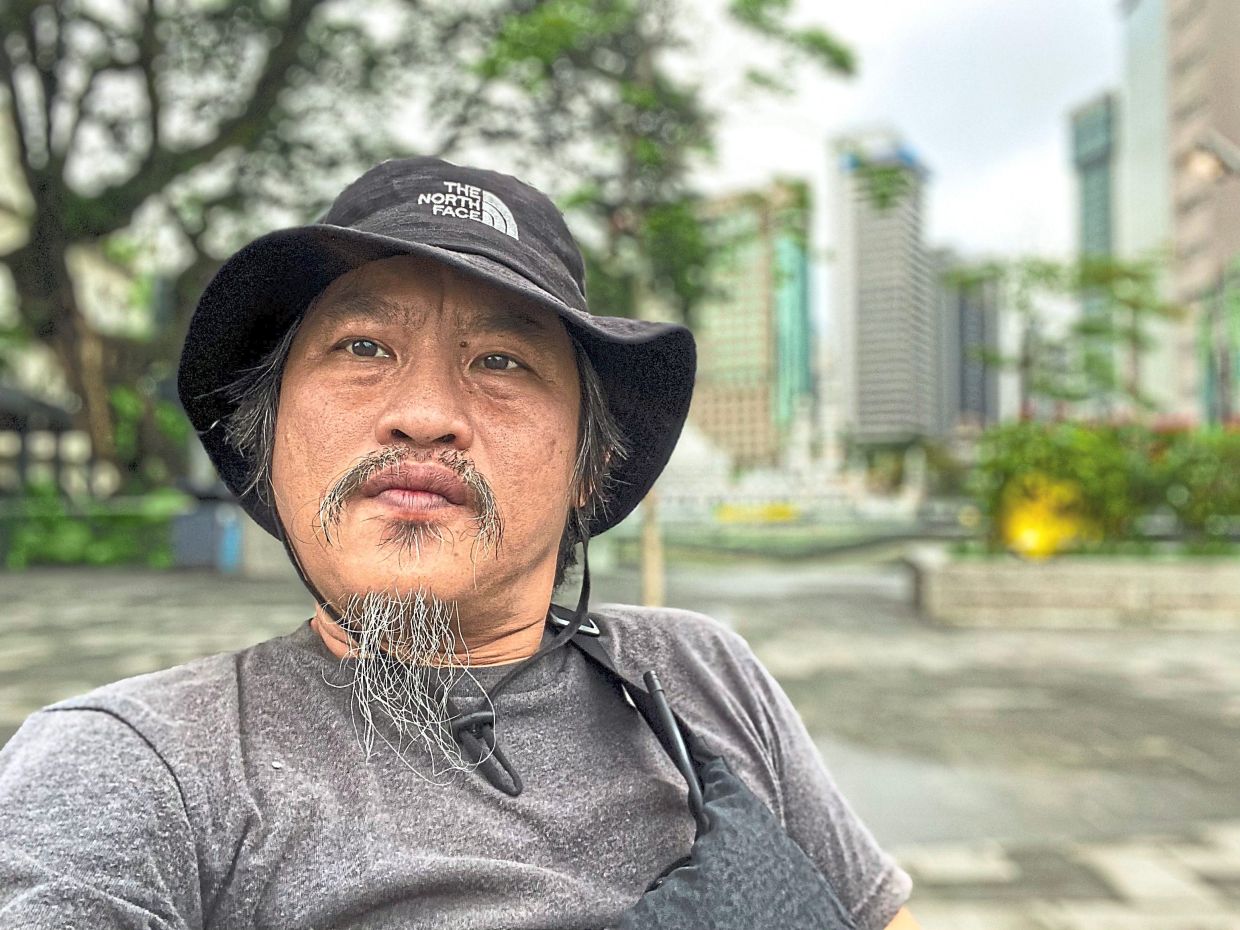
“Some 200-plus photos and loads of interviews later, we thought that it still wasn’t enough – there was no solid link between the photos and stories. So that’s when we decided to bring Shih-Li into the picture,” says Malek.
Rather than compiling the stories Malek collected during his travels documenting kaki lima locations, Kow was brought on to write a completely new and original fictional story based on the photographs he had taken, which she considered an interesting challenge.
“Finding a starting point was difficult. I was given around 120 of Malek’s photos, almost all of which did not have people in them. So finding a central character was a challenge.
“Then I had to figure out how to piece the story together from all the unrelated photos, which required finding the right photos and sequencing them. All in all, it needed many iterations, but it was fun,” says Kow.
Despite working on the same project, neither Kow nor Malek had met each other until much later. However, both agreed that this was a good thing.
“After Amir mentioned bringing Shih-Li on board for the book, I Googled her, then went out and bought one of her books.
“I was pleasantly surprised that her stories read almost the same as the ones I had collected – stories of family, brushes with the authorities, the daily struggles of small businesses. All of these things somehow converge and exist in the same place and time,” says Malek.

But he adds that as they didn’t work on their parts concurrently, they were each able to exercise their own creativity with no interruption while working on the book.
“The first time we met was when we were asked to come in to discuss paper options before the book was sent to the printer. In hindsight, I’m happy that it worked out that way, because if I had heard Malek’s anecdotes beforehand, I would have felt an obligation to incorporate them into what I was writing.
“As it turned out, I think we were on the same wavelength – his experiences while taking the photographs and the story I wrote could easily exist in the same space,” says Kow.
More than just a walkway
It’s easy to conflate five-foot ways with your typical city pavements and sidewalks, but they’re so much more, say Kow and Malek.
“If we define kaki lima as a covered walkway in front of a row of shops, then technically we have that everywhere, even in new buildings. But not all kaki lima are the same. For me, the defining characteristic for kaki lima is its adjacency to a grouping of shophouses, which means there is life beyond just commerce in the building. There are families and lives being built in the homes above or behind the shops.
“Although we can’t see these private spaces, there are signs of their lives which appear in the shared space of the kaki lima. This, coupled with the businesses being run and the proximity to street life, is what makes the kaki lima more than just a walkway,” she adds.
For Malek, while many kaki lima carry a similar aesthetic, what differentiates them is their stories.
“Kaki lima is a unique part of our culture and history, yet many of us don’t take the time to pause and listen to the stories they hold. We should celebrate and appreciate kaki lima like how any heritage deserves,” concludes Malek.
Kaki Lima: Pictures And A Story is available in all good bookstores.