
As Chinese New Year approaches, a trip to the market becomes almost compulsory for celebrants.
Beyond picking up red packets and decorations, shopping for snacks is often the main draw.
For our home, we typically pick up all types of snacks and biscuits, but it’s the crunchy, salty, irresistible treats that keep guests nibbling and lingering a little longer.
Among the more popular snacks are seaweed chips – gim-bugak – originally Korean but have evolved locally.
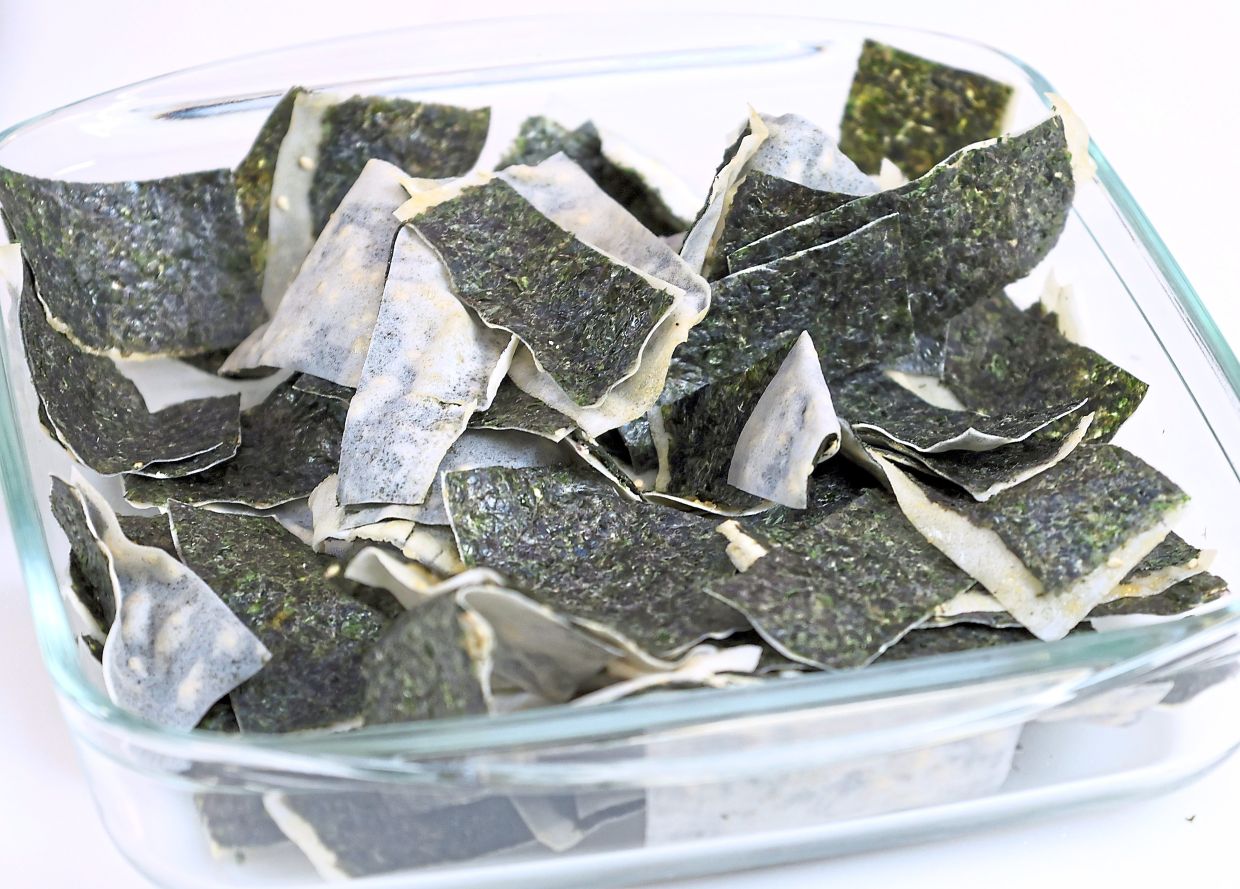
These deep-fried snacks are black on one side, lightly golden on the other, and crisp through and through.
They are unapologetically salty, sometimes flavoured with chilli flakes, Sichuan peppercorns or wasabi, and almost impossible to stop eating once opened.
While we were preparing the mise en place for this dish, our photographer, Chan Tak Kong, studied the ingredients with a puzzled look.
He could not quite tell what was taking shape from a stack of popiah wrappers, nori sheets and an egg.
When I showed him online reference photos, he immediately exclaimed, “Oh, these are fish skins!”
They are not, of course, made from fish.
He then clarified that they were often called “vegetarian fish skins”, because of their uncanny resemblance to the real thing. Well, I learned something new that day.
Seaweed sheets, commonly known by the Japanese term nori, are made from edible algae, usually red, green or purple laver.
The seaweed is minced, spread thinly and dried using a process not unlike paper-making.
This explains its Chinese name zicai, which translates rather literally to “paper vegetable”.
One happy coincidence is that nori sheets are almost identical in size to commercial popiah wrappers.
When layered together, they align perfectly, making assembly quick and tidy.
In this recipe, beaten egg acts as the adhesive, binding the nori to the wrapper before frying.
This makes the dish vegetarian, though not strictly vegan.
Strict vegans can substitute Vietnamese rice paper for the popiah wrapper and use water to activate the starch.
The sheets must be left to dry for about an hour before cutting and frying.
The traditional Korean approach uses a paste of glutinous rice flour and water, spread thinly over the nori and left to dry for at least two hours or overnight before frying.
It requires patience, but the resulting snack rewards with exceptional crispness.
Whichever method you choose, the result is the same: light, shatteringly crisp seaweed chips that vanish almost immediately upon serving.
Consider making extra – my experience suggests they will not last long!
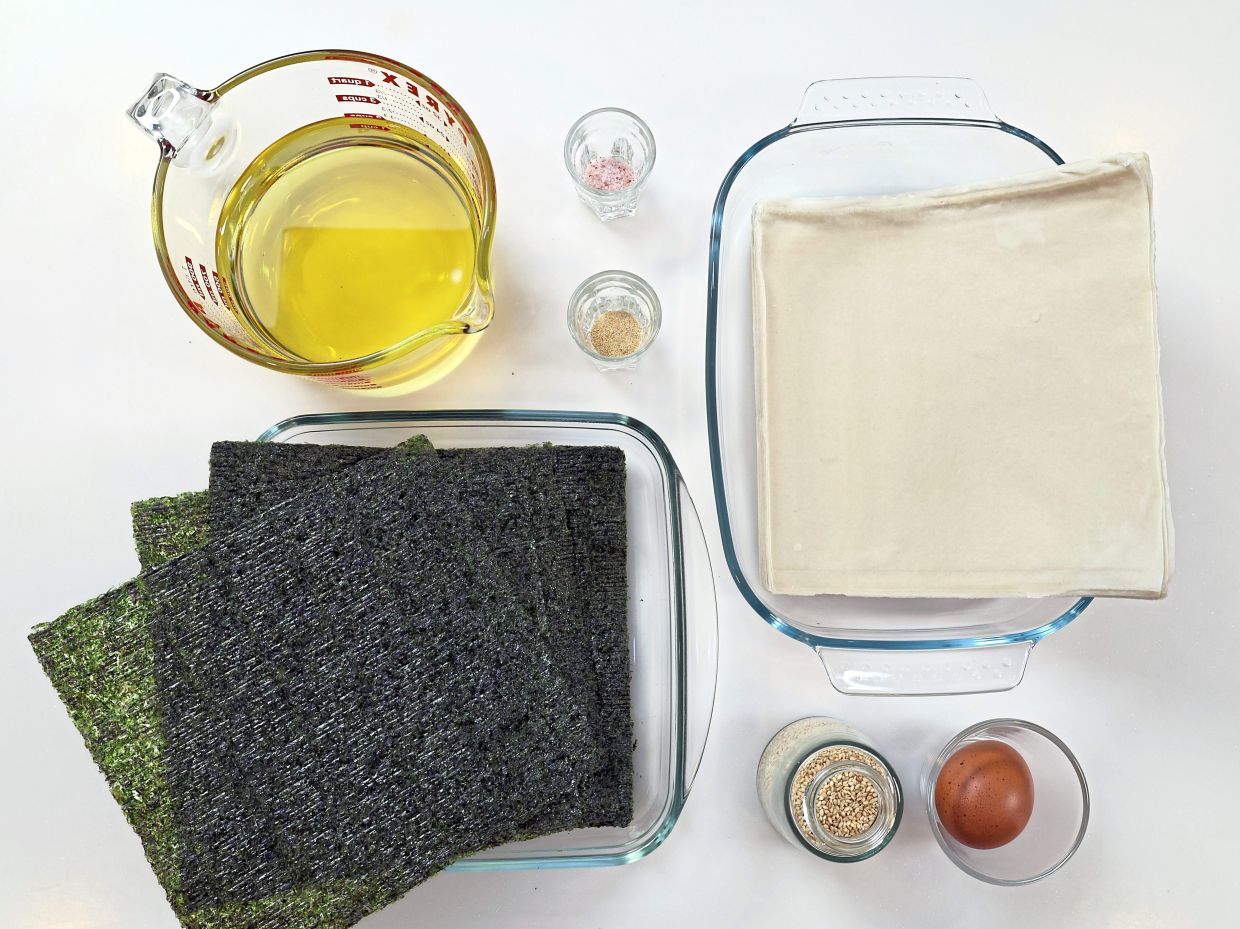
Seaweed chips
Ingredients
10 sheets laver (nori)
10 sheets popiah wrapper
1 large egg
1 tsp salt
1 tsp onion powder
2 tbsp toasted sesame seeds
1 cup cooking oil, for frying
Directions
Beat the egg with salt and onion powder until well combined.
Brush a popiah wrapper lightly with the egg mixture.
Sprinkle evenly with sesame seeds, then press a nori sheet onto the wrapper.
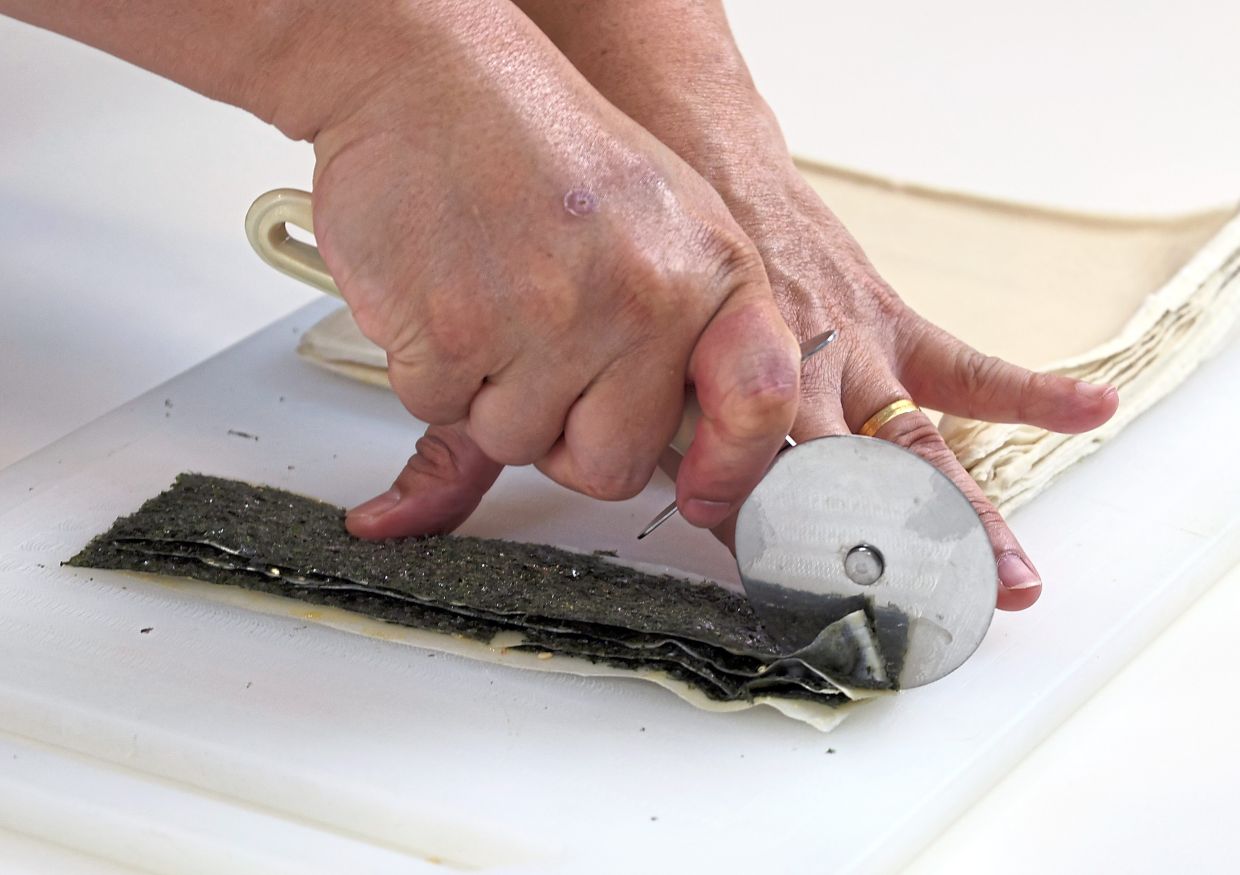
Using a rotary pizza cutter or kitchen scissors, cut each sheet into six narrow strips, then divide each strip into three pieces, making 18 pieces per sheet.
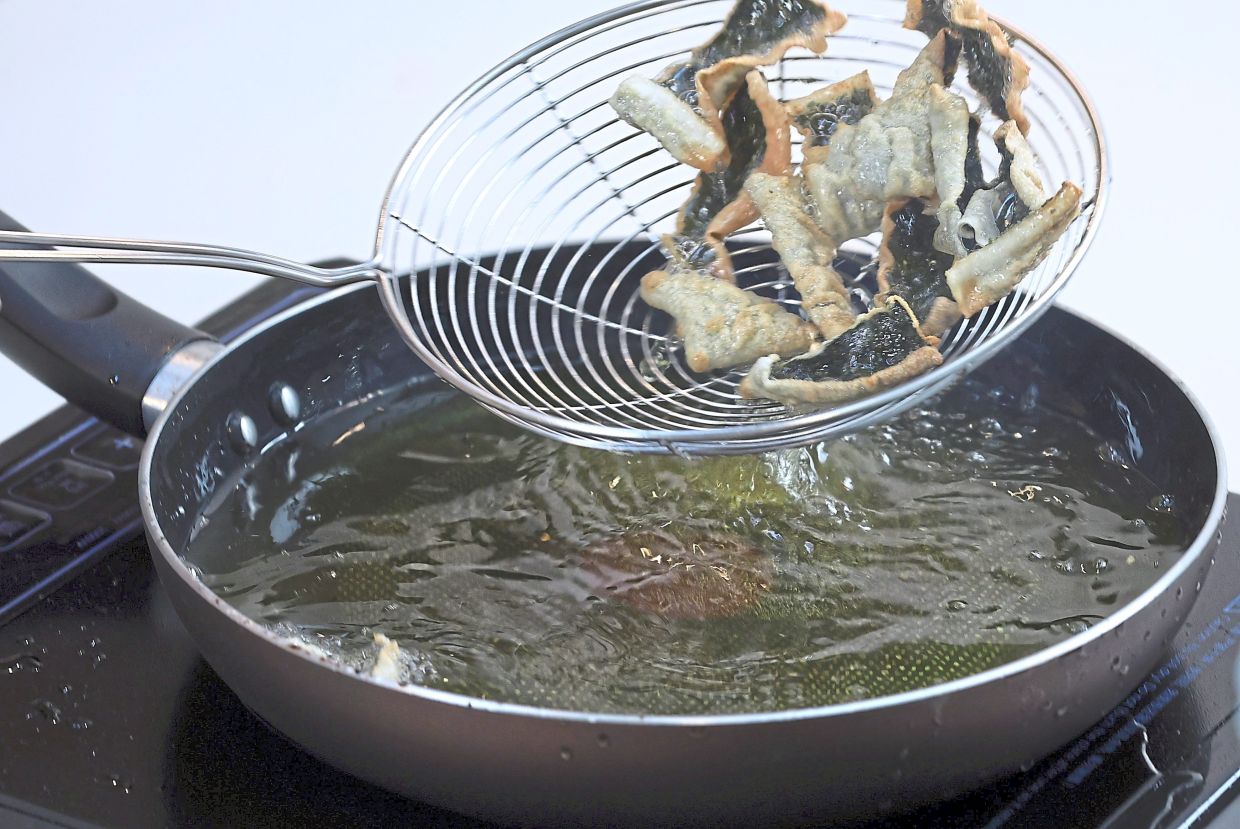
Heat oil over medium-low heat and deep-fry the pieces until crisp. Do not rush this step – slower frying ensures even crispness without burning.
Spread to drain excess oil over a lot of paper towels and allow to cool completely. Serve immediately, or store in an airtight container for up to two weeks.
Gallery
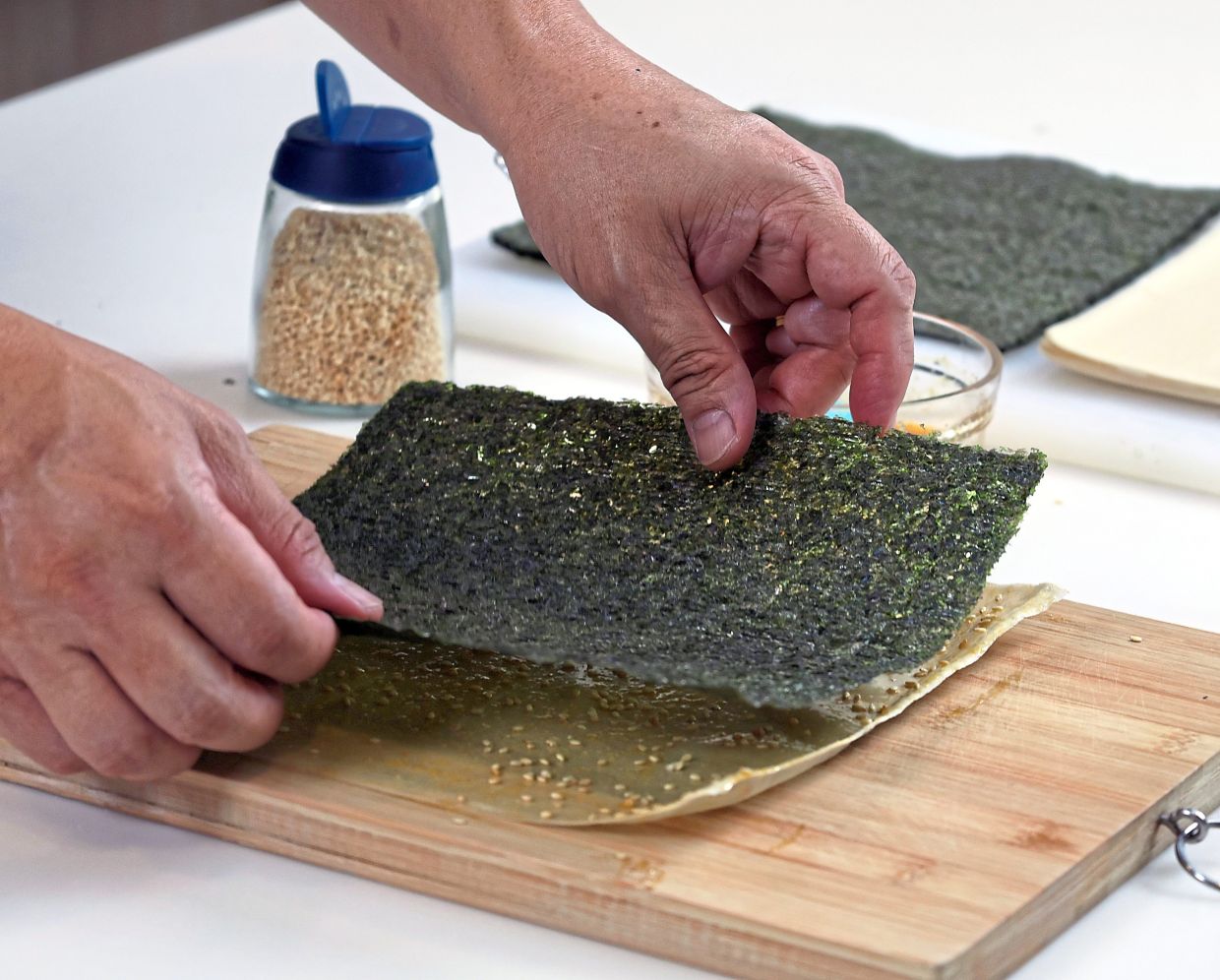
Brush the ‘popiah’ wrapper with egg batter and sprinkle sesame seeds before adhering the ‘nori’ sheet.
Cutting the strips with a rotary pizza or pasta cutter is a lot more efficient than using a knife or a pair of scissors.
Heat the oil to medium low and fry until crispy and lightly golden.
Drain off excess water with plenty of paper towels.