
It may surprise you, but few foods have won over palates worldwide and reveal such a compelling blend of history, culture, and science as the humble noodle.
From their ancient roots to their diverse modern forms, noodles represent both a culinary staple and a powerful symbol of cultural exchange across peoples and continents.
Recent archaeological discoveries, alongside historical records and advancements in food science, offer profound insights into the evolution of noodles from an early innovation to a global culinary phenomenon.
A 4,000-year-old discovery in China
The most compelling scientific evidence for the origin of noodles unequivocally points to ancient China. A groundbreaking discovery in 2002 by archaeologists at the Neolithic site of Lajia in Qinghai Province, northwest China, substantiates this theory.
Inside a sealed bowl, researchers unearthed noodle-like strands that were radiocarbon-dated to approximately 4,000 years ago. This makes them the oldest physical noodles ever discovered, providing tangible proof of their ancient Chinese heritage.
Chemical analysis of these remarkable ancient noodles revealed that they were primarily made from two types of millet: Setaria italica (foxtail millet) and Panicum miliaceum (broomcorn millet).
This is a crucial detail, as wheat, which would later become a more common ingredient in noodle production, was not the primary grain used in these earliest forms.
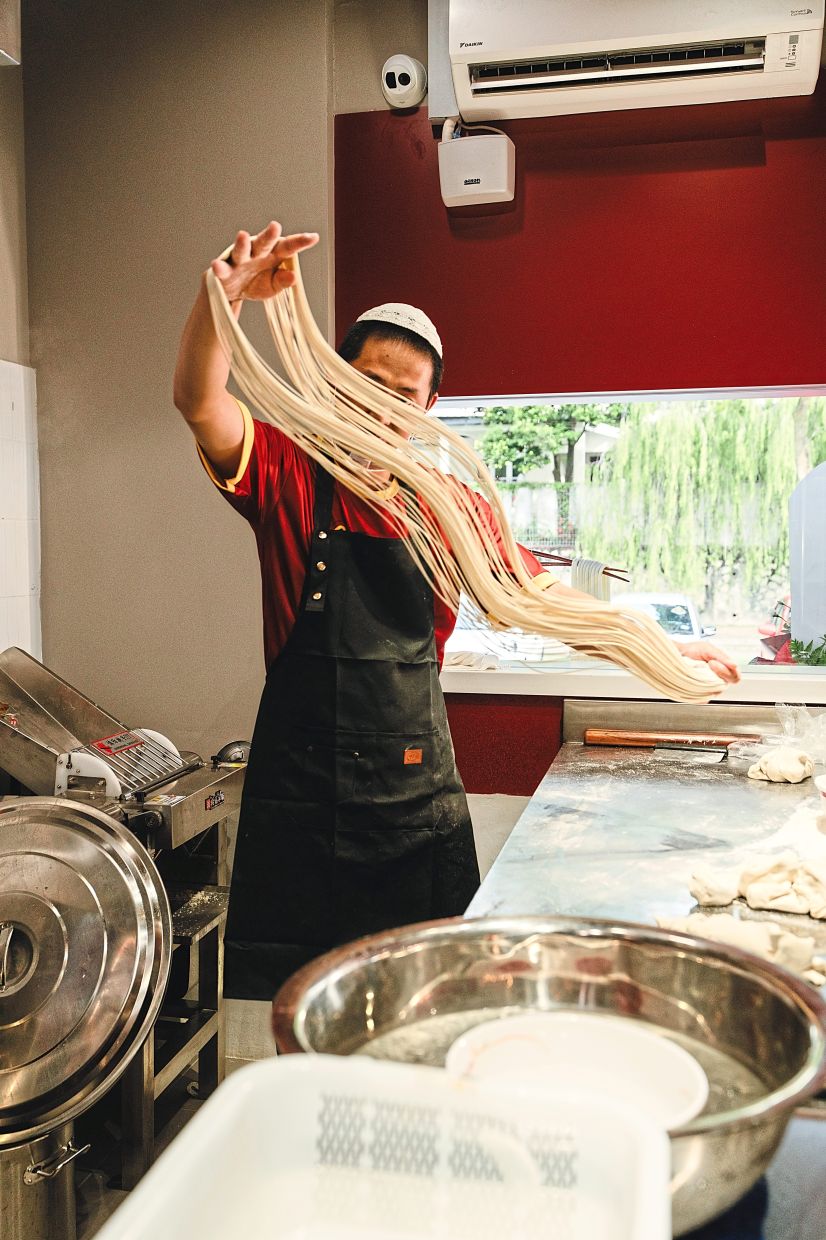
The noodles themselves were described as long, thin, and round, bearing a striking resemblance to modern “lamian”, or hand-pulled noodles, indicating that sophisticated techniques of dough stretching and boiling were already in practice by ancient Chinese cooks.
Lajia’s sealed noodles
The survival of these 4,000-year-old noodles until today is a remarkable archaeological story in itself. It is due to an extraordinary, unique confluence of multiple natural disasters and environmental conditions.
Approximately 4,000 years ago, the settlement was struck by a massive earthquake, which led to the collapse of buildings and the unfortunate entrapment of their inhabitants and belongings.
This seismic event was immediately followed by devastating floods and mudslides, which buried the entire site under a layer of sediment approximately three metres deep.
This rapid and deep burial proved to be the key to preservation, as it created anaerobic conditions – an environment characterised by little to no oxygen. Such an oxygen-deprived setting is ideal for preserving organic materials such as food, as it effectively prevents decay by microorganisms.
The specific situation of the noodle bowl further enhanced this preservation: it was turned upside down, and an inverted cone of clay beneath it further sealed the contents. This configuration blocked out both air and moisture, effectively “embalming” the noodles and protecting them for millennia.
As the site gradually dried out over time, the combination of the thick layer of sediment above the bowl, the pervasive lack of oxygen, and the physical seal provided by the bowl ensured that the noodles remained intact, offering archaeologists an exceptionally rare glimpse into the daily life and diet of the ancient Qijia culture.
Early written records and cultural significance
While the Lajia discovery provides the earliest physical evidence, written records also shed light on noodles in ancient China.
Written references to noodles in China can be found in texts from the Eastern Han Dynasty (25–220 AD), which describe noodles made from millet flour. It is worth noting that these early noodles were often not the long, continuous strands we typically encounter today; some were in the form of small, irregular pieces of dough, known as “mian pian”, which were simply tossed into boiling water – a style of cooking noodles that still exists in parts of China.
Beyond their role as sustenance, noodles rapidly gained profound cultural significance in China. In Chinese culture, they are powerful symbols of longevity, prosperity, and family unity.
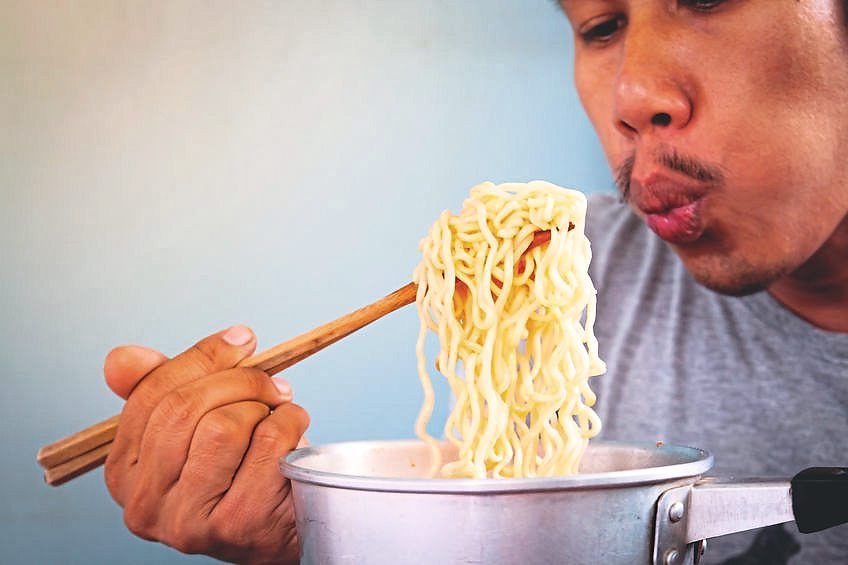
Special noodle dishes are traditionally consumed on birthdays to wish for a long life, at weddings to symbolise happiness, and during festivals to invoke good fortune.
Legends even attribute the invention of noodles to the mythical Yellow Emperor, Xuanyuan, who supposedly conceived the idea after observing thin dough strands falling into boiling water.
This is a testament to the deep roots of noodles in Chinese folklore.
Global journey of noodles
The Silk Road, the ancient network of trade routes connecting China with Central Asia, the Middle East, and Europe, played an instrumental role in the global dissemination of noodles.
As traders and travellers traversed these vast routes, they carried not only precious goods like silk and spices but also culinary techniques, including the art of noodle-making.
This extensive cultural exchange led to the widespread adaptation of noodles, with each adopting culture incorporating local ingredients and culinary preferences to create their unique versions.
As one of the world’s most prominent staple foods, the question of noodle origins has, perhaps inevitably, sparked lively debate among historians and scientists.
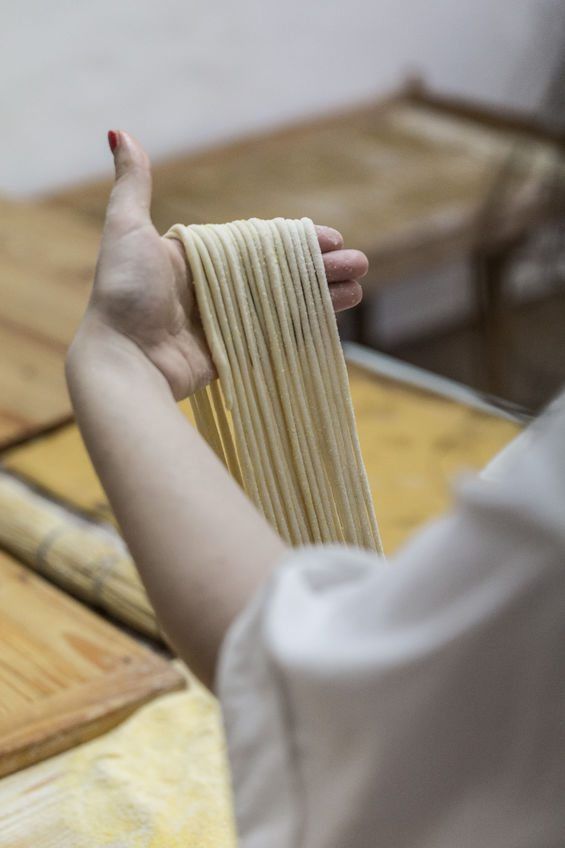
While the oldest definitive physical evidence originates from China, some scholars had proposed that similar noodle-like foods could have developed independently in other regions that had access to grains and water.
For instance, in Italy, the Roman writer Cato the Elder (234–149 BC) described a dish called “laganum” – flat sheets of dough that were boiled and layered. Laganum is now considered an ancestor of modern lasagna.
However, these early Italian dough sheets were distinct from the long, thin strands discovered in China. By the Middle Ages, dried pasta made from wheat semolina became popular in Italy, particularly in the southern regions, where the climate was conducive to wheat cultivation and pasta drying.
The earliest written record of dried pasta in Italy dates back to the 13th century. This was considerably later than Chinese noodles, which had already been a dietary staple thousands of years earlier.
Despite ongoing debate, the lack of direct physical evidence in other regions comparable to the Lajia discovery means that the Chinese origin remains the most widely accepted theory among scientists.
Evolution of noodle-making
As previously noted, the earliest Chinese noodles were made from millet, a resilient grain well-suited to the climate of northern China.
However, as wheat cultivation expanded throughout China during the Han dynasty and subsequent periods, wheat-based noodles increasingly gained popularity.
Wheat’s higher gluten content offered new culinary possibilities and allowed for the development of innovative techniques, such as hand-pulling and extrusion, which ultimately led to the creation of iconic noodle varieties like “lamian” and “udon”.
By the Ming Dynasty (14th–17th centuries), stretchy hand-pulled noodles had firmly established themselves as a hallmark of Chinese cuisine.
Further innovations included the addition of eggs to noodle dough, a development first noted in 544 AD during the Northern Wei dynasty. This addition resulted in a richer, more tender noodle and its popularity spread across Asia, contributing to the development of beloved varieties such as Cantonese egg noodles and Japanese ramen.
This period also saw a flourishing of regional diversity in noodle traditions.
Different grains, preparation methods, and cultural preferences shaped local noodle dishes. In southern China, for example, rice noodles became popular due to the abundance of rice, while in northern regions, wheat and buckwheat noodles continued to dominate.
Each area developed its unique and celebrated dishes, ranging from the spicy Sichuan “dandan” noodles to the hearty northern “zhajiangmian”. This adaptability and the continuous evolution of noodle-making techniques laid the groundwork for the global phenomenon noodles are today.
Culinary tapestry
The following is a far-from-comprehensive list of noodles, and reflects just a fraction of the types of noodles available around the world.
• Japan: Noodles such as “udon” and “soba”, made from wheat and buckwheat respectively, have become culinary staples. “Ramen”, while influenced by Chinese origins, evolved into a distinct and highly celebrated Japanese dish.
• Korea: Wheat noodles (guksu) and unique chewy cold noodles (naengmyeon) reflect a blend of local tastes and Chinese heritage.
• Southeast Asia: The region’s abundant rice and vibrant flavours are showcased in popular rice noodle dishes like Vietnamese “pho” and Thai “pad thai”.
• Italy: Pasta, in its myriad forms from spaghetti to lasagna, stands as a cornerstone of Italian cuisine, revered for its perfect pairing with rich sauces and fresh ingredients.
• Germany/France: “Spätzle”, an irregularly shaped egg noodle sometimes mixed with crushed liver is delicious in a rich cream sauce. “Nüdle” dates back at least four centuries, and is a common side dish accompanying hearty stews and rich dishes.
• Middle East: Dishes like “reshteh” in Iran and “itriyya” in the Arab world highlight the region’s own noodle traditions, some of which may have been influenced by the ancient Silk Road exchanges.
As you can see, the story of noodles continues and extends far beyond their ancient origins. The simple noodle has evolved into a global culinary chameleon that adapts to and enriches diverse cultures worldwide. Their inherent versatility and adaptability have allowed them to be adopted, transformed, and enjoyed across continents.
The views expressed here are entirely the writer’s own.