
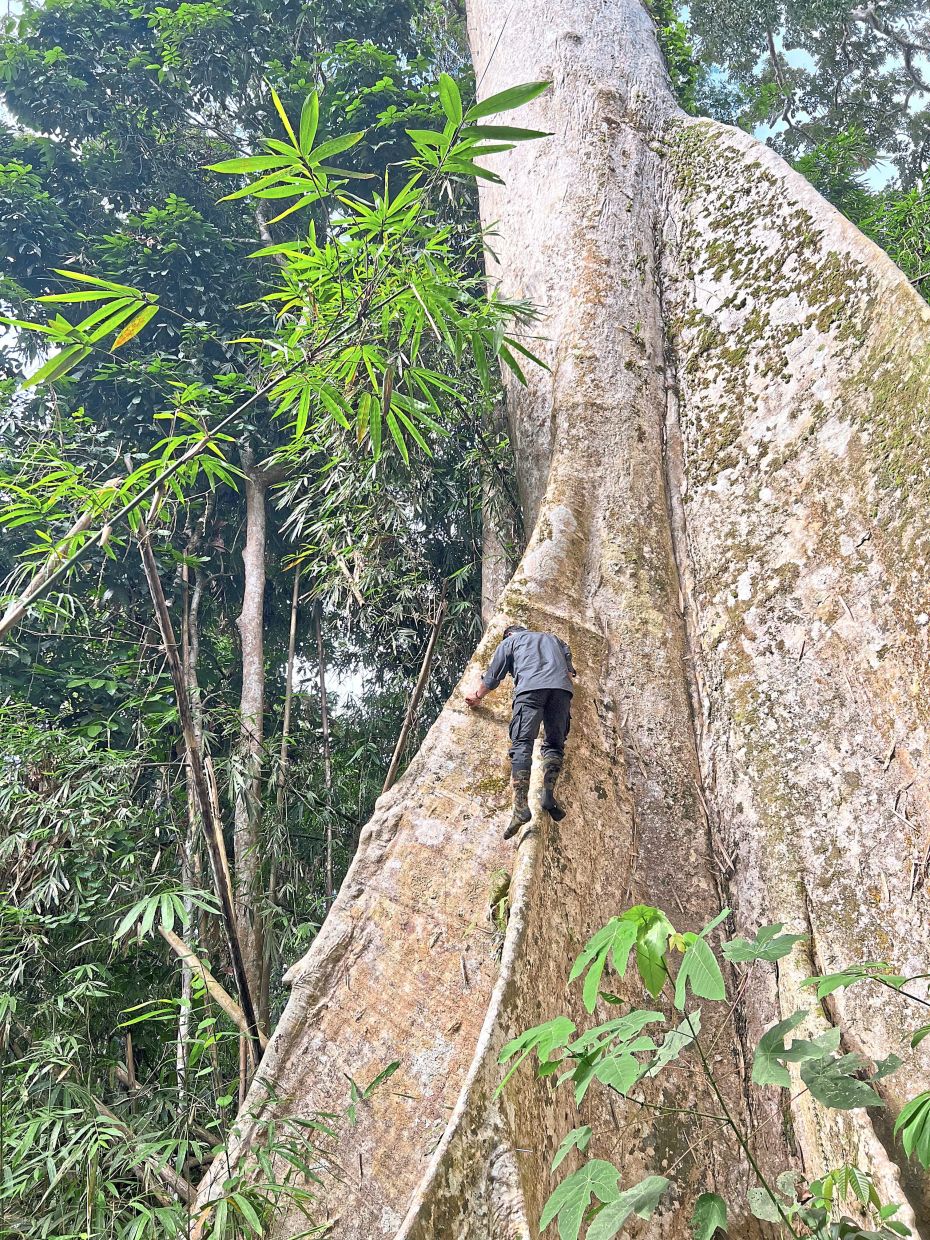
INDONESIA stands at a critical crossroads, balancing the urgency of economic growth with the imperative of environmental protection.
The nation’s drive to build massive infrastructure from toll roads to urban projects promises enhanced connectivity and economic opportunity. Yet, this expansion comes at a steep cost: biodiversity loss and escalating climate risks.
Recent reports indicate Indonesia lost 104,000ha of intact forest between 2021 and 2022 alone.
Road construction, in particular, fragments natural habitats and accelerates environmental degradation for hundreds of kilometres beyond project sites.
Deforestation is not merely an environmental concern. Between 2000 and 2016, nearly half of the country’s emissions stemmed from forest clearing.
Protected areas contribute environmental services valued at up to 30% of gross domestic product, including flood control, groundwater recharge and coastal protection—services that safeguard millions from floods, droughts and rising sea levels.
Building resilience into development
In this dilemma, nature-based solutions (NbS) offer a strategic pathway, allowing infrastructure development and ecosystem conservation to move forward together.
With the 2024 infrastructure budget reaching 423 trillion rupiah (RM104.5bil), integrating NbS into project planning presents a significant opportunity.
By embedding ecosystem protection and restoration into infrastructure projects, Indonesia can ensure development not only serves people but also strengthens environmental resilience.
The government has shown commitment through key policies. The Nationally Determined Contribution (NDC) emphasises landscape-level approaches for socio-economic resilience, while the LTS-LCCR (Long-Term Strategy for Low Carbon and Climate Resilience) 2050 strategy explicitly targets NbS adoption.
Regulations such as Permen KLHK No. 23/2019 (Regulation of the Minister of Environment and Forestry No. 23/2019) and PUPR No. 9/2021 (Regulation of the Minister of Public Works and Public Housing No. 9/2021) provide a legal framework for sustainable development, particularly in forested areas.
Planning from the “upstream”
Experts stress that NbS should be applied from the earliest planning stages, the “upstream” of a project.
At this stage, policymakers can avoid critical conservation areas, select optimal project locations and identify NbS investments that deliver dual benefits: climate resilience and community well-being.
Applying NbS only during design or construction stages is costly and limits positive environmental impact.
WWF and Gadjah Mada University have conducted spatial analyses offering decision-makers three main scenarios:
> Unconstrained conservation: Prioritising intact forests with high biophysical value near populations, maximising ecosystem services like water supply and sediment retention.
> Infrastructure impact conservation: Focusing on forests near high-risk road networks to strengthen both infrastructure and community resilience.
> Restoration: Identifying degraded lands—agricultural, open, or barren—that can be rehabilitated into secondary forests to improve climate resilience and human well-being.
Key findings
Protecting 10% of the highest-priority areas within development zones, which is about 16% of Indonesia’s land, is essential for safeguarding millions of residents and tens of thousands of kilometres of roads.
Conserving 18% outside development zones and restoring 11% of land provides similar benefits.
Priority patterns vary across provinces: Papua, West and Central Kalimantan, South Sumatra and South Sulawesi emerge as conservation hotspots, while West and North Kalimantan, Riau, South Sulawesi and South Sumatra are key restoration areas.
Around 25% to 30% of these areas provide multiple ecosystem services, mainly groundwater recharge, while coastal protection is concentrated within 2km of the shoreline.
A majority of priority areas lie outside protected zones and key biodiversity areas, highlighting the need for new interventions and NbS investment opportunities beyond established conservation networks.
Protecting areas within 15km and 25km of roads supports approximately 147 million people and 70% of the road network, while restoration benefits more than half of the population and infrastructure, with West Kalimantan, North and South Sulawesi and West Sumatra as key priorities.
From analysis to action
NbS should be integrated into national and regional planning, guiding RPJMN (National Medium-Term Development Plan), RPJPN (Long-Term National Development Plan), spatial plans and local zoning.
This allows setting conservation and restoration targets that strengthen transport resilience, while benefiting biodiversity and tourism, in line with LTS-LCCR 2050 and the updated NDC.
NbS mapping can also guide road routes to avoid critical ecosystems and prioritise degraded forest restoration, reducing long-term operational costs.
Cost-benefit analyses using Sustainable Asset Valuation (SAVi) show NbS provides substantial added value, including high internal rates of return in certain locations.
Most priority conservation and restoration areas are outside protected zones, creating opportunities for cross-ministry coordination and collaboration with landowners (government or private) to develop nature-positive projects.
Examples include The Sustainable Infrastructure Programme in Asia (SIPA) ecosystem service training modules, Advancing Transport and Logistics Accessibility (ATLAS) projects in Sumatra and Riau, and Public Investment Management Guidelines (PIMG) and Project Preparation and Delivery Facility (PPDF) initiatives incorporating NbS as a core planning criterion.
Supporting policies are equally important: the National Land Agency under the Ministry of Agrarian Affairs and Spatial Planning should integrate NbS into spatial planning at district and city levels, road networks should meet Regulations of the Minister of Environment and Forestry’s conservation standards, NbS spatial assessments should inform National Strategic Projects selection, and the Ministry of Finance can encourage NbS within ESG frameworks for infrastructure financing.
All NbS data should be available on national platforms like One Map to support prioritisation, planning and design across ministries.
With these steps, Indonesia has the chance to turn the dilemma of development versus climate crisis into a sustainable growth strategy.
Infrastructure can serve immediate human needs while safeguarding environmental sustainability and resilience for future generations. NbS are not just an option, they are essential for an Indonesia that seeks growth without sacrificing its natural wealth.
This article is produced from a report jointly developed by WWF-Indonesia, Organisation for Economic Co-operation and Development, Gadjah Mada University’s Faculty of Geography, and the National Development Planning Agency under Indonesia’s Ministry of National Development Planning.