Foundation for Environmental Education and Green Growth Asia Foundation move to strengthen teacher training, link learning to green jobs, and scale climate-ready education.
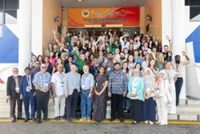
THE Foundation for Environmental Education (FEE), one of the world’s largest climate and environmental education networks, kicked off its annual National Operators Meeting (NOM) 2025 on Sept 15 at the International Youth Centre (IYC), Kuala Lumpur.
The event is hosted by the Green Growth Asia Foundation (GGAF), FEE’s official national member in Malaysia and will run from Sept 15-18, hosting nearly 200 delegates from 48 countries.
Following NOM is the EcoCampus International Conference (ECIC), which takes place from Sept 18–20. The “Empowering Malaysia’s Green Future Masterplan” will be launched at the ECIC.
With over 110 member organisations across 85 countries and more than 40 years of experience in Education for Sustainable Development (ESD), FEE connects global commitments with grassroots action.
“FEE bridges the gap between high-level climate commitments and grassroots capacity, empowering educators, students and communities through EcoCampus and EcoSchools to deliver measurable, quality-assured sustainability outcomes,” said FEE president Dr Nikos Petrou.
GGAF executive director Datuk Dr Mahadi Mohamad emphasised, “Malaysia’s leadership in environmental education must be built on practical delivery. GGAF focuses on student leadership and measurable indicators for energy, waste, water and biodiversity to ensure progress is visible and verifiable. Hosting NOM in Kuala Lumpur lets the world see quality at work and at scale.”
GGAF chief executive Dr Balamurugan Ratha Krishnan added, “This is where education meets the green economy. Malaysia is showing how to turn lessons into jobs, data into ESG credibility, and campus projects into city solutions. For companies building talent pipelines and stronger disclosures, these programmes are ready to plug in and scale.”
Aligned with Unesco’s ESD for 2030 and the Greening Education Partnership, the “Empowering Malaysia’s Green Future Masterplan” will strengthen teacher capacity, link learning to green jobs and expand hands-on projects in schools and campuses.
FEE’s flagship EcoSchools and EcoCampus programmes embed sustainability into education by turning classrooms and campuses into “living laboratories.” These initiatives now connect directly to green skills, micro-credentials and industry mentorships to make graduates job-ready.
ESG-aligned indicators will enable auditable and comparable reporting for schools, universities and corporate partners, strengthening community impact while supporting disclosure regimes.
Linking schools, SMEs and campuses helps local ecosystems raise sustainability performance in line with Scope 3 requirements. And with delegates from multiple regions exchanging proven solutions, models can be rapidly localised and scaled, accelerating impact for education, industry and cities.
The momentum continues with ECIC where universities and colleges will showcase living lab projects, link green skills to employability, and exchange best practices with international peers.
GGAF is a mission-driven organisation enabling hands-on climate action across schools, campuses and cities.
Through flagship programmes including EcoSchools, EcoCampus, Young Reporters for the Environment (YRE), and Low Carbon Schools, GGAF equips educators and youth with tools, training and partnerships to deliver measurable environmental and social impact.