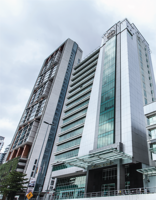
PETALING JAYA: Steady economic growth, continued infrastructure development, and stable financing conditions are expected to spur the Malaysian property market to new highs this year.
Industry experts and observers are optimistic, if not hopeful, that these fundamentals will help boost property transactions in 2026.
“Malaysia’s property sector is expected to grow this year, though the pace will likely be steady rather than rapid.
“Market activity and transaction values are projected to increase moderately, backed by a growing economy, expanding infrastructure and steady financing conditions,” said an analyst.
“We believe that the overall outlook is positive but measured, with growth expected to be in line with the government’s recent projection on transaction growth for 2026,” he added.
Earlier this month, Housing and Local Government Minister Nga Kor Ming said Malaysia’s property market is anticipated to grow at a steady pace, with total transaction value expected to exceed RM250bil this year.
He noted that total transaction value in Malaysia’s property market has been climbing steadily, from RM196.8bil in 2023 to RM232.3bil in 2024.
“Malaysia’s property market continues to grow at a steady pace, with no signs of a bubble. Total property transactions have improved consistently over the past three years, reflecting healthy market conditions rather than speculative activity,” he said in a statement.
Savills Malaysia Sdn Bhd group managing director Datuk Paul Khong said industrial and logistics properties are set to lead the property market expansion this year, driven by manufacturing activity and foreign investment.
“Across the country, from the northern to the southern regions, more industrial parks are being developed,” he told StarBiz.
Khong also noted that in the first nine months of 2025, the country had attracted approved investments totalling RM285.2bil, representing a 13.2% increase from the previous year.
“Johor led all states with RM91.1bil in approved investments, followed by Selangor with RM51.9bil, Kuala Lumpur (RM45.9bil), Penang (RM23.7bil), and Kedah (RM17.5bil),” he noted.
Olive Tree Property Consultants founder and chief executive officer Samuel Tan said the Johor Baru (JB)-Singapore Rapid Transit System (RTS) Link, Johor-Singapore Special Economic Zone (JS-SEZ) and Forest City Financial Zone will all provide a boost to the Johor property market.
“The physical progress of the RTS Link will continue to boost buyer confidence. Properties around the RTS Link and along the alignment will see sustained interest from those seeking Singapore proximity without Singapore prices.”
Tan added that the “immense cost” differential makes Johor – especially Iskandar Puteri and JB City Centre – an extremely attractive option for Singaporeans and Malaysians seeking more spacious living.
“This supports a healthy rental market. Like the national trend, Johor is a major beneficiary of industrial relocations and data centre investments, partly due to land and energy cost advantages over Singapore. This creates high-value jobs and ancillary property demand.”
Tan noted that the challenges for the Johor property market include the execution risk of the JS-SEZ.
“Bureaucratic delays, unclear regulations, or failure to attract global anchor companies could lead to a loss of confidence and another cycle of stagnation,” he added.
Tan noted that Johor still carries a significant overhang of unsold high-rise units from the previous cycle.
“This oversupply will continue to cap price appreciation in non-strategic locations, even as prime RTS Link-adjacent areas thrive.
“Infrastructure must continue to be improved as JB struggles with increased population density, which could potentially affecting livability.”
Meanwhile, an analyst said he remains “upbeat” on the outlook for residential and “some sub-segments” of the commercial property market.
“The residential segment should remain stable, with modest price increases, particularly in well-located areas.
“Moreover, selected commercial properties – especially prime offices – are expected to perform relatively well.”
He added that urbanisation and demographic trends will continue to play an important role.
“Ongoing migration to key cities such as Kuala Lumpur, JB and Penang is sustaining demand for residential and mixed-use developments.
“At the same time, a growing working-age population and new household formation are supporting both home purchases and the rental market.”
He also said tourism recovery will help contribute positively to the country’s property market.
“Increased visitor arrivals to destinations like Langkawi and Melaka can support hospitality-related developments and short-term accommodation demand.”
He further noted that government policies and incentives have been supportive.
“Housing initiatives, stamp duty exemptions and affordable housing programmes can stimulate transactions, while economic corridors such as Iskandar Malaysia continue to attract domestic and foreign investors.”
MBSB Research expects the resilient buying interest in 2025 to continue into 2026.
“Data released by Bank Negara Malaysia showed that total loan applications for purchase of property grew for five consecutive months in December 2025, increasing 6.9% year-on-year to RM50.3bil.
“On a monthly basis, total loan application in December were weaker by 9% month-on-month, which we think could be due to seasonal effects from the year-end holidays.”
Cumulatively, MBSB Research said total loan applications ended 2025 on a higher note, with stable growth of 3.4% year-on-year.
“Loan applications in 2025 remained sturdy despite loan growth of 4.9% in 2024 and 5.7% in 2023, underscoring the continuous recovery and resilient buying interest on property.”
Going forward, the research house expects marginal growth in buying interest in 2026 despite the high base in 2025, as the positive outlook for the sector continues to support property demand.
MBSB Research said approved loans for property purchases were marginally lower at RM23.3bil (minus 1.7% year-on-year) in December 2025, reversing growth over the previous three months.
“The decline in approved loans was mainly due to a lower loan approval ratio of 42.7% in December 2025 against 50.2% in December 2024.
“That has more than offset the higher loan application in December 2025.”
On a monthly basis, the research house said approved loans were lower by 1.4% month-on-month due to both lower loan applications and a lower loan approval ratio.
“Cumulatively, total approved loans in 2025 were higher at RM286.8bil (up by 1.2% year-on-year). The higher approved loans indicate a stronger new sales outlook for developers.
“Going forward, we see stable new sales prospects for 2026, while developers will reveal their new sales target for 2026 during the upcoming results reporting season this month.”
Commenting on the reporting season, MBSB Research said it expects developers to continue registering decent earnings growth and to conclude 2025 on a positive note.
“Most of the developers under our coverage reported earnings growth in the third quarter of 2025 (3Q25), supported by stronger property sales secured in 2024 and 2025.
“The stronger property sales, coupled with stable progress billings, should continue to underpin the earnings outlook for developers going forward.”
On the new property sales front, MBSB Research said it sees developers on track to hit their sales targets.
“Most developers targeted higher sales in 2025, as market conditions were favourable with stable demand for property. Going forward, we expect developers to set marginally higher new sales targets for 2026, due to the stable underlying demand for properties.”
Additionally, the research house noted that the growing exposure of property companies to industrial property development is also helping to lift new property sales.
Zerin Properties chief executive officer Previn Singhe also believes that developers’ performances are expected to remain stable.
“Most major developers are on track to meet their 2025 sales targets, supported by disciplined launch strategies, stronger product alignment, and steady take-up in the affordable and mid-market segments.
“Overall, it is shaping up to be a consolidation year, characterised by stable demand, selective capital deployment and a continued focus on fundamentals rather than broad-based expansion,” he said.