PETALING JAYA: After fixing its fiscal position, Malaysia is entering what policymakers are calling the “year of implementation” in 2026, with the focus now shifting from policy design to delivery.
That message took centre stage at the second edition of the Malaysia Economic Forum (FEM) 2026, themed Accelerating Growth, Advancing Malaysia.
The forum drew nearly 5,000 participants, including institutional investors managing a combined US$7.3 trillion in assets and corporates with a total market capitalisation of US$226bil.
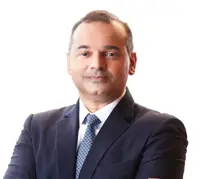
Speaking at a panel on fiscal and monetary policies, Second Finance Minister Datuk Seri Amir Hamzah Azizan said the Madani government now has the policy space and institutional stability needed to push ahead with deeper economic transformation.
Three years into the government’s term, he said reforms were gaining traction due to a clear framework and political stability.
“Because we have a clear framework and stability, we have been able to carry out reforms that anchor Malaysia as we move forward,” he said during a panel discussion moderated by Bursa Malaysia Bhd chief executive officer Datuk Fad’l Mohamed.
Amir Hamzah added that stability was necessary to translate policy into execution.
He said that reforms began with “securing the base”, pointing to fiscal reforms anchored by the fiscal responsibility act, subsidy rationalisation and tighter spending discipline.
“The key was not removing subsidies, but redirecting them to the right pockets of the economy,” he said, noting that leakages and arbitrage were reduced while support for vulnerable groups was maintained.
Savings from subsidy rationalisation, Amir Hamzah said, were channelled back into the economy to support growth and strengthen Malaysia’s fiscal position.
With the base secured, Amir Hamzah said the government now focused on “raising the ceiling” by attracting the “high quality” investments and moving beyond a purely manufacturing-driven economy.
“Made in Malaysia is evolving into Made by Malaysia,” Amir Hamzah said, as the country seeks to capture more value through knowledge ownership, skills development and higher-value activities.
He pointed out Malaysia’s economic resilience was evident last year, supported by diversified trade, pragmatic international engagement and continued inflows of foreign direct investment.
However, Amir Hamzah stressed that growth must ultimately translate into tangible benefits for the rakyat, a principle aligned with the Madani Economy framework, which emphasises not only raising growth potential but also “lifting the floor”.
“This means ensuring every Malaysian benefits from change,” he said, citing improvements in wages, employability and living standards, alongside stronger support mechanisms for vulnerable groups.
At the core of the strategy, Amir Hamzah said, is the ambition to transition Malaysia into a high-income nation by 2030, as outlined under the 13th Malaysia Plan.
Looking ahead, Amir Hamzah said the next phase of reform would focus on efficiency, including measures such as e-invoicing, aimed at improving transparency in financial transactions, reducing leakages and strengthening the country’s balance sheet.
He added that Malaysia’s growth priorities, clearly outlined under the National Industrial Master Plan, seek to attract higher value-added investments and differentiate the country from regional peers.
A key plank of this strategy is the upcoming New Incentive Framework (NIF), which will be rolled out in 2026.
Unlike previous approaches, Amir Hamzah said the NIF will be outcome-based, prioritising investments aligned with national priorities, high-value job creation and labour market development.
“In the past, incentives were often linked to scale.
“Going forward, it’s about quality,” he said, adding that projects located in less-developed regions may receive enhanced incentives to promote more balanced growth.
Meanwhile, Bank Negara Malaysia (BNM) Governor Datuk Seri Abdul Rasheed Ghaffour said all key engines of the economy are currently supporting growth.
He said consumption remains resilient, underpinned by high labour force participation, rising wages and supportive government policies, with unemployment at a low of 2.9%.
Investments have been on an upcycle since 2023, driven increasingly by high-quality investments that generate higher value-added activities and incomes, he noted.
He added that the external sector has also held up well despite global trade disruptions, with exports continuing to grow.
While acknowledging global uncertainties, Abdul Rasheed said BNM remains cautiously optimistic about 2026, supported by Malaysia’s strong fundamentals, diversified economy and resilient financial system.
“While we do see the tailwinds coming in, of course, there’s a lot of uncertainty,” he said.
“What’s important for us is to ensure that we provide a conducive environment, from monetary stability and financial stability for the country to be able to achieve sustainable growth.”
Inflation stood at 1.6% in December 2025, and Abdul Rasheed expects further moderation amid easing global cost pressures and a monetary policy stance that remains supportive of growth.
On monetary policy, Abdul Rasheed said the pre-emptive overnight policy rate cut to 2.75% in July 2025 was intended as an “insurance” move to sustain growth momentum, noting that policy impacts typically work with a lag.
Meanwhile, in his welcoming remarks, Economy Minister Akmal Nasrullah Mohd Nasir said FEM 2026 is a pivotal checkpoint for turning policy frameworks into real outcomes, positioning the forum as a national “report card” on implementation.
“FEM is set to make 2026 the year of implementation, where success is measured not by announcements but by the delivery of real outcomes, overcoming challenges, and creating lasting impacts that are felt by the rakyat within a reasonable time frame,” he said.
FEM, he added, aims to strengthen delivery discipline through data-driven transparency and accountability, ensuring recommendations translate into actionable policies rather than remaining at the discussion stage.