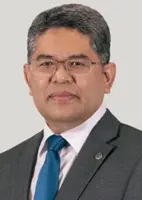
KUCHING: Energy transition and low-carbon industrialisation will stay as Sarawak’s central growth engine, the state’s premier says.
This leverages Sarawak’s renewable-energy advantage to anchor downstream industries, data centres and emerging hydrogen-based economy, said Sarawak Premier Tan Sri Abang Johari Tun Openg.
“This transition will be underpinned by strong environmental stewardship, including sustainable land and water management, circular-economy practices and climate-resilience measures to ensure that industrial growth remains environmentally responsible over the long term.
“Manufacturing and downstream industries will be deepened, with emphasis on higher-value processing, advanced materials and export-oriented production.
“This will move Sarawak further up regional and global value chains, supported by greater adoption of advanced technologies, applied research and industry-led innovation as well as stronger links between firms, research institutions and talent pipelines to accelerate commercialisation and productivity gains,” he added in his 2026 New Year address that marked the 9th anniversary of his premiership on Jan 13 at the Borneo Convention Centre here.
Abang Johari said over the past nine years, Sarawak had deliberately positioned energy not only as a source of revenue but as a foundation for long-term economic sovereignty, industrial competitiveness and social stability.
“Sarawak’s renewable-energy strength, particularly hydropower, has provided Sarawak with reliable, affordable and increasingly low-carbon energy. Continued investment in generation capacity, grid resilience and system reliability have strengthened this advantage and underpinned investor confidence across sectors.”
He said food security and modern agriculture will be strengthened through productivity-driven approaches, including technology adoption, integrated agri-parks and stronger farmer-market links. The measures would improve farm incomes, enhance value addition and reduce supply vulnerabilities while promoting more resilient and sustainable agri-food systems,
“Digitalisation and artificial intelligence (AI) adoption will be scaled across sectors to raise productivity and improve service delivery, supporting smarter urban management, industrial optimisation and data-driven public services.
“Transport, logistics and gateways will be upgraded as strategic enablers, ensuring that ports, airports, roads and digital infrastructure effectively support industrial clusters, trade flows and regional connectivity.”
He said the planning and preparatory work is progressing for a new Kuching International Airport and a deep-sea port at Tanjung Embang to enhance Sarawak’s logistics capability and position the state as a more competitive regional gateway.
The Premier said, under the Post Covid-19 Development Strategy 2030 (PCDS 2030), Sarawak is pursuing economic transformation while continuing to invest heavily in basic infrastructure, education, healthcare and social protection, ensuring that growth remains inclusive, balanced and sustainable.
“As these foundations take hold, their impact became increasingly evident. Beyond individual programmes and projects, the past nine years represent a period of deliberate state-building for Sarawak.”
Abang Johari said through disciplined financial management, the clear assertion of rights and prudent revenue reforms, including the introduction of the state sales tax on petroleum and petroleum products in 2019, Sarawak built a more stable and predictable revenue base.
As a result, he said Sarawak state revenue doubled compared with 2017 levels.
He said, last year Sarawak’s state revenue reached RM13.5bil, exceeding a target of RM13bil.
The notable achievements under Abang Johari’s leadership included the establishment of state-owned Petroleum Sarawak Bhd through which Sarawak transformed its role from a passive resource owner into an active commercial participant, ensuring that value creation remains anchored within Sarawak.
The Sarawak Development Bank, which provides development-oriented financing aligned with state priorities, was also created, alsong with the Sarawak Sovereign Wealth Future Fund to convert finite resource revenues into enduring financial assets for future generations.