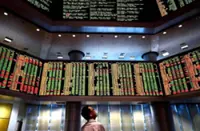
PETALING JAYA: Events in the United States could again wield significant influence over the movement of the FBM KLCI in the near term, as the Supreme Court is due for an opinion cast on President Donald Trump’s global tariff rulings today.
If the court upholds the tariffs, it would affirm expansive presidential emergency powers in trade; and if it strikes them down, it could limit such actions and trigger refunds or policy reversals.
Concurrently, Washington’s Bureau of Labor Statistics will also be releasing its latest non-farm payroll ( P) report on the same day, which would detail the net number of jobs added or lost in the US economy in December, excluding farm workers, private household employees, the self-employed and certain non-profit organisations.
That said, IPP Global Wealth investment strategist and economist Mohd Sedek Jantan is taking an alternative view, as he believes that Malaysia would be largely shielded from US data-induced volatility this time around, the latter of which he feels is becoming internally consistent.
“Global equities and US Treasuries are wobbling because the US data flow is becoming internally inconsistent; as growth is slowing just enough to unsettle earnings expectations, but not enough to give the Federal Reserve (Fed) a clean pivot,” he told StarBiz.
Comparing the FBM KLCI’s 90-day volatility percentage of approximately 7.5% to the respective 11.5% and 16.4% of the S&P 500 and Nasdaq, he said fundamentally, Malaysia was not trading as a high-beta global risk asset, but as a domestically anchored income and cash-flow market.
Mohd Sedek further observed: “Bank Negara Malaysia is effectively running a stability regime with the overnight policy rate at 2.75%. This anchors corporate funding costs, mortgage servicing and cash flow for small-medium enterprises.
“That alone sharply reduces the equity risk premium volatility compared with markets that are still hostage to every Fed repricing.”
In addition, he said an income-led demand cycle, largely neutralised inflation fears and an export market that has stopped contracting means the local index should not be mirroring the movement of Wall Street, even if global sentiment turns fragile.
The volatility transmission is weaker because Malaysia is not priced off US liquidity anymore, said Mohd Sedek, as the local market is being driven by domestic income, fiscal impulse and policy stability.
“In a world of expensive global equities and fragile narratives, that makes Bursa Malaysia structurally more resilient than the headline correlations suggest,” he pointed out.
Meanwhile, head of equity sales at Rakuten Trade Vincent Lau believes President Trump’s market friendly and business-minded approach towards equities means volatility would be tampered, in turn also signalling good news for Malaysia.
“Even if the FBM KLCI were to track Wall Street’s movement, as it usually has historically, Trump’s active involvement will provide some support, and hence, this is also positive for our equity markets.
“Furthermore, US corporate earnings growth had also been strong overall last year,” he said
Commenting on the P report due today, both Mohd Sedek and chief investment officer at Tradeview Capital Nixon Wong concurred that a negative labour report would see funds gravitating into emerging markets and vice-versa.
“If the P signals softer hiring and a gradual rise in US labour market slack, markets will move rapidly to price earlier and deeper Fed cuts. That will push US yields lower, compress the dollar’s carry advantage and reopen the global search for yield.
“For Malaysia, lower US yields mechanically improve foreign portfolio flows into emerging markets, particularly those with stable policy frameworks and credible currencies. Malaysia fits that profile well right now, with a stable OPR, controlled inflation and a strengthened ringgit,” said Mohd Sedek.
Wong added: “If the P is stronger than expected, US yields will go up and the dollar will similarly strengthen. This means a smaller chance of a Fed rate cut, which may pressure equity prices.
“On the other hand, if the P is weaker, we are likely to see risk appetite for emerging market equities like Malaysia improve.
“However, it is important to take note of not just the P data, but also the Fed rate cut path and currency movement as a result of that, which could drive sentiment in Malaysia.”
Perhaps, more importantly, should the Supreme Court alter Trump’s tariff direction, Wong said this could impact trade-linked industries and exporters which are exposed to the global supply chain such as technology, while domestically anchored defensive names such as the utilities, consumer and healthcare sectors may see some positive influence.
He advised investors to hold cash to be ready for buying opportunities, or lower portfolio beta, while also keeping equal weight in both domestic defensive and quality exporters with diversified end-markets or clients.
While acknowledging that whatever decision the Supreme Court takes would reprice global supply chain risks, Mohd Sedek took a bigger picture view by underlining that Malaysia is positioned more as a reconfiguration beneficiary than a tariff casualty in any case.
“If the Court constrains tariff powers, export-linked sectors such as electrical and engineering, precision manufacturing, machinery and industrial suppliers would see the largest upside, as the geopolitical risk premium embedded in their valuations unwinds and order-book visibility improves, with banks benefiting through stronger trade finance and foreign-exchange flows.
“If tariff authority is reinforced, the winners rotate domestically, as construction, industrial parks, logistics, utilities and banks gain from accelerated friend-shoring and capacity relocation driving foreign investments, capital expenditure, power demand and credit growth,” he said.
Crucially, however, he noted the FBM KLCI is not export-dominated, but is led by banks, utilities, telecommunication companies, consumer and domestic services, whose earnings are anchored in local income, investment and infrastructure spending.
Mohd Sedek reasoned that this makes the index structurally insulated from tariff shocks and, in many cases, positively leveraged to global supply-chain fragmentation.
“The right positioning into this uncertainty is, hence, to stay ‘overweight’ on domestic demand and infrastructure-linked sectors, while holding exporters selectively based on market diversification and value-added exposure, rather than pure US trade dependence,” he said.