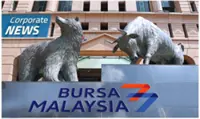
PETALING JAYA: Clean petroleum product (CPP) tanker operator Orkim Bhd ’s initial public offering (IPO) on Bursa Malaysia’s Main Market yesterday is being held up as an example of the Government-linked Enterprises Activation and Reform Programme (GEAR-uP) bumiputra “relay race”.
Under the framework, Ekuiti Nasional Bhd (Ekuinas) – which owned and groomed Orkim prior to listing – has exited the company through an offer-for-sale in the IPO and a transfer of shares to Permodalan Nasional Bhd (PNB) and its trustees.
PNB now holds 60% of Orkim as the “long-term steward”.
Ekuinas is expected to receive gross proceeds of about RM828mil from the IPO and the share transfer, of which RM350mil will be distributed as dividends to PNB, according to a joint statement by PNB and Ekuinas.
The remaining proceeds, the statement noted, will be redeployed into new bumiputra mid-market investments, in line with Ekuinas’ mandate to recycle capital into growth companies.
Speaking at the listing ceremony, Second Finance Minister and Acting Economy Minister Datuk Seri Amir Hamzah Azizan said the transaction demonstrated how Ekuinas identifies and strengthens companies before passing them on to PNB for long-term growth under a structured approach.
“This is the bumiputra ‘relay race’ in action – where one capable institution passes the baton to another, ensuring that the momentum continues and that Malaysian enterprises remain competitive for generations to come,” he said.
“It is also an early example of success resulting from the government’s strategy announced in Budget 2024 to consolidate Yayasan Ekuiti Nasional with Ekuinas into Yayasan Pelaburan Bumiputra and PNB to make Ekuinas the direct private equity arm of PNB.”
Amir Hamzah said the Orkim listing also reflects the broader direction for the government-linked investment company (GLIC) ecosystem, where GLICs identify, groom and scale companies before passing them on to the next phase of ownership or to the capital market.
For example, he said Khazanah Nasional Bhd manages an RM6bil Dana Impak fund, while the Retirement Fund Inc has put in place growth-focused funds such as Dana Pemacu, with RM6bil, and Dana Perintis, with RM500mil, to support companies at different stages of development, forming a pipeline of growth companies.
“The whole GLIC plays a part because what we want to do is to create a lot more of these companies that are funnelling all the way through so that we have more that comes out of the funnel.
“Hopefully, it will also support Bursa Malaysia,” he said.
Meanwhile, Bursa Malaysia chief executive officer Datuk Fad’l Mohamed said Orkim’s debut marked the ninth IPO on the Main Market and the 58th listing overall this year.
He said Malaysia’s capital market is currently valued at about RM4.25 trillion, with equities accounting for roughly RM2 trillion, or 47% of the total.
Fad’l added Bursa Malaysia plays a critical role beyond fundraising, serving as a key channel through which institutional investors deploy the savings of millions of Malaysians to generate long-term returns.
He said about RM1.6 trillion of public and pension funds are invested in local equities.
“In other words, our public equity market serves as a vital engine for national savings, fuelling business expansion and economic growth,” he noted.
Against this backdrop, Amir Hamzah said Bursa Malaysia is on track to post a stronger year for listings in 2024, already surpassing last year’s total of 55 IPOs, which contributed RM31.37bil in market capitalisation based on their IPO prices.
“Last year, we had 55 listings, and this year hopefully we will get about 60 listings,” he said, adding total funds raised could be close to RM30bil.
However, Amir Hamzah stressed the focus for Bursa Malaysia going forward will be less about the headline number of listings and more about attracting larger companies to add depth to the market.
“What we really want is scale. Bursa Malaysia will shift its focus into bringing in bigger companies to strengthen the Main Market,” he said, adding discussions are ongoing with the local exchange to set targets that reflect not just quantity but also the weight and quality of listed players.
Amir Hamzah said discussions are ongoing between the Transport Ministry and the Finance Ministry on extending income tax exemptions for the marine transportation industry beyond 2026.
Any support, he said, must come with commitments from industry players.
“There must be clarity in terms of what the industry has to do – strengthening the nascent fleet and developing local seafarers – so the whole ecosystem builds at the same time. Just providing tax incentives alone is not enough.”
Orkim’s shares opened flat at 92 sen, matching its IPO price on its Main Market debut.
The group raised RM92mil through the sale of 100 million new shares, with about RM80mil (87%) earmarked for the acquisition of two new tankers under its fleet expansion and modernisation programme.
Another RM1.15mil (1.2%) has been allocated for working capital, while the remaining RM10.85mil (11.8%) will cover listing expenses.
The company operates 18 vessels with a combined capacity of 239,186 deadweight tonnes, including 14 coastal CPP tankers, two medium-range CPP tankers, and two liquefied petroleum gas tankers, servicing major oil companies along Malaysia’s coastal routes.
Orkim chairman Datuk Abdul Hamid Sh Mohamed said the company holds a 56% share of Malaysian-flagged vessels but only about 12% of the overall market, leaving significant room for growth in a sector still dominated by foreign-registered vessels.
Orkim closed its maiden trading day up one sen, or 1.09% to 93 sen with 60.37 million shares traded.