PETALING JAYA: The planned implementation of a carbon tax in the recent Budget 2026 offered little clues that industries were looking out for.
Any imposition of a carbon tax is seen to increase companies’ tax burdens for critical industries such as the steel, cement and energy.
For the steel sector, many players here are struggling financially at this point in time.
Such a tax is also seen to eventually add to supply chain costs for other connecting downstream industries such as the automotive, construction and the machinery sectors, among others.
The impact of this would then see the production of dearer products that will be borne by the end consumer ultimately.
Despite the idea of being able to play a part to ‘save the environment’ with many still not convinced to come on board, has drummed the momentum up towards such a tax at a time when precarious weather related disasters become more frequent and violent today.
Hence, the eventual move towards carbon tax would be unstoppable and that the imposition of such a tax will kick-in and be sustained sooner rather than later in Malaysia.
On the global front, while the European Union appears to be the main proponent for other countries’ supply chains to move towards more environmentally friendly goals; the United States under the present government has withdrawn from such international initiatives such as The Paris Agreement.
The Malaysian government had earlier indicated the carbon tax will be introduced next year with an initial focus on the iron, steel and energy sectors although still lacking details now.
The carbon tax is also widely seen as being part of the National Energy Transition Roadmap for the country to achieve carbon neutrality by 2050.
A recent research note by MBSB Research indicated the introduction of a carbon tax will add to the government’s fiscal revenue, pending further details, which will be charged to the iron, steel and energy industries. It estimates that with the assumption of a starting rate at RM10 per kg unit of greenhouse gas emission, suggests a potential contribution of carbon tax of up to RM2bil to RM3bil.
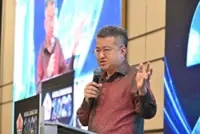
Sunway University economics professor Dr Yeah Kim Leng said the carbon tax may be a short-term inconvenience but is also seen as necessary for a small and open economy such as Malaysia.
“If we do not follow we can lose out. One of the key challenges is to create greater awareness and to start on a gradual basis so that industries have the ability to cope with the potential rise in costs especially to implement some decarbonisation measures – and these are costly.
“For polluting industries, one of the immediate impacts is to look into cleaner energy sources or to decarbonise which will reduce its impact,” Yeah told StarBiz.
Commenting on the iron and steel industry for example, Yeah said players here will likely face a dilemma given that costs may outweigh the ability to receive premium prices in the longer run.
But he also said they would likely have no choice but to move forward along with the decarbonisation goals.
“Policy makers should look into financial feasibility for industries that are impacted and this matter will have to be taken into full consideration – this is the biggest challenge that’s being faced today,” Yeah said.
Meanwhile, BIMB Research chief economist Imran Nurginias Ibrahim said the successful implementation of the carbon tax will hinge on careful design and gradual implementation as the industries involved are highly energy intensive and sensitive to cost changes.
“A phased approach starting with a low tax rate will allow firms to adapt, invest in cleaner technologies and maintain competitiveness. While the policy will raise operational and compliance costs initially, it also creates long term incentives for efficiencies and greener production, that would help align the country with global sustainably standards,” Imran said.
Furthermore, CIMB Research in a report said several outstanding issues need to be ironed out before the proposed carbon tax on the domestic steel sector can be carried out effectively.
“First and foremost, we are unsure if the carbon tax mechanism can be fully implemented prior to the passing of other broader climate-related legislations. We also concur with calls for domestic carbon taxes to be levied in phases alongside requisite funds to steer the domestic steel supply chain towards embracing the green or circular economy,” it said.
It also noted that the availability of long-term scrap supply – the main feedstock used for primary steelmaking in electric arc or induction furnaces – is crucial to support the transition towards low-carbon steel products and that domestic supply of ferrous scrap has remained tight.
Yeah noted while the overall strategy is there to decarbonise the economy, implementation is key in ensuring that there will be not too much disruptions to industries which can potentially drive them out of business.
“I believe we are still in the very early stages of this as many things still haven’t been figured out or fine tuned as of yet,” he said.