Emerging Asian currencies rose on Wednesday as the dollar weakened after dovish comments from Federal Reserve Chair Jerome Powell bolstered bets for more rate cuts, though brewing trade tensions between the U.S. and China kept gains in check.
Powell left the door open to further rate cuts on Tuesday and said the end of the central bank's long-running effort to shrink its holdings may be coming into view.
"Powell's comments solidified market expectations of two more rate cuts this year and three rate cuts in 2026 and hurt the sentiment toward the dollar, which in turn provided support to Asian markets despite the fact that renewed U.S.-China trade tensions could eventually hurt their economies," said Poon Panichpibool, a market strategist at Krung Thai Bank.
Against a basket of currencies, the dollar edged down 0.2% The MSCI index of emerging market currencies rose 0.4%, breaking a six-session losing streak.
The Thai baht, the Taiwanese dollar and the South Korean won rose 0.4% each. Despite the gains in other regional currencies, the Indonesian rupiah was largely flat at 16,580 per dollar.
It is among the worst-performing Asian currencies so far this year amid growing concerns about central bank independence and fiscal prudence following the departure of reputable finance minister Sri Mulyani Indrawati.
The country's new finance minister said the rupiah is likely to strengthen in the fourth quarter, with capital inflows set to increase once foreign investors see economic growth is accelerating.
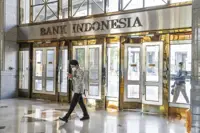
Bank Indonesia is due to meet next week and BofA analysts are expecting a 25 basis point rate cut, with inflation anchored and currency movements probably seen as manageable by the central bank.
Regional stock markets also rose, with MSCI's gauge of Asian emerging market equities up 1.1% after falling for three consecutive sessions.
Stocks in South Korea rose 2%. Shares in Bangkok, Taipei, and Singapore added between 0.3% and 1.1%.
However, gains in regional assets were capped as trade tensions between the world's two largest economies simmered. U.S. President Donald Trump said Washington was considering terminating some trade ties with China, including in relation to cooking oil.
Meanwhile, U.S. Trade Representative Jamieson Greer said it depended on China whether additional 100% tariffs on its exports to the United States kick in on November 1 or sooner, but acknowledged it might be hard for Beijing to find an off-ramp.
Despite the momentary rebound on Wednesday, Panichpibool said caution towards EM assets would likely prevail in the near term until it becomes certain that the trade tensions between the U.S. and China could de-escalate.
HIGHLIGHTS:
** Thailand's industrial sentiment rises as new government boosts confidence
** Deflationary pressures persist in China on weak demand
** IMF lifts growth outlook on more benign tariffs as revived US-China trade war looms
** Top South Korea officials to visit US for tariff talks amid hope for progress - Reuters