PETALING JAYA: The proposed trade-in offer for cars above 20 years announced in Budget 2026 aims to simultaneously tackle road safety and environmental concerns while promoting responsible end-of-life vehicle disposal.
Prime Minister and Finance Minister Datuk Seri Anwar Ibrahim in presenting the budget in Parliament last Friday said the government, together with national vehicle manufacturers, are providing matching grants of up to RM4,000 to encourage owners to dispose of old vehicles and purchase new national vehicles.
He also announced the 100% exemption from excise duty and 100% exemption from sales tax will continue on the purchase of new Proton and Perodua national cars by taxi and private hire car owners.
“The matching grant of up to RM4,000 introduced in Budget 2026 provides the necessary push for owners to dispose of unsafe vehicles while at the same time, supporting the growth of Malaysia’s automotive sector,” said Aaron Kee, group chief business officer at eCommerce platform Carsome.
An industry veteran, however, said the trade-in offer should have been applicable for all full completely-knocked-down (CKD) locally assembled cars and not just restricted to national cars.
“The government will lose a lot of money since both national cars pay minimal taxes on their cars. So there is nothing to offset. In other words, it’s more subsidies given out,” he explained.
However, the impact of the trade-in offer could be limited, industry people said, judging from past records. In 2015, a RM5,000 rebate for trading in cars aged 10 years and above for a new one had muted success. There was no mention of extending the exemptions to electric vehicles (EVs) in Budget 2026 which suggests the government has ended them as planned.
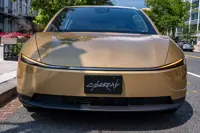
The industry veteran expects demand for such cars to drop drastically unless the demand is taken up by the new Proton E.mas – but EV cars above RM100,000 will likely suffer.
Industry people said an end-of life policy would have been more practical but politically unpopular to address the issue of aged cars. There are currently some 38.7 million registered vehicles as of 2025, with some five million or so aged more than 20 years.
Such cars not only pose road safety risks but also contribute disproportionately to emissions and inefficient fuel consumption.
Due to the lack of disposal incentives, many ageing vehicles are left in public spaces and housing estates, turning into public eyesores and hazards. As such, the measures announced in the budget were seen as supportive rather than transformative.
Kee said while the proposals in Budget 2026 address current needs, it would be valuable to see a more cohesive long-term automotive roadmap to guide Malaysia’s automotive ambitions.
With tax exemptions for completely built-up EVs ending in December and those for CKD EVs set to expire in 2027, greater certainty on excise duty treatment and localisation policies will help to sustain investor confidence, allow industry players to plan with certainty, and support long-term industry growth.
Hence, the automotive sector remains in anticipation of the upcoming National Automotive Policy review due by year-end, which is expected to announce more measures specifically on EVs.
The proposed Lemon Law in Budget 2026, Kee said, will help clearly define the rights of consumers and the obligations of sellers, ensuring that buyers have proper recourse when products fail to meet promised standards.
“By establishing clear definitions of product quality and responsibility, the law encourages greater transparency and professionalism among automotive businesses, from dealerships and workshops to inspection and refurbishment services.
“In the long run, this will help build a marketplace where trust and accountability drive competition, rather than price alone,” he stated in a statement post-Budget 2026. From a stock pick angle, TA Research stated the trade-in proposal will benefit companies linked to national cars like Sime Darby Bhd , MBM Resources Bhd and DRB-Hicom Bhd.
Meanwhile, the Malaysian Automotive Association (MAA) in a statement said it welcomed the introduction of a matching grant of RM4,000 to encourage vehicle owners to dispose of their old vehicles.
“This represents a progressive step toward improving vehicle safety, promoting environmental sustainability, and supporting Malaysia’s national car brands.
“MAA proposes that the government consider extending the eligibility to include locally assembled (CKD) models of other automotive brands. Such an extension would broaden participation across the local assembly ecosystem, strengthen investment in Malaysia’s CKD operations, and generate greater economic spillover benefits throughout the supply chain.”