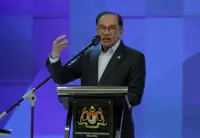
Prime Minister Datuk Seri Anwar Ibrahim has once again introduced the biggest budget in Malaysia’s history, amounting to RM419bil.
What is remarkable here is that it has been done with minimal increases in taxes, and practically the budget has been self-funded.
The prime minister’s words reflect the direction of the government: “This government chose to improve governance in implementing targeted subsidies without adding burden to the people.
“This approach has enabled us to combat corruption, curb smuggling, and dismantle cartels. We have chosen the long, difficult, and winding road – that of reform, strict fiscal discipline, and institutional strengthening, because only this path can ensure the country benefits in the long term.”
Time and time again, there has been discussion in the public domain and research has also been done in the past which clearly indicates that there is ample room to strengthen tax enforcement measures to uncover taxpayers who have either not been declaring or under declaring their taxes, or involved in smuggling, thereby totally bypassing the tax system.
The budget will largely be funded by responsible taxpayers who are already registered for income tax and indirect tax purposes.
The gap in the budget can be reduced significantly if enforcement iscarried out diligently using the means available currently together with using articial intelligence (AI).
When AI digital tools and forensic teams are connected with the enormous data that is available internally and externally, the tax authorities are already in a position to expose taxpayers who have not been declaring or complying with the requirements of the law.
The prime minister himself pointed out in his speech that in the last two years, the authorities have recovered RM15.5bil in seizures and penalty collections.
Now that the authorities have already gotten a taste of what can be done, you can anticipate that the frequency and intensity of the activities carried out by both Royal Malaysian Customs Department (RMCD) and Inland Revenue Board (IRB) will be increased.
This is already happening now and will only increase in the coming year in order to provide fairness to responsible taxpayers.
Non-compliant and irresponsible taxpayers are being funded by responsible taxpayers. The prime minister’s move to have stricter compliance and enforcement is the right direction, lessening the burden on responsible taxpayers, and assisting the country close the deficit gap.
On the income tax front, tax authorities are expected to increase their monitoring and enforcement in the area of stamp duties when the self-assessment system kicks in on Jan 1, 2026.
The IRB will also focus on e-invoicing when it is fully implemented by July 1, 2026. The information collected from e-invoicing will also expose taxpayers who are not in the system or who are under declaring their taxes.
The other areas the IRB is already intensifying its focus on are transfer pricing, tax incentives, declaration of benefits and perquisites, preparation of capital statements for high-net-worth individuals.
The use of nominees is not uncommon to evade detection by tax authorities.
Customs is equally intensifying its scrutiny of whether taxpayers have been properly registered for sales and service tax (SST) purposes.
In many cases, taxpayers are not aware that they should have been registered from September 2018 when the SST was introduced.
The declaration on importation for sales tax and customs duty is also being examined by the authorities to minimise leakage through under declaration.
The customs and border control unit has a more difficult physical task of identifying and closing in on smuggling activities.
The current measure announced of extending the use of digital tax stamps will also add to the tax revenues through the ability to monitor the movement of the goods into the country.
How do you prepare yourself?
Before you are selected for an audit or an investigation, it is advisable to get confirmation from customs or advance rulings from both authorities wherever possible to avoid any disputes.
Advance ruling mechanisms are available in both RMCD and IRB.
In certain cases, you can even write in to the tax policy divisions of both authorities in the event there are uncertainties in the interpretation of the law.
It is also possible in certain cases where you may not agree with the views adopted by the authorities. In such a case, you must be prepared with the facts, evidence, and your reading of the law to present to the authorities when an audit or investigation occurs.
Since the thrust of the government is fiscal responsibility, and one of the actions is to reduce debt, the tax enforcement measures are expected to increase to contribute towards the reduction of the nation’s debts.
With the modern tools available and the RM700mil financial backing given to enhance the various enforcement agencies, taxpayers will have to prepare to face greater scrutiny from the authorities.
In the course of improving governance in administering the tax system, it is extremely important that the tax authorities are mindful of the taxpayer’s rights.
S M Thanneermalai is the managing director of Thannees Tax Consulting Services Sdn Bhd. The views expressed here are the writer’s own.