KUALA LUMPUR: The FBM KLCI saw a milder-than-expected decline following the 25% tariffs on Malaysia as announced by the United States overnight.
Investors and analysts appeared to focus on the positives from the latest tariff announcement, noting that negotiations with the United States for a lower tariff rate was still possible and that it would only come into force starting Aug 1.
While sentiment was tepid at the open, buyers also appeared ready to buy into any dip this time around, supported by Asian markets which were mostly higher.
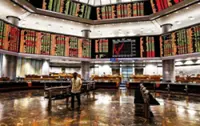
At its close, the FBM KLCI recovered to register a drop of 0.48%, or 7.4 points, to 1,530.14, after falling to a low of 1,526.27 in the morning session.
The broader market saw 3.06 billion shares worth RM2.2bil changing hands, as losers trounced gainers with 550 counters declining, while 399 closed higher.
According to Tradeview Capital’s portfolio manager Ng Tzyy Loon, the resilient market performance yesterday was not totally unexpected, although there was anticipation of a knee-jerk market reaction earlier in the day.
“We expect the impact to be less severe than when it was announced in early April as there are some changes that have happened over the past 90 days.
“Trump’s stance has turned less hawkish and more pragmatic since April 2025, after learning that his trading partners are not playing the game the way he wanted,” Ng told StarBiz.
He noted that this was seen when the US government chose treasury secretary Scott Bessent instead of hawkish and protectionist White House trade adviser Peter Navarro to take a more active role in trade talks, especially with China.
“Also, the passing of Trump’s Big Beautiful Bill by the Senate and the House enabling the US government to increase its debt ceiling by US$4 trillion provided more flexibility for the Trump administration to plan the treasury refinancing plan,” he said.
“We think that Malaysia will still remain the place to be as the electrical and electronics (E&E) export from the country is quite difficult to be replaced by other countries given our track record and high customisation-level to clients’ orders,” Ng added.
Hong Leong Investment Bank Research (HLIB Research) said in its strategy report that any sharp correction is a good buying opportunity – especially of high beta stocks.
“Countries can still negotiate down to the 10% baseline and we view this more as a negotiation extension beyond the July 9 deadline than a true escalation.
“All in, we believe Trump’s latest move is part of his broader negotiation playbook,” it said.
“Moreover, with ample sidelined liquidity, investors have grown increasingly conditioned to buy into weakness, driven by a persistent fear of missing out on potential rallies,” HLIB Research added.
The research house had retained its 2025 FBM KLCI target level at 1,640 points, based on a 14.5 times price-to-earnings ratio.
HLIB Research said this target was conservative compared to its bottom-up calculation of 1,765, as it expects the second half of the year to be a period of contrasts, where the third quarter would be turbulent, before an anticipated calm in the fourth quarter.
“While negative in isolation, Malaysia still fares relatively better versus regional peers such as Indonesia and Thailand, which face steeper tariffs of 32% and 36% respectively.
“In contrast, Vietnam now enjoys a relative advantage, with its revised tariff rate reduced to 20% from the initial 46%.
“That said, all impacted countries retain the option to negotiate down to the baseline rate of 10%,” HLIB Research said.