In surprise move, Singapore tightens monetary policy on inflation risks


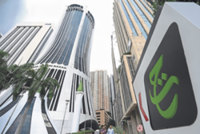
FILE PHOTO: The logo of the Monetary Authority of Singapore (MAS) is pictured at its building in Singapore. REUTERS/Edgar Su/File Photo

SINGAPORE: Singapore's central bank tightened its monetary policy settings on Tuesday in its first out-of-cycle move in seven years, as global supply constraints and brisk economic demand elevate inflation pressures across the region.

The city-state's trade-dependent economy is highly susceptible to swings in global inflation and the central bank's sudden move comes as price pressures ring alarm bells for policymakers elsewhere in Asia.

Selena Ling, head of treasury research and strategy at OCBC, said she expects the central bank to tighten again in April, describing Tuesday's move as only a "slight tightening."

"If they had announced a more aggressive tightening today, then that would have dampened expectations for April," she said.

The Monetary Authority of Singapore (MAS), which manages monetary policy through exchange rate settings, said it would slightly raise the rate of appreciation of its policy band.

The width of the band, known as the Nominal Effective Exchange Rate, or S$NEER, and the level at which it is centered will be unchanged.

The MAS, which typically holds scheduled policy reviews twice a year, once in April and then in October, last surprised with an off-cycle move in January 2015 when it eased its policy after a collapse in global oil prices.

Last year, many Asia-Pacific economies largely shrugged off inflationary threats that had rattled policymakers in Europe and the United States but that thinking now appears to be shifting.

Australia's core inflation flew to its fastest annual pace since 2014 in the December quarter, data showed on Tuesday, challenging the central bank's benign interest rate outlook.

In Japan, a country renowned for its stubbornly tepid price growth, policymakers have also acknowledged creeping inflation pressures.

Elsewhere, investors expect the U.S. Federal Reserve to raise its benchmark interest rate in March with the central bank likely to step up its rhetoric against inflation at its meeting this week.

Singapore's policy move comes just a day after data showed core inflation in the city-state climbed in December by the fastest pace in nearly eight years.

"This move builds on the pre-emptive shift to an appreciating stance in October 2021 and is appropriate for ensuring medium-term price stability," the MAS said, referring to its tightening move late last year.

The central bank is due to review its stance in April, when it was widely expected by economists to tighten again.

The Singapore dollar strengthened to 1.3425 versus the U.S. dollar, its highest since October 2021.

'DOUBLE TIGHTENING'

Singapore's bellwether economy is expected to grow 3-5%, unchanged from earlier forecasts.

"2022 will be year of double tightening for Singapore - both fiscal and monetary levers will grind tighter," said OCBC's Ling.

The MAS expects Singapore's economic recovery, which has so far been led by the trade-related and services sectors, to extend to the domestic-oriented and travel-related sectors this year as COVID-19 restrictions are eased.

Singapore has vaccinated 88% of its 5.5 million people against COVID-19 and 55% have received booster shots.

The MAS forecasts core inflation to be 2.0-3.0% this year, from the 1.0-2.0% expected in October. Headline inflation is expected to be 2.5-3.5%, from the earlier forecast range of 1.5-2.5%.

"While core inflation is expected to moderate in the second half of the year from the elevated levels in the first half as supply constraints ease, the risks remain skewed to the upside," the MAS said.

Singapore will release its annual budget on Feb. 18, when the government is expected to announce the timing for an anticipated hike in goods and services tax.

The city-state's economy grew 7.2% in 2021, its fastest pace in over a decade, rebounding from a record 5.4% contraction in 2020. The government has spent more than S$100 billion over the last two years to cushion its economy from the impact of the pandemic.

Instead of interest rates, the MAS manages policy by letting the local dollar rise or fall against the currencies of its main trading partners within an undisclosed band.

It adjusts its policy via three levers: the slope, mid-point and width of the policy band. - Reuters

Get 20% OFF The Star Digital Access

Monthly Plan

RM 13.90/month

RM 11.12/month

Billed as RM 11.12 for the 1st month, RM 13.90 thereafter.

Best Value

Annual Plan

RM 12.33/month

RM 9.87/month

Billed as RM 118.40 for the 1st year, RM 148 thereafter.

Follow us on our official WhatsApp channel for breaking news alerts and key updates!

Next In Business News

Asian shares climb on chip rally, oil jumps as Gulf hostilities resume
Risk-off mood drags on Bursa Malaysia as Iran conflict flares up
Ringgit rises as Fed minutes weigh on US$
Australia watchdog reviews Big Four audit complaints amid KPMG probe
Trading ideas: Chin Hin, Pekat, Infomina, EITA, Pan Merchant, Aemulus, Synergy, Hektar REIT, Sapura Industrial, PRG, Enest
Oil hits multi-week high as US-Iran truce falters
Hektar-REIT seals RM30mil industrial acquisition
GB Bond gets nod to list on ACE Market
Aemulus secures orders worth RM8mil
Pan Merchant in RM17mil contract win

Others Also Read