PETALING JAYA: Malaysia must ensure that its domestic business ecosystem is ready to support small and medium enterprises (SMEs) and cultivate highly skilled people, hence becoming a high value chain country before it signs or ratifies any trade agreement.
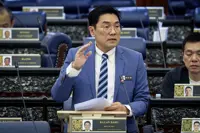
UiTM Sabah political economist-lecturer Firdausi Suffian said: “We need fewer constraints. (At the same time) we don’t want to be left out. We want to participate in free trade agreements (FTAs) but we also need to proceed with caution.
“Consider the latest cabotage policy and the subject of the undersea cable. It hinders Malaysia’s economic reform. However, if you consider the state’s interests, the cabotage policy should remain.”
In his view, the government should ensure that foreign-flagged vessels repairing underwater cables are able to pass on their expertise to Malaysian workers.
“Knowledge-sharing fosters local capabilities,” he said.
Despite the aspirations of nurturing an open economy, certain regulations are still needed because state-level interests need to be protected.
“The degree of protection and intervention defines how liberal the economy is. Finally, we cannot rely only on the home market. We must integrate into the global industrial network,” he added.
On the rapid changes in Malaysia’s political landscape and its impact on Malaysia’s trade relations, he said trade agreements and politics were inextricably linked. While Malaysia’s policies are open and transparent (to a degree), political interests have an implicit influence on trade policies.
“We want to benefit from FTAs. Therefore, we need policy instruments that work along the way, particularly in line with World Trade Organisation (WTO) guidelines.
“One area that we should look at is the WTO’s Most-Favoured-Nation principle, which means treating others equally. Countries are not permitted to discriminate between their trading partners under WTO agreements,” he concluded.
Firdausi said if Malaysia aimed to move into a high-value economy, it must ensure that its domestic business ecosystem is ready to support SMEs and is also able to nurture a pool of highly skilled workforce.
He said SMEs account for 90% of Malaysia’s gross domestic product (GDP) and 65% of the job market.
“Projections revealed that our economy will grow next year, but this does not imply we will be back to pre-Covid-19 normalcy. So, are our SMEs ready? Their growth depends on substantial government backing, not only financially but also in terms of skilled workers, the overall ecosystem and infrastructure.
“Most nations want to improve their own economies as they gradually restart pre-Covid-19 trade relations. When it comes to trade, there may be zero-sum games and there may be trade-offs. Certain interests may be enforced. Therefore, further considerations for SMEs are required,” he added.
For example, he said more should be done to prepare the country and its SMEs for the Regional Comprehensive Economic Partnership (RCEP) and the Comprehensive and Progressive Agreement for Trans-Pacific Partnership (CPTPP).
Budget 2022 announced financial support and digitalisation for the sector, but SMEs must be better prepared if they are to be competitive.
Budget 2022 has been allocated RM332.1bil this year from RM320.6bil as a result of Covid-19 relief measures. The government expects 5.5% to 6.5% GDP growth next year, with a 5.9% revenue growth to RM234bil.
When signing or ratifying trade agreements, it is good for Malaysia to proceed with caution, although FTAs have their benefits.
Comparing the RCEP and the North American Free Trade Agreement (Nafta), both of which are FTAs, Firdausi said the RCEP offered a larger market and was more promising compared with Nafta, which encompasses the United States, Mexico and Canada.
Often, the benefits of these agreements need time to take effect. For example, time was needed for the Common Effective Preferential Tariff plan to take effect, but it showcased Malaysia’s attention to details, notably in the automobile sector, he said.
While regional agreements can help individual member countries, the Malaysian government must, at the same time, build an ecosystem for foreign direct investment to bring in skill-based activities, he added.
Leading economist on competition policy, regulation and economic development Keith Boyfield said now was the right time to bolster brand quality.
“The world needs skills and Malaysia is well placed to take advantage of the opportunities presented in our digital age,” Boyfield said. “The pandemic has levelled things to a certain degree. It will, over time, inevitably encourage businesses to revise what they consider to be efficient practices,” he added. — Bernama
Already a subscriber? Log in
Get 20% OFF The Star Digital Access
Cancel anytime. Ad-free. Unlimited access with perks.