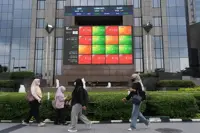
SEOUL: South Korea's stock benchmark topped 5,000 points for the first time on Thursday, powered by gains in chip firms and automakers on artificial intelligence optimism, reaching a level promised by President Lee Jae Myung in just over six months since he took office.
The benchmark KOSPI rose as much as 2.2% to 5,019.54 in morning trade, marking its highest level on record.
The index has risen nearly 20% so far this month, after emerging as the world's best performer in 2025 with a 76% jump - its biggest annual gain since 1999 - on a chip rally fueled by surging demand for AI investments and capital market reforms.
The breach of the 5,000 mark also follows U.S. President Donald Trump backing away from his threat to slap new tariffs on European nations, easing market volatility and extending a rally in Korea's world-beating index.
Chipmaker Samsung Electronics rose 5% on Thursday to an all-time high, while peer SK Hynix gained 4.5%.
Hyundai Motor, up as much as 7.5% and trading at a record, has also been rallying this month as investors cheered its newly unveiled humanoid robot technologies.
"The bullish market trend this time is a fundamentals-driven one based on earnings growth, which makes the KOSPI still cheap," said Kim Jae-seung, an analyst at Hyundai Motor Securities.
Some analysts, however, expressed caution about how the rally up to now had been concentrated in only some sectors.
"We also need to think about the fact that this year's rally has been led by certain sectors such as semiconductors, automobiles, shipbuilding and defence," said Han Ji-young, an analyst at Kiwoom Securities.
TACKLING "KOREA DISCOUNT"
President Lee said on Wednesday the domestic stock market was "still undervalued", adding that the boom in AI and semiconductors was at an unpredictable scale.
Under his "KOSPI 5,000" initiative, Lee has introduced a series of market reforms and tax measures aimed at boosting the domestic stock market and resolving the so-called "Korea Discount", since he took office in June 2025.
The Korea Discount refers to a tendency for domestic stocks to trade at lower valuations compared with global peers, due to factors such as opaque corporate governance structures and low dividend payouts.
"The KOSPI at 5,000 is not the destination but a new starting line," a spokesperson for the ruling Democratic Party said, vowing to keep pushing to improve market fairness and credibility.
The Lee administration and his Democratic Party last year revised the Commercial Act to better protect shareholder interests and plans to make share repurchases and cancellations a requirement for listed companies to boost shareholder value.
The government also aims to win developed-market status for the domestic stock market from global index provider Morgan Stanley Capital International (MSCI), with further loosening of foreign exchange restrictions planned for this year to improve foreign access. - Reuters